1×7 Stainless Steel Wire Rope Product Introduction Overview: The 1×7 stainless steel wire rope is a high-quality, durable, and versatile wire rope constructed from a single strand of seven individual ...
See Details

Modern lines replace operator judgment and batch-average certificates with thermomechanical treatment, closed-loop drawing control, and inline surface inspection so every coil behaves like the one before it.
For a manufacturer such as JiangSu Kailong Stainless Steel Products Co., Ltd., with wire drawing, rope closing, and fastener forming under one roof in Dainan Town, Jiangsu, those technologies are not marketing labels. They are the difference between a wire that feeds the next process and a wire that stops it.
The first measurable gain is not peak tensile strength; it is coil-to-coil consistency.
Strength is specified on paper and confirmed by a sample. Consistency is proven meter by meter, and it decides whether the wire survives stranding, weaving, cold heading, or spring coiling without interruptions. New technologies in stainless steel wire production shift the emphasis from hitting a single test value to holding a narrow distribution across the whole coil.
Figure 1. Within-coil tensile spread for 1.0 mm 304 wire by process generation. Lower is better; values reflect mill-audit and trial-batch ranges.
Three controls deliver most of the gain:
| Parameter | Conventional line | New-technology line |
| Diameter control | +/-0.02 mm, sampled at reel change | +/-0.005 mm, closed-loop gauging |
| Surface inspection | Visual sampling at operator discretion | Inline eddy-current and optical scanning |
| Annealing control | Time-at-temperature from operator log | Closed-loop with microstructure verification |
| Traceability | Mill certificate per batch | Coil-level process data, shareable |
Consistency is the real product. A wire that passes the certificate but breaks in the customer's machine costs more than the wire itself.
Suppliers who run this level of control can offer a high-strength, multi-specification stainless steel wire range across many diameters and finishes, because the process window is stable enough to repeat.
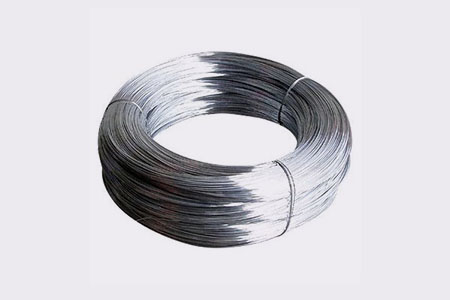 High-Strength Multi-Specification Stainless Steel WireThis wire range is highlighted after a discussion of controlled thermomechanical processing, making it relevant for buyers seeking consistent grain structure and repeatable mechanical properties across multiple diameters and finishes.View Product →
Thermomechanical processing is the single most important upgrade in stainless steel wire production because it engineers the grain structure deliberately instead of hoping the anneal came out right.
In conventional lines, wire is heated to solution temperature, quenched, and then drawn until the customer's tensile range is reached by trial. Coil-to-coil variation comes from uneven heating, quench delays, and die wear, and it is usually detected only after the wire ships. Thermomechanical schedules combine a controlled solution treatment with a calibrated reduction sequence and a cooling-rate profile, so that grain size, carbide distribution, and retained cold work land in the same window every run.
Definition: Thermomechanical processing is the controlled combination of heat treatment and mechanical deformation used to set the grain structure and mechanical properties of stainless steel wire before final drawing.
The result shows downstream: rope closers see a more uniform lay, fastener formers see fewer cracked heads, and spring makers see consistent set. Integrated factories pair drawing control with rope closing because the same 304 wire that satisfies a tensile certificate also has to run through a 7x19-6x19 IWS closing machine without fighting the dies.
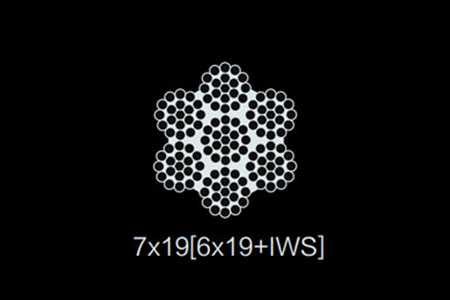 7X19 [6x19+IWS] Stainless Steel Wire Rope 304/316This 7x19 wire rope with independent wire strand core balances strength and flexibility, and is presented alongside inline inspection benefits—useful for applications requiring uniform lay and reliable performance in demanding environments.View Product →
Inline inspection changes the economics of quality because defects are removed at drawing speed instead of after a customer complaint.
Eddy-current testing detects subsurface seams and inclusions that visual inspection misses; laser diameter gauges flag ovality in real time; digital line records tie every meter to drawing speed, lubricant temperature, and annealing setpoint. When a deviation alarm triggers, the affected length is cut out and downgraded before it enters a reel.
For customers, the benefit is precise quarantine. If a wire breaks in a high-speed bending former, the supplier can replace exactly the affected coils instead of scrapping an entire batch. Without coil-level data, the same failure becomes a dispute over whose process caused it.
Traceability turns "the supplier said it was fine" into "here is the process record for this exact coil".
Buyers should treat new production technologies as audit criteria, not marketing claims.
When you qualify a wire supplier, ask what the line records per coil, how surfaces are inspected, and whether tensile data are reported by coil position or only as a batch average. Ask who sets the process window: an operator or a closed-loop controller with metallurgical feedback. The answers separate factories that invested in new technologies in stainless steel wire production from those still running manual lines.
Process data is the cheapest insurance a wire buyer can request. If the supplier cannot produce it, the technology is not there.
Vertical integration is a practical shortcut for verification. JiangSu Kailong Stainless Steel Products Co., Ltd. runs wire drawing, rope closing, fastener forming, and TIG welding-wire production under one roof in Dainan Town. The same 304 and 316 material in its wire also becomes bolts, washers, and filler metal, so the company cannot afford to ship wire that fails its own stranding machines. That internal loop is exactly what our comparison of stainless steel wire production methods describes in practice.
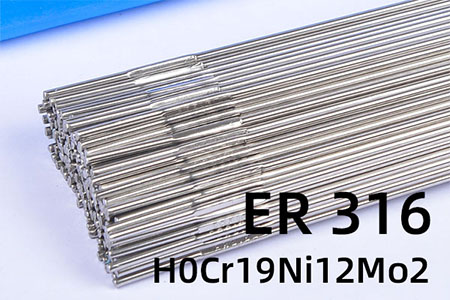 Refined Stainless Steel 316 TIG Special Welding Wire ER316This ER316 TIG wire uses H0Cr19Ni12Mo2 material for corrosion-resistant welds in chemical, food, and medical equipment. It appears in a context where vertical integration and coil-level quality records support process verification.View Product →
When a supplier shows you coil-level data and welcomes a process audit, the technology is real. Contact the factory directly to discuss your wire specification and request the latest coil-level records for the grade you plan to order.
Short answers to the questions purchasing teams ask most often.
Thermomechanical processing combines controlled heat treatment with a calibrated mechanical deformation sequence to set the grain structure and mechanical properties of stainless steel wire before final drawing. It replaces trial-and-error annealing for repeatable microstructure coil to coil.
Yes. Rope stranding depends on uniform diameter, elongation, and surface condition across every wire in the construction. When within-coil tensile spread drops from about +/-85 MPa to +/-18 MPa, strands lay more evenly, residual torsion drops, and the rope bed wears more predictably.
Ask three questions: Is diameter measured closed-loop during drawing? Is surface inspected inline with eddy-current or optical sensors? Can the supplier provide coil-level process data for the exact reel you are quoting? A factory that says yes to all three has invested; hesitation usually means it has not.
Moderately, typically a low single-digit percentage over conventionally drawn wire. The added cost is offset by fewer breaks, less downtime, and lower rejection risk in the customer's own process, so the cost per accepted component usually falls.
Key takeaway: buy wire from the process, not the price list. The technology behind the reel decides whether it runs or stops.
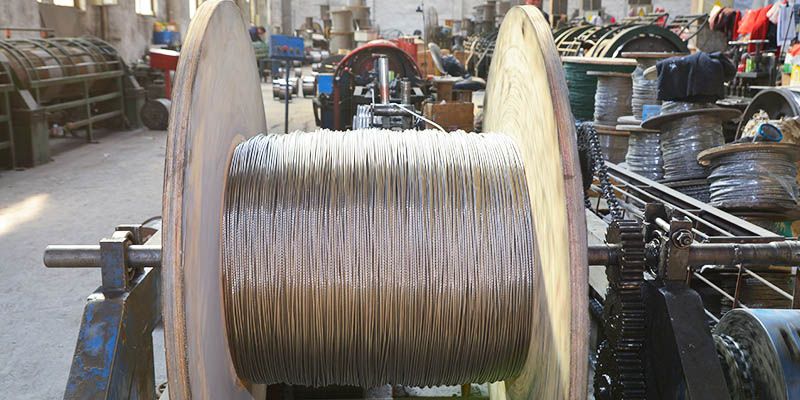
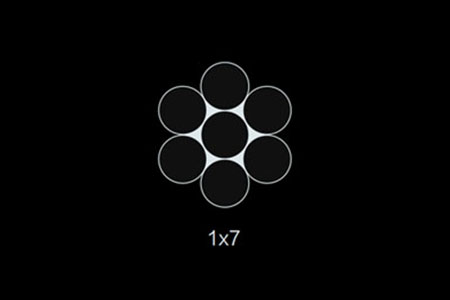
1×7 Stainless Steel Wire Rope Product Introduction Overview: The 1×7 stainless steel wire rope is a high-quality, durable, and versatile wire rope constructed from a single strand of seven individual ...
See Details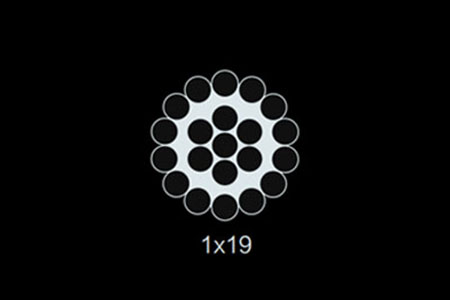
1×19 Stainless Steel Wire Rope Product Introduction Overview: The 1×19 stainless steel wire rope is a robust and high-strength wire rope made from a single strand of 19 individual wires twisted togeth...
See Details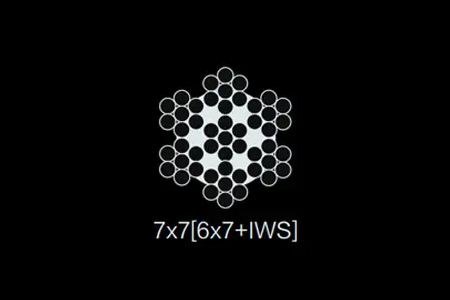
7×7 Stainless Steel Wire Rope Product Introduction Overview: The 7×7 stainless steel wire rope is a versatile, durable, and flexible wire rope made from seven strands, each containing seven individual...
See Details
7X19 [6x19+IWS] Stainless Steel Wire Rope Product Introduction Overview: The 7X19 [6x19+IWS] stainless steel wire rope is a high-performance wire rope designed for applications that require maximum st...
See Details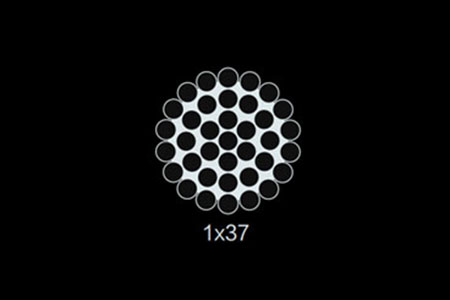
1×37 Stainless Steel Wire Rope Product Introduction Overview: The 1×37 stainless steel wire rope is a high-strength, durable wire rope made from a single strand of 37 individual wires twisted together...
See Details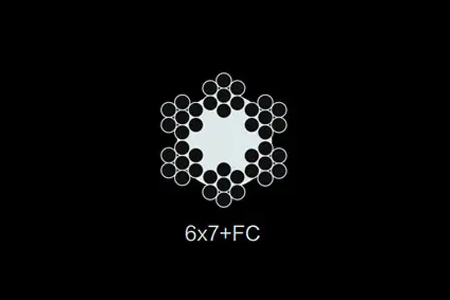
6×7+FC Stainless Steel Wire Rope Product Introduction Overview: The 6×7+FC stainless steel wire rope is a high-quality wire rope designed for applications requiring both strength and flexibility. This...
See Details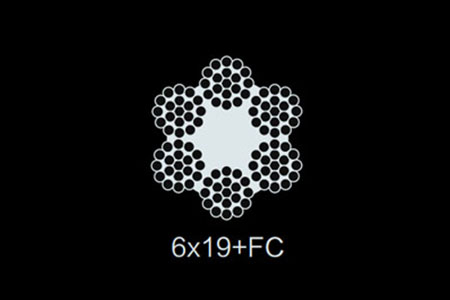
6×19+FC Stainless Steel Wire Rope Product Introduction Overview: The 6×19+FC stainless steel wire rope is a high-performance, versatile rope designed to provide exceptional strength, flexibility, and ...
See Details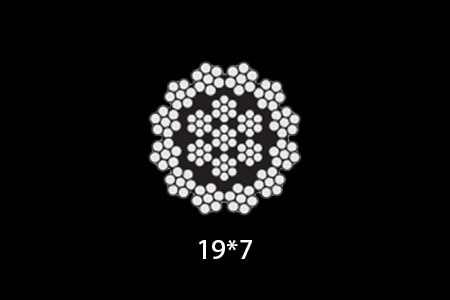
19×7 Stainless Steel Wire Rope Product Introduction Overview: The 19×7 stainless steel wire rope is a high-performance wire rope designed for a wide range of applications requiring both strength and f...
See Details



 wechat scan