1×7 Stainless Steel Wire Rope Product Introduction Overview: The 1×7 stainless steel wire rope is a high-quality, durable, and versatile wire rope constructed from a single strand of seven individual ...
See Details

A 1.2 mm cold drawn 304 stainless steel wire held inside a 0.01 mm diameter band at 1,850 MPa tensile used to be a specialty order with a specialty price. It is now a normal production specification from mills in Jiangsu, and the premium over commercial tolerance has narrowed to a few percent on volume tonnage.
Advances in stainless steel wire technology now sit in four places: the melt shop, the drawing line, the annealing furnace and the stranding machine. Each one produces a number that can be verified on a mill certificate or an incoming inspection report, and each one changes what a buyer can reasonably write on a drawing.
The commercial consequence is straightforward. Diameters that once forced secondary grinding can be ordered directly, and surface conditions that once required in house acid pickling can arrive ready to weld or assemble.
A real advance changes a number on an inspection certificate. Anything that only changes the wording of a brochure is not an advance, and buyers who screen suppliers on measurable criteria avoid most specification disputes.
Advances in stainless steel wire technology are measurable improvements in melt cleanliness, drawing accuracy, surface condition and downstream consistency that allow tighter tolerances and more predictable mechanical properties without specialty pricing or extended lead times.
When a supplier claims progress, ask for the four corresponding metrics. Each one is testable, and each one has a range that qualified mills now treat as routine.
| Performance claim | Metric to verify | Routine value in 2026 |
| High precision diameter | Laser gauge reading and ovality along the coil | 0.01 mm band on 0.5 to 3.0 mm wire |
| Bright, oxide free surface | Bright anneal atmosphere and surface roughness | Ra 0.2 to 0.4 micron |
| Clean steel | Sulfur content and thin series inclusion rating | Sulfur max 0.010 percent, inclusions max 1.5 |
| Consistent strength | Tensile spread across a single heat | Within 3 percent |
| Predictable rope strength | Breaking load test on the finished rope | 95 to 105 percent of nominal |
Sulfur is the clearest single example of how far melt control has moved, and it explains why modern wire draws more cleanly than the same grade did fifteen years ago.
Commercial 304 and 316L were once melted to roughly 0.030 percent sulfur because that level improved machinability. Argon oxygen decarburization and vacuum oxygen decarburization now deliver 0.010 percent or lower as a matter of routine, which raises hot ductility during drawing and reduces surface tearing at the die entry.
A supplier who cannot show sulfur and molybdenum values per heat is selling a grade name rather than a controlled material, and that gap appears later as inconsistent springback or as pitting in service.
Servo controlled multi die drawing lines with inline laser diametrometers are the reason a 0.01 mm tolerance band is now quotable on small diameters, and the mechanism is worth understanding before you accept or reject a quotation.
Older single block machines corrected diameter after the fact. A modern line passes the wire through eight to twelve dies, measures it continuously and adjusts capstan speed in response, so the tolerance holds across an entire 500 kg coil instead of the first fifty metres. Lubricant temperature control and intermediate annealing between passes stop work hardening from running ahead of the schedule.
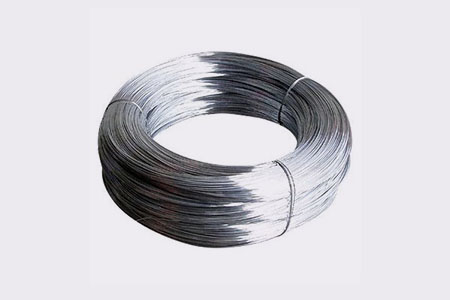 High-Strength Multi-Specification Stainless Steel WireFine stainless steel wire in 302/304/316/316L grades, suited to mesh, fasteners, marine and cold-drawn applications; check specs for tensile and corrosion needs.View Product →
Temper selection then decides the mechanical result. The chart below shows the tensile ranges that a qualified mill can hold on cold drawn 304.
Continuous bright annealing in a hydrogen atmosphere with a dew point below minus 40 degrees C delivers an oxide free, mirror bright surface without the mixed acid pickling step that used to dominate cost, waste and rework.
The older route annealed in a nitrogen hydrogen mixture with a dew point near minus 10 degrees C. That left a grey oxide film, and removing it required a nitric hydrofluoric acid bath followed by rinsing and neutralisation. The bath consumed acid, generated sludge, and introduced a real risk of intergranular attack whenever temperature or immersion time drifted.
One caveat matters for marine and food contact work. Bright annealing removes oxide, but it does not rebuild the passive film to full thickness, so passivation in citric or nitric acid is still specified after forming. Treat annealing and passivation as two separate line items on the drawing.
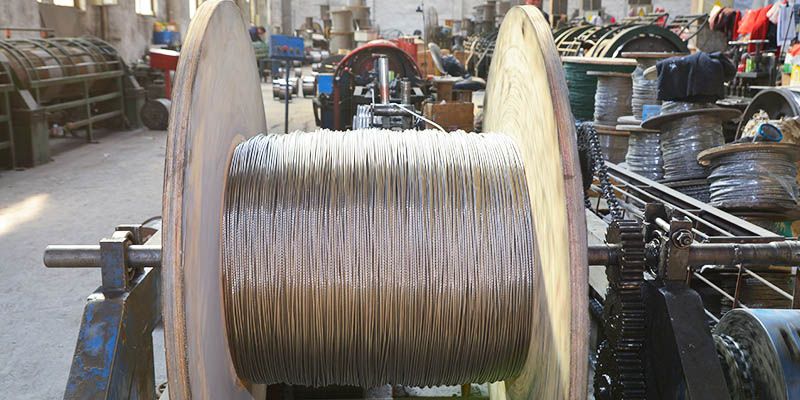
Automated stranding with tension feedback on every spool is why 7x7 and 7x19 ropes now test within a few percent of nominal breaking load instead of scattering across a wide band.
Unequal wire tension is the main source of early rope failure, because slack strands carry less load while the tight ones fatigue first. Preforming, controlled lay length and per spool tension regulation remove most of that imbalance, and the effect is visible in fatigue testing on sheave and drum applications.
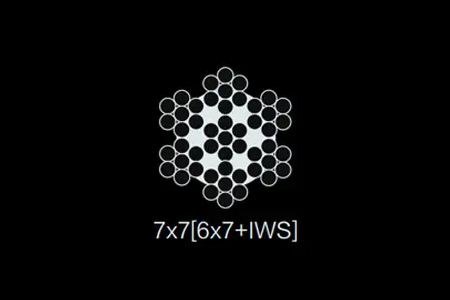 7x7 Stainless Steel Wire Rope for Marine and LiftingFlexible 7x7 stainless rope for lifting, mooring, and rigging; choose 304/316 grades and verify finished-rope breaking load before marine or industrial use.View Product →
When you buy rope, request a breaking load test on a sample cut from the finished rope, not a calculation from the wire that went into it. EN 12385-4 and ISO 2408 describe the test methods, and a supplier who tests finished rope will normally quote a tighter minimum breaking load for the same construction.
TIG filler advances are chemical and cosmetic rather than dramatic, and they show up as fewer weld defects instead of higher headline numbers.
Three changes matter most. Carbon in ER316L is capped at 0.030 percent to limit sensitisation in the heat affected zone. Silicon is held inside a narrow range so the weld pool flows predictably. The finished surface must be free of drawing lubricant residue and oxide, because both cause arc instability and porosity on the first pass.
Grade matching follows the base metal. Use 308L for 304 components, and 316L for 316 components or for service where chlorides are present. On thin wall tube and orbital welding, spool tension consistency matters as much as chemistry, since a spool that binds will stall an automated head mid pass.
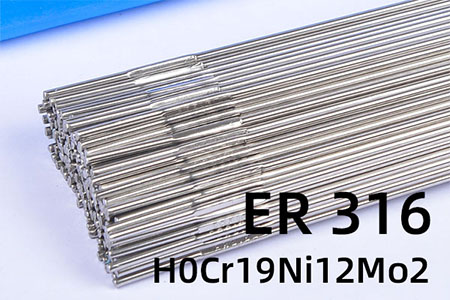 316 TIG Welding Wire ER316 for Stainless SteelTIG wire in 316/ER316 for joining stainless components; grade matching and consistent spool tension support thin-wall and orbital welding, with 1.0–4.0 mm diameters.View Product →
The practical effect is that you can stop padding tolerances for safety and start specifying the property that actually governs the part.
An RFQ that names grade, diameter with tolerance band, temper or tensile target, surface finish, delivery form, coil or spool size and certificate level removes most of the clarification traffic. For critical parts, ask for EN 10204 3.1 certification with the heat number traceable to the mechanical test. A mill that runs drawing, annealing and stranding under one quality system, such as JiangSu Kailong Stainless Steel Products Co., Ltd. in Dainan, Jiangsu, can confirm achievable tolerance and finish before you release the order.
If you are specifying wire, rope or rigging hardware for a new project, send the drawing and target numbers through the contact page and ask the mill to confirm the achievable tolerance, tensile and finish. For background on how drawing and annealing routes differ between suppliers, this note on manufacturing differences in stainless steel wire is a useful starting point.
Stranding tension control, because rope failure usually starts at the most heavily loaded strand. A rope tested to EN 12385-4 with a breaking load within a few percent of nominal gives a sling designer a working load limit that can be trusted rather than discounted twice.
Yes on diameters between roughly 0.5 mm and 3.0 mm, provided the mill draws on a servo controlled line with inline gauging. Above 5 mm, thermal movement and coil handling widen the practical band, and 0.03 mm is the more realistic request.
No. Bright annealing produces an oxide free surface but leaves the passive film thinner than a dedicated passivation step achieves. For marine, food contact and medical parts, specify bright anneal plus citric or nitric passivation.
Four things: diameter at three points along the coil, tensile strength on a sample from each heat, sulfur content on the certificate, and surface roughness if the part is visible or welded. Those four checks catch most substitution and process drift problems before production starts.
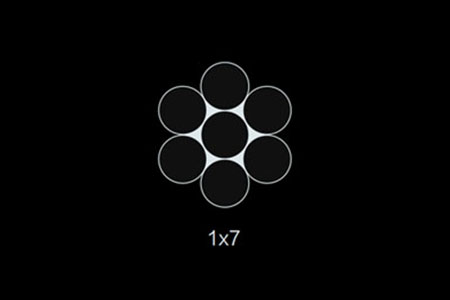
1×7 Stainless Steel Wire Rope Product Introduction Overview: The 1×7 stainless steel wire rope is a high-quality, durable, and versatile wire rope constructed from a single strand of seven individual ...
See Details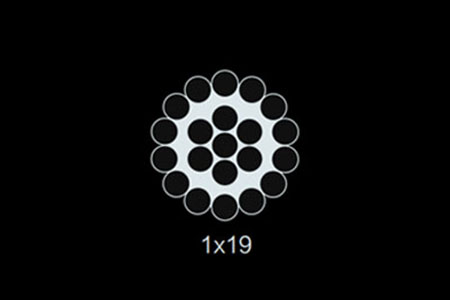
1×19 Stainless Steel Wire Rope Product Introduction Overview: The 1×19 stainless steel wire rope is a robust and high-strength wire rope made from a single strand of 19 individual wires twisted togeth...
See Details
7×7 Stainless Steel Wire Rope Product Introduction Overview: The 7×7 stainless steel wire rope is a versatile, durable, and flexible wire rope made from seven strands, each containing seven individual...
See Details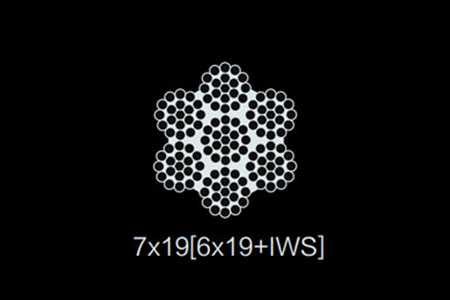
7X19 [6x19+IWS] Stainless Steel Wire Rope Product Introduction Overview: The 7X19 [6x19+IWS] stainless steel wire rope is a high-performance wire rope designed for applications that require maximum st...
See Details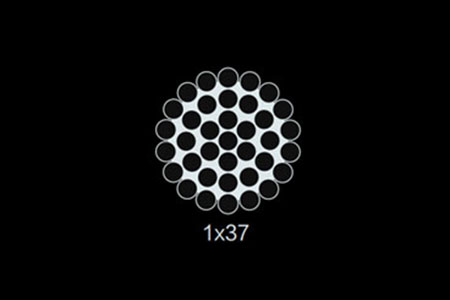
1×37 Stainless Steel Wire Rope Product Introduction Overview: The 1×37 stainless steel wire rope is a high-strength, durable wire rope made from a single strand of 37 individual wires twisted together...
See Details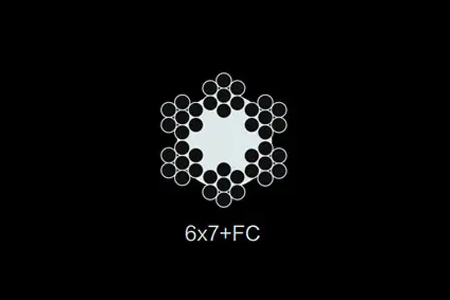
6×7+FC Stainless Steel Wire Rope Product Introduction Overview: The 6×7+FC stainless steel wire rope is a high-quality wire rope designed for applications requiring both strength and flexibility. This...
See Details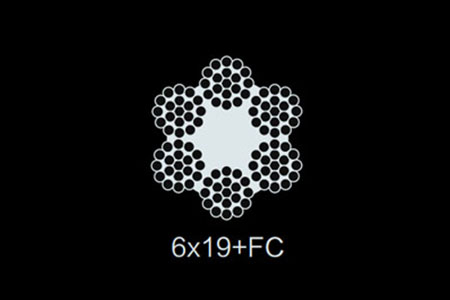
6×19+FC Stainless Steel Wire Rope Product Introduction Overview: The 6×19+FC stainless steel wire rope is a high-performance, versatile rope designed to provide exceptional strength, flexibility, and ...
See Details
19×7 Stainless Steel Wire Rope Product Introduction Overview: The 19×7 stainless steel wire rope is a high-performance wire rope designed for a wide range of applications requiring both strength and f...
See Details




 wechat scan