1×7 Stainless Steel Wire Rope Product Introduction Overview: The 1×7 stainless steel wire rope is a high-quality, durable, and versatile wire rope constructed from a single strand of seven individual ...
See Details

A 0.015 mm diameter drift on a 1.0 mm grade 304 wire changes the cross-section by roughly 3 percent, which is enough to push tensile strength, spring rate and fatigue life outside the band a customer specified. That single number explains why most real progress in stainless steel wire manufacturing has come from process control rather than from new alloy chemistry.
The measurable innovations in stainless steel wire manufacturing sit in three places: cleaner steel at the melt shop, tandem multi-die drawing with inline inspection, and closed-loop bright annealing. Everything else, from lubricant chemistry to laser-marked coils, exists to support those three.
Twenty years ago a drawing shop judged a pass schedule by sound and feel. A die that squealed was re-lapped, a coil that snapped was re-strung, and the cause was rarely written down. The same decisions are now made from data: die wear curves, motor current signatures and eddy-current signals sampled every few centimetres of wire.
For buyers the practical consequence is uncomfortable. Two suppliers can quote the same grade, the same diameter and the same tolerance and still deliver wire that behaves differently in a spring coiler or a mesh loom. Mechanical properties are decided by the total reduction sequence and the final anneal, not by the grade name on the certificate.
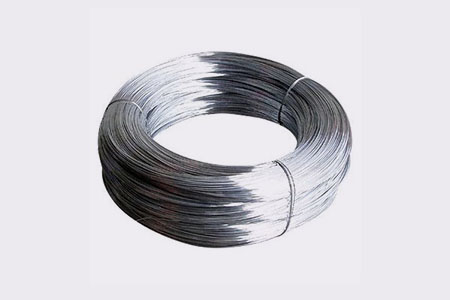 High-Strength Multi-Specification Stainless Steel Wire for Demanding ApplicationsReview this multi-grade stainless steel wire for consistent diameter and drawing/anneal control in demanding mesh, spring, and forming applications.View Product →
Wire produced on a controlled line behaves predictably because diameter variation across a 500 kg coil stays inside a narrow band. Wire bought on price alone usually reveals its variation later, in the press or the coiler, once the cost of a failed batch is already committed.
Most unexpected wire breaks during fine drawing come from non-metallic inclusions and residual surface defects in the wire rod, not from the chromium or nickel balance of the steel. Composition gets the attention; cleanliness causes the downtime.
That is why the upstream half of the process deserves as much scrutiny as the drawing line. A modern stainless melt shop runs a sequence built around inclusion removal:
Each step adds cost to the rod. The return appears downstream as fewer drawing breaks, longer die life and a wire surface that accepts a bright anneal without streaking.
The largest throughput gain in wire drawing came from replacing single-die benches with tandem machines that pull wire through 6 to 12 dies in one continuous, wet-lubricated pass. That removed coil-to-coil handling between passes, but the bigger prize was control.
Die material moved in the same direction. Polycrystalline diamond and coated tungsten carbide hold bore tolerance roughly twice as long as plain carbide in 316 wire, largely because the coating limits cobalt leaching by the lubricant. Diameter then stays stable for a full shift instead of drifting through the last third of a coil.
Scrap rate by drawing process generation
Inline eddy-current testing is the part buyers should ask about directly. It detects surface and near-surface discontinuities at line speed, so a defect is identified on the coil where it was created rather than in a customer's press three weeks later. Modern lines also log the signal, which means a disputed coil can be re-examined against a record instead of against memory.
Final mechanical properties are set by annealing. Temperature, atmosphere, dew point and cooling rate decide whether the wire leaves the furnace soft, bright and stress-free, or hard, scaled and ready to crack on the next bend.
| Route | Atmosphere | Temperature | Surface result | Best fit |
| Batch bell furnace | Hydrogen or nitrogen-hydrogen mix | 1050 to 1150 C | Matte, usually needs pickling | Heavy sections, low volume |
| Continuous bright annealing | Hydrogen rich, dew point below -40 C | 1040 to 1120 C | Bright and oxide free | Fine wire, high volume |
| Inline resistance or induction | Protective gas | 950 to 1100 C | Bright, low residual stress | Spring and rope wire |
| Vacuum annealing | Vacuum | 1000 to 1100 C | Cleanest finish, slower cycle | Medical and aerospace |
Continuous bright annealing under a hydrogen-rich atmosphere is now the default for fine wire. It burns off drawing lubricant residue, restores ductility and leaves a surface that needs no pickling. Removing the acid line removes a waste stream, but the more important effect for the buyer is the removal of a hydrogen embrittlement risk in cold-worked grades.
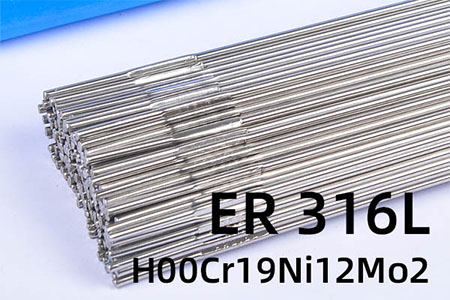 Ultra-Pure 316L Stainless Steel TIG Welding Wire ER316LConsider this ER316L TIG welding wire for precision, low-spatter welds in chemical, food, medical, and marine fabrication.View Product →
The same drawing and cleaning platform also produces stainless steel TIG welding wire in 304, 308L, 309, 316 and 316L grades, where filler surface cleanliness has a direct effect on weld porosity and on the number of reworked joints in a fabrication shop.
Buyers should test a supplier's process control, not its brochure. A handful of documents separate a genuinely modern line from a well-marketed one, and all of them can be requested before a purchase order is issued.
Ask for the pass schedule, the anneal atmosphere record and the inline inspection log for the coils you are quoting. A supplier that cannot produce all three is selling wire it does not fully control.
The difference between grades is often smaller than the difference between two suppliers of the same grade. The manufacturing differences behind stainless steel wire grades are worth reading before a specification is locked.
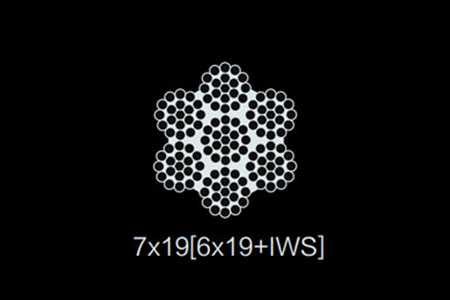 7x19 Stainless Steel Wire Rope 304/316 with Independent Wire StrandView this flexible 304/316 stainless steel wire rope for marine, lifting, and load-securing uses where consistent diameter supports predictable breaking loads.View Product →
Downstream, the same discipline shows up in stranded products. 7x19 and 6x19 IWRC stainless steel wire rope in 304 and 316 depends on consistent wire diameter and tensile to deliver a predictable breaking load, which is why rope quality is really a wire quality question.
JiangSu Kailong Stainless Steel Products Co., Ltd., a wire manufacturer based in the Dainan stainless cluster in Jiangsu Province, China, keeps drawing, annealing, surface treatment and packaging inside one plant. That shortens the feedback loop between a drawing problem on the floor and the melt that caused it, which is the practical advantage of vertical integration rather than a slogan.
Buyers who need coil-level records before committing to a production order can request them through the factory's contact page.
Tandem multi-die drawing combined with inline eddy-current inspection. Running 6 to 12 dies in one wet pass while every metre is inspected cuts scrap from roughly 2.6 percent on bench drawing to below 1 percent on a controlled line.
Yes. Holding plus or minus 0.01 mm instead of plus or minus 0.03 mm typically adds 4 to 8 percent to the price per kilogram, because it requires slower finishing passes, more frequent die changes and closer annealing control. Where diameter drives spring rate or fit, the scrap saving at the customer's plant usually exceeds that premium.
Request coil-level records: the drawing pass schedule, the annealing atmosphere and dew point log, the inline inspection report, and tensile and elongation values measured after the final anneal on that specific coil. A supplier running closed-loop control can supply all four.
No. Batch bell furnaces remain cost-effective for heavy sections and low volumes. Continuous bright annealing wins for fine wire, where surface cleanliness, uniform ductility and the absence of a pickling step matter more than furnace utilisation.
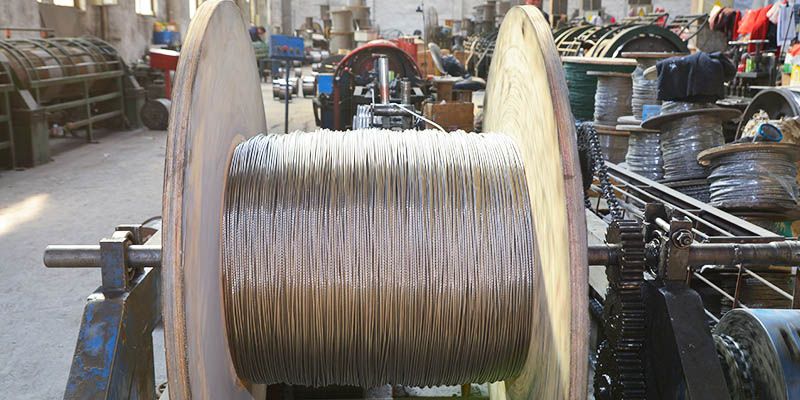
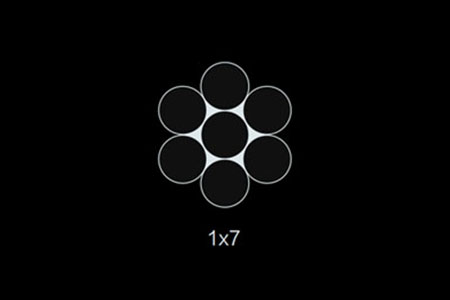
1×7 Stainless Steel Wire Rope Product Introduction Overview: The 1×7 stainless steel wire rope is a high-quality, durable, and versatile wire rope constructed from a single strand of seven individual ...
See Details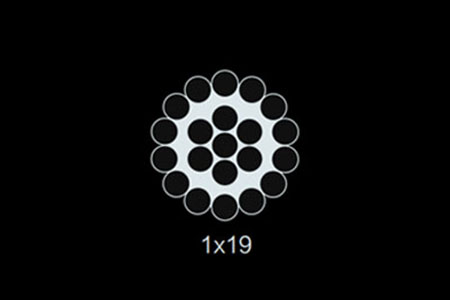
1×19 Stainless Steel Wire Rope Product Introduction Overview: The 1×19 stainless steel wire rope is a robust and high-strength wire rope made from a single strand of 19 individual wires twisted togeth...
See Details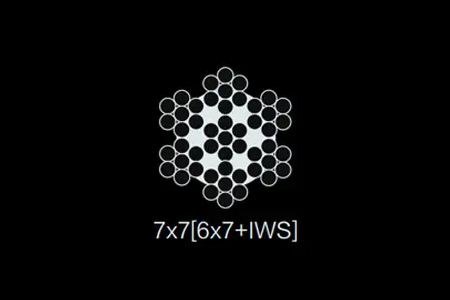
7×7 Stainless Steel Wire Rope Product Introduction Overview: The 7×7 stainless steel wire rope is a versatile, durable, and flexible wire rope made from seven strands, each containing seven individual...
See Details
7X19 [6x19+IWS] Stainless Steel Wire Rope Product Introduction Overview: The 7X19 [6x19+IWS] stainless steel wire rope is a high-performance wire rope designed for applications that require maximum st...
See Details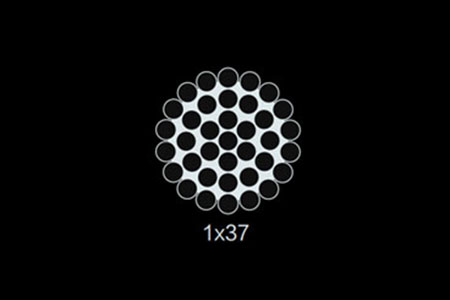
1×37 Stainless Steel Wire Rope Product Introduction Overview: The 1×37 stainless steel wire rope is a high-strength, durable wire rope made from a single strand of 37 individual wires twisted together...
See Details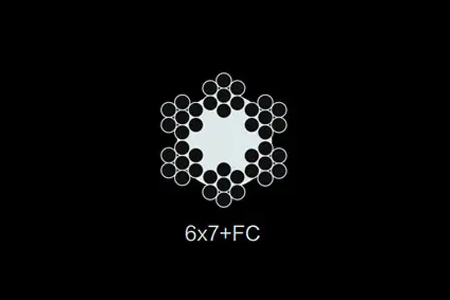
6×7+FC Stainless Steel Wire Rope Product Introduction Overview: The 6×7+FC stainless steel wire rope is a high-quality wire rope designed for applications requiring both strength and flexibility. This...
See Details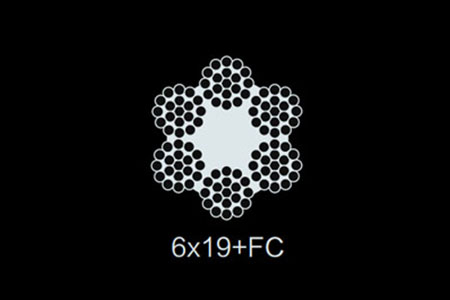
6×19+FC Stainless Steel Wire Rope Product Introduction Overview: The 6×19+FC stainless steel wire rope is a high-performance, versatile rope designed to provide exceptional strength, flexibility, and ...
See Details
19×7 Stainless Steel Wire Rope Product Introduction Overview: The 19×7 stainless steel wire rope is a high-performance wire rope designed for a wide range of applications requiring both strength and f...
See Details




 wechat scan