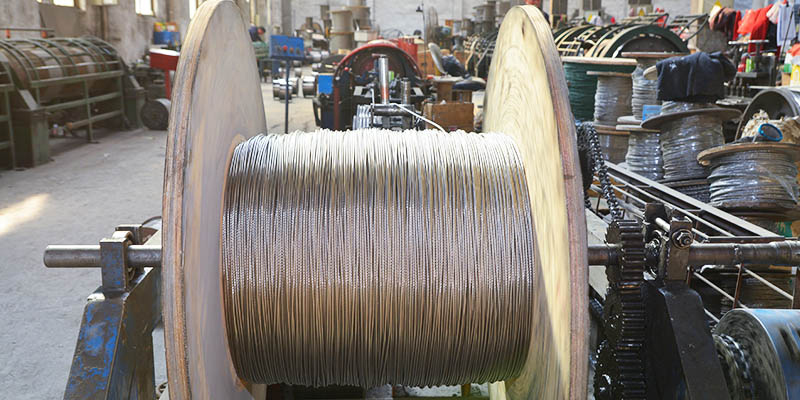
1×7 Stainless Steel Wire Rope Product Introduction Overview: The 1×7 stainless steel wire rope is a high-quality, durable, and versatile wire rope constructed from a single strand of seven individual ...
See Details

The stainless steel wire market has moved from a commodity conversation to a specification-driven one. Procurement teams buying stainless steel wire in 2026 weigh grade chemistry, mechanical test data, supply chain exposure, and supplier certifications before sending a single request for quotation. The latest industry tracking data puts the global stainless steel wire and wire rod market at around USD 7.1 billion in 2025, with forecasts reaching USD 12.1 billion by 2033 — a compound annual growth rate near 7.0 percent, led by Asia-Pacific demand.
The stainless steel wire and wire rod market is expanding at a compound annual growth rate of roughly 7.0 percent, and the growth is broad-based rather than dependent on one end-use sector. Separate analyses scope the market differently: the stainless steel wire segment alone was valued at USD 4.2 billion in 2024, while the wider wire and wire rod category is tracked at USD 7.1 billion in 2025.
Construction and energy infrastructure are the two largest demand engines for stainless steel wire, but the fastest-rising applications are architectural mesh and marine-grade wire rope — both of which demand tighter mechanical tolerances than general-purpose wire.
Within the broader steel wire market — projected to reach USD 124.7 billion by 2025 — stainless steel is the fastest-growing material segment, expanding at roughly 6.7 percent annually. The practical effect is that capacity for stainless wire drawing and wire rope construction is being added faster in Asia than in any other region.
304 remains the default grade across most stainless steel wire applications, but 316 and 316L are steadily gaining share wherever chloride exposure, marine conditions, or welded assemblies are involved.
| Grade | Key chemistry | Best-fit wire applications | Cost relative to 304 |
| 304 | 18% Cr, 8% Ni | General wire rope, fasteners, interior mesh | Baseline |
| 316 | 16% Cr, 10% Ni, 2–3% Mo | Marine rigging, coastal architecture, chemical plant | Roughly 15–25% higher |
| 316L | Low-carbon variant of 316 | TIG welding wire, welded structures | Similar to 316 |
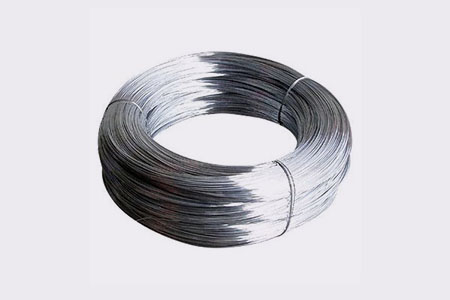 High-Strength Stainless Steel Wire with Multiple SpecificationsThis wire is suitable for buyers evaluating chloride-resistant stainless steel options, especially when 304, 316, or 316L grades are needed for marine or welded assemblies. It offers corrosion resistance and tensile strength, but buyers should still request chemical and mechanical test certificates.View Product →
Buyers now routinely request a chemical composition certificate, tensile and torsion test values, and a defined surface finish — bright, matt, or black oxide — before approving a new wire source. A "high strength" claim without test data is not a specification.
China has shifted from a low-cost export base to a qualified source for specification-grade stainless steel wire, but that shift is not uniform across suppliers — which is exactly why verification matters. JiangSu Kailong Stainless Steel Products Co., Ltd., based in the Dainan town stainless steel cluster of Jiangsu province, represents this new profile: a factory that runs wire drawing, wire rope construction, rigging hardware, TIG filler wire, and fasteners under one ISO 9001:2015 certified management system.
The company describes itself as a driver of import substitution, producing high-requirement stainless wire products that match the performance of imported premium grades. Because the quoted grade name alone does not reveal wire drawing quality, annealing consistency, or surface integrity, buyers should compare the manufacturing route differences between suppliers before qualifying a new source.
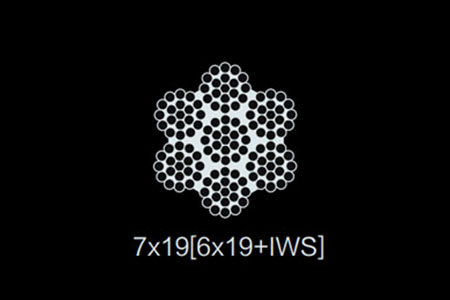 7X19 Stainless Steel Wire Rope in 304 or 316This wire rope combines seven strands with an independent wire strand core, giving a balance of strength and flexibility. It suits heavy-duty marine, construction, or industrial use where abrasion and corrosion resistance are important. Reviewing the supplier’s manufacturing scope helps confirm quality.View Product →
The fastest way to eliminate supply risk is to verify three things before ordering: traceable grade chemistry, mechanical test data, and the supplier's actual production scope.
For welding applications, pair the filler wire grade with the base metal grade; low-carbon 316L filler is the standard companion for 316 base metal in highly corrosive service. Buyers who combine these verification steps with a factory-backed supplier get consistent tensile values, traceable chemistry, and fewer shipment rejections.
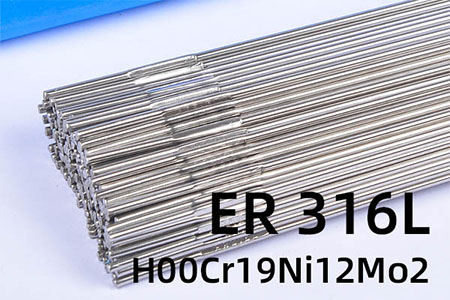 Ultra-Pure 316L TIG Welding Wire H00Cr19Ni12Mo2This TIG filler wire is made with low-carbon 316L chemistry, making it a standard match for welding 316 base metal in corrosive service. It is intended for chemical, food, medical, and marine applications where stable welds with minimal spatter are desired.View Product →
Analyses vary by scope. The stainless steel wire and wire rod market was estimated at roughly USD 7.1 billion in 2025 and is projected to reach USD 12.1 billion by 2033, implying a CAGR near 7.0 percent. The stainless steel wire segment alone was valued at USD 4.2 billion in 2024.
Specify 316 or 316L for saltwater and chloride-rich environments. The molybdenum addition provides localized corrosion resistance that 304 cannot match. Use 316L where welding will be performed to avoid carbide precipitation in the heat-affected zone.
Request the ISO 9001:2015 certificate, a batch material test certificate with full chemistry, and mechanical test data. Confirm whether the supplier operates an actual factory covering wire drawing, rope construction, and surface treatment, and audit the plant before committing to volume.
China's position comes from vertical integration: domestic stainless rod supply, drawing capacity, in-house finishing, and export-oriented logistics. That integration supports a shift in which locally produced wire now matches imported mechanical and surface specifications at a lower landed cost.
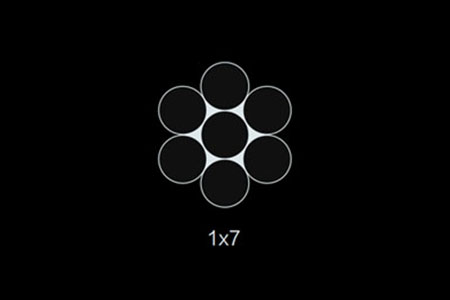
1×7 Stainless Steel Wire Rope Product Introduction Overview: The 1×7 stainless steel wire rope is a high-quality, durable, and versatile wire rope constructed from a single strand of seven individual ...
See Details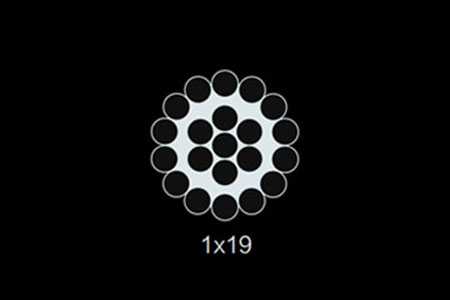
1×19 Stainless Steel Wire Rope Product Introduction Overview: The 1×19 stainless steel wire rope is a robust and high-strength wire rope made from a single strand of 19 individual wires twisted togeth...
See Details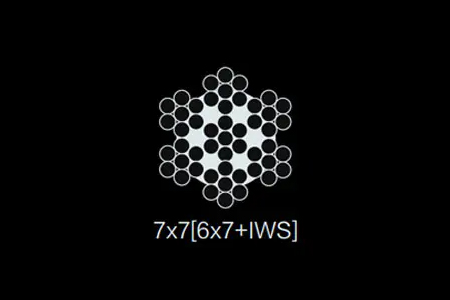
7×7 Stainless Steel Wire Rope Product Introduction Overview: The 7×7 stainless steel wire rope is a versatile, durable, and flexible wire rope made from seven strands, each containing seven individual...
See Details![7X19 [6x19+IWS] Stainless Steel Wire Rope 304/316](/steelwirerope-china/2024/12/20/4.jpg)
7X19 [6x19+IWS] Stainless Steel Wire Rope Product Introduction Overview: The 7X19 [6x19+IWS] stainless steel wire rope is a high-performance wire rope designed for applications that require maximum st...
See Details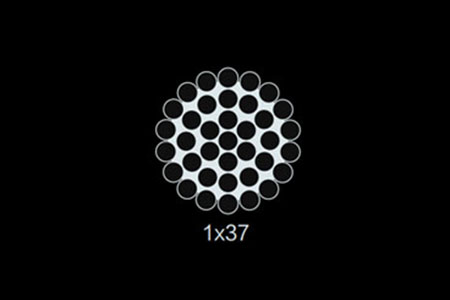
1×37 Stainless Steel Wire Rope Product Introduction Overview: The 1×37 stainless steel wire rope is a high-strength, durable wire rope made from a single strand of 37 individual wires twisted together...
See Details
6×7+FC Stainless Steel Wire Rope Product Introduction Overview: The 6×7+FC stainless steel wire rope is a high-quality wire rope designed for applications requiring both strength and flexibility. This...
See Details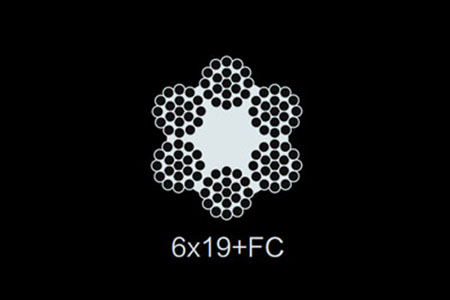
6×19+FC Stainless Steel Wire Rope Product Introduction Overview: The 6×19+FC stainless steel wire rope is a high-performance, versatile rope designed to provide exceptional strength, flexibility, and ...
See Details
19×7 Stainless Steel Wire Rope Product Introduction Overview: The 19×7 stainless steel wire rope is a high-performance wire rope designed for a wide range of applications requiring both strength and f...
See Details




 wechat scan