1×7 Stainless Steel Wire Rope Product Introduction Overview: The 1×7 stainless steel wire rope is a high-quality, durable, and versatile wire rope constructed from a single strand of seven individual ...
See Details

A coastal infrastructure contractor rejected three stainless steel wire bids in March 2026 because none of the suppliers could provide a mill certificate tracing the material to a specific heat number. The two shortlisted bids specified 316L low-carbon grade, not the 304 baseline that dominated the previous decade. That sequence - grade, certificate, supplier behavior - is what the latest trends in stainless steel wire actually look like in procurement.
Jiangsu Kailong Stainless Steel Products Co., Ltd. produces high-strength stainless steel wire, wire rope, rigging hardware, and TIG welding wire from a single factory in DaiNan, Jiangsu Province, one of China's established stainless steel production bases. Observing orders from inside a wire factory makes the changes concrete: 316L adoption, steel-core rope constructions, surface finish requirements, and factory-direct sourcing are the four trends that moved the most between 2021 and 2026.
The most consequential trend in stainless steel wire grades is the shift from 304 toward 316L for any application exposed to chloride, humidity, or repeated welding.
304 still works in dry indoor environments, but pitting failures in coastal splash zones have pushed marine, food-processing, and pharmaceutical specifications toward 316L. The "L" stands for a maximum carbon content of 0.03%, which prevents chromium carbide precipitation at grain boundaries during welding. A welded 316L assembly keeps its corrosion resistance across the heat-affected zone; 304 does not always do the same. For wire rope, fasteners, and stainless steel wire that will be cut and terminated on site, this difference decides the service life.
Traceability is the second part of the trend. Buyers now request mill certificates with heat numbers, chemical composition, and mechanical test values as mandatory bid documents. Positive material identification (PMI) spot checks are increasingly written into acceptance criteria. A wire drum without a traceable heat number is treated as unverified material even if the surface looks correct.
| Grade | Max carbon | Tensile range (typical) | Corrosion behaviour | Typical wire use |
| 304 | 0.08% | 515-700 MPa | Good in dry indoor air; pitting in chloride splash | General rigging, furniture components |
| 316 | 0.08% | 515-690 MPa | Better; resists most maritime atmospheres | Coastal hardware, cable assemblies |
| 316L | 0.03% | 485-620 MPa | Best of the three; weld-friendly | Marine wire rope, welded assemblies |
| Duplex 2205 | 0.03% | 620-900 MPa | Superior pitting and stress-corrosion resistance | Offshore lifting, high-load systems |
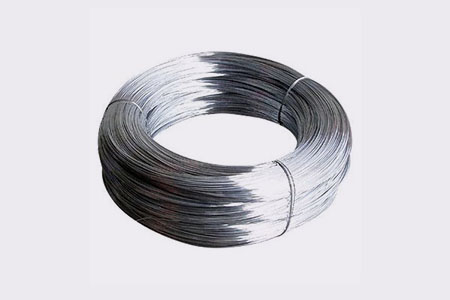 Versatile Multi-Specification Stainless Steel Wire for Industrial UseThis stainless steel wire suits marine, construction, and electrical applications thanks to its corrosion and oxidation resistance. Its traceability and mill certification matter for buyers verifying material heat numbers during procurement.View Product →
The defining construction trend in stainless steel wire rope is the shift from fibre-core to independent wire strand (IWS) cores, because a steel core holds its shape under repeated bending where a fibre core does not.
Wire rope construction controls how the rope flexes, spools, and carries load. A 6x19 FC rope uses a fibre core; a 7x19 IWS rope replaces it with an independent steel strand core. That change raises the metallic cross-section, increases breaking load for the same diameter, and stops the core from collapsing under crushing loads on drums and sheaves. In cycling applications, IWS constructions typically produce longer fatigue life than fibre-core equivalents.
Construction choice follows duty. 1x19 is still specified for straight static tension such as guard lines. 7x7 is a balanced choice for railing and light rigging. 7x19 IWS suits running rope, winch lines, and control cables. 19x7 rotation-resistant rope serves single-drum lifts where spin needs to be controlled. The trend is not a single magic construction; it is a more deliberate match of core type and strand count to the actual duty cycle.
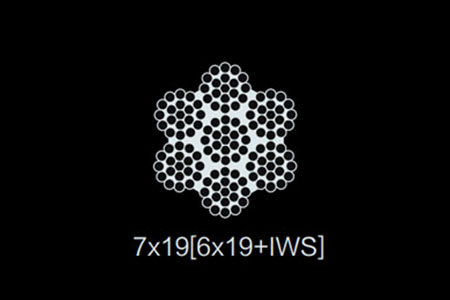 7X19 IWS Stainless Steel Wire Rope in 304 or 316This 7x19 independent wire strand rope balances flexibility and strength for dynamic rigging, winch lines, and control cables. Available in 304 or 316 stainless steel, it offers abrasion and corrosion resistance suited to demanding environments.View Product →
Surface finish is now specified as a separate line item because it determines corrosion performance, cleanliness, and how a wire behaves during installation.
Bright annealed wire is produced in a protective atmosphere, giving a clean reflective surface that suits food, beverage, and pharmaceutical equipment. Pickled and passivated wire has the chromium-depleted layer from drawing and heat treatment chemically removed, restoring the passive oxide film that makes stainless steel corrosion resistant. For marine rigging, a passivated surface measurably delayed the onset of rust bloom compared with as-drawn wire in humid storage.
Black-coated stainless steel wire rope, such as the 7x7 black construction, appears where reduced glare, visual marking, or a non-reflective finish matters: architectural mesh, camera support lines, and decorative barriers. Coated carbon steel wire is a lower-cost substitute, but once the coating is scratched, the base metal corrodes. Stainless steel wire does not rely on a sacrificial coating; its corrosion resistance is in the material itself.
Buyers increasingly source stainless steel wire directly from manufacturers that control drawing, surface treatment, and packing in one facility, because that structure shortens lead times and keeps certification in a single chain of custody.
Factory-direct sourcing collapses the distance between the production line and the purchase order. One supplier provides the material certificate, the product certificate, and the packing list, which eliminates the documentation gaps that appear when a wire coil passes through a trader. The manufacturer's quality system - ISO 9001:2015 certification and high-technology enterprise status in our case - is auditable at the source.
Import substitution is another structural trend. Chinese wire producers now cover high-requirement stainless steel wire lines that were historically imported, and the shift changes procurement timelines and pricing. A buyer who contacts the factory directly can compare lead times, request samples, and audit the production line before committing to a container.
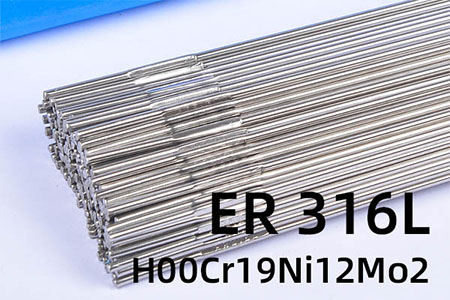 Ultra-Pure 316L TIG Welding Wire H00Cr19Ni12Mo2This TIG welding wire with 316L grade and low carbon content resists sensitization during welding, making it suitable for marine splash zones and chemical exposure. It ensures stable welds with minimal spatter for critical assemblies.View Product →
For marine splash zones, chemical exposure, or welded assemblies, specify 316L. Its 0.03% maximum carbon content and molybdenum addition protect the heat-affected zone from sensitization during welding. For dry indoor use, 304 remains sufficient and costs less. Match the grade to the environment rather than selecting the highest number.
IWS stands for independent wire strand core. The rope's core is a steel strand instead of fibre, which resists crushing and keeps the rope round under repeated bending. The practical result is a higher breaking load for the same diameter and a longer fatigue life in running-line service.
Request a mill certificate per heat number, check the chemical composition and tensile values against your specification, review the ISO 9001:2015 scope, and run positive material identification spot checks on arrival. A factory-direct manufacturer provides this evidence without gaps in the chain of custody.
Factory-direct sourcing shortens the chain of custody for certificates, reduces lead times, and simplifies quality audits. When one manufacturer controls raw material, drawing, surface treatment, and packing, batch-to-batch variation drops and problems are solved at the source.
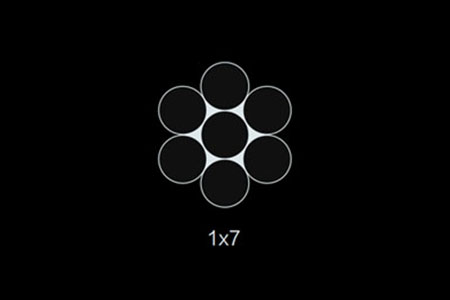
1×7 Stainless Steel Wire Rope Product Introduction Overview: The 1×7 stainless steel wire rope is a high-quality, durable, and versatile wire rope constructed from a single strand of seven individual ...
See Details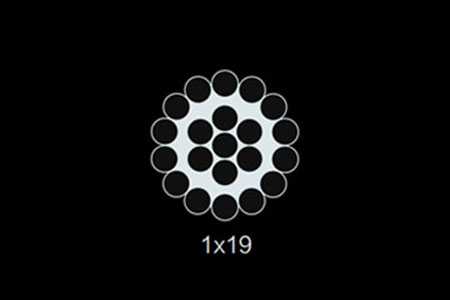
1×19 Stainless Steel Wire Rope Product Introduction Overview: The 1×19 stainless steel wire rope is a robust and high-strength wire rope made from a single strand of 19 individual wires twisted togeth...
See Details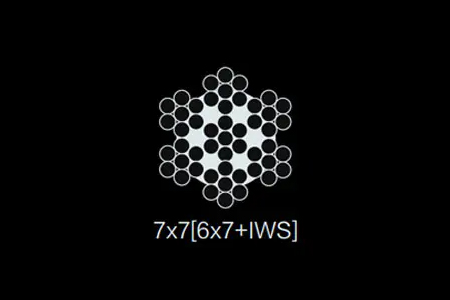
7×7 Stainless Steel Wire Rope Product Introduction Overview: The 7×7 stainless steel wire rope is a versatile, durable, and flexible wire rope made from seven strands, each containing seven individual...
See Details![7X19 [6x19+IWS] Stainless Steel Wire Rope 304/316](/steelwirerope-china/2024/12/20/4.jpg)
7X19 [6x19+IWS] Stainless Steel Wire Rope Product Introduction Overview: The 7X19 [6x19+IWS] stainless steel wire rope is a high-performance wire rope designed for applications that require maximum st...
See Details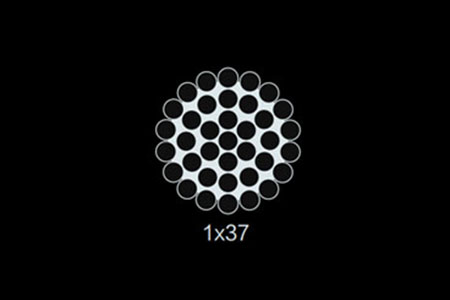
1×37 Stainless Steel Wire Rope Product Introduction Overview: The 1×37 stainless steel wire rope is a high-strength, durable wire rope made from a single strand of 37 individual wires twisted together...
See Details
6×7+FC Stainless Steel Wire Rope Product Introduction Overview: The 6×7+FC stainless steel wire rope is a high-quality wire rope designed for applications requiring both strength and flexibility. This...
See Details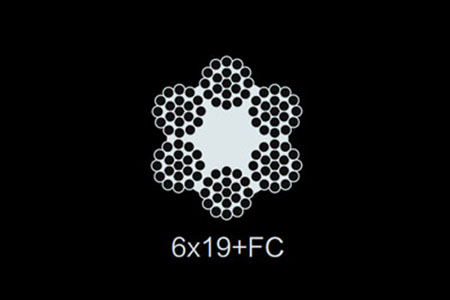
6×19+FC Stainless Steel Wire Rope Product Introduction Overview: The 6×19+FC stainless steel wire rope is a high-performance, versatile rope designed to provide exceptional strength, flexibility, and ...
See Details
19×7 Stainless Steel Wire Rope Product Introduction Overview: The 19×7 stainless steel wire rope is a high-performance wire rope designed for a wide range of applications requiring both strength and f...
See Details



 wechat scan