1×7 Stainless Steel Wire Rope Product Introduction Overview: The 1×7 stainless steel wire rope is a high-quality, durable, and versatile wire rope constructed from a single strand of seven individual ...
See Details

If you need a stainless steel that can deliver a tensile strength exceeding 170 ksi while maintaining corrosion resistance close to 304, the answer is 17-4PH in the H900 condition. This precipitation-hardened grade is the go-to choice for aerospace shafts, chemical processing valves, and food equipment components. Understanding its exact mechanical behavior, heat treatment sequence, and the matching fasteners or filler materials available from experienced manufacturers will save your project from costly specification mismatches.
17-4PH is a martensitic precipitation-hardening stainless steel containing approximately 17% chromium, 4% nickel, and 4% copper. The “H900” designation refers to a specific age-hardening heat treatment: the material is solution treated at about 1040°C, air cooled, then aged at 900°F (482°C) for one hour and air cooled again. This process precipitates copper-rich particles within the martensitic matrix, boosting strength to levels typical of many alloy steels while keeping the alloy fully stainless.
The H900 condition yields the highest strength among standard 17-4PH tempers. It is widely used when high hardness and wear resistance are critical, yet toughness is still a design consideration. The material can operate continuously up to 400°C and intermittently up to 600°C.
The performance of 17-4PH H900 is defined by a combination of high tensile strength, yield strength, and hardness. The following table summarizes typical values from industry data sheets:
| Metric | Value | Unit |
|---|---|---|
| Tensile Strength, Ultimate | ≥ 1310 | MPa |
| Tensile Strength, Yield (0.2% offset) | ≥ 1170 | MPa |
| Elongation at Break | ≥ 10 | % |
| Reduction of Area | ≥ 35 | % |
| Hardness (Rockwell C) | 38 – 445 | HRC |
| Charpy Impact (V-notch, longitudinal) | ≥ 20 | J |
Corrosion resistance is generally similar to that of 304 stainless steel in most environments, though pitting resistance may be slightly lower due to the copper addition. 17-4PH H900 also exhibits good fatigue strength and can be polished to a high finish. Weldability is acceptable when using the same filler metal (e.g., AWS ER630) or a compatible nickel-base alloy; a post-weld aging treatment restores full strength in the heat-affected zone.
Because of its high strength-to-weight ratio and corrosion resistance, 17-4PH H900 appears in components where failure would be costly: gas turbine blades, chemical pump shafts, nuclear reactor internals, and marine fasteners. In the food and beverage industry, the material is used for valve stems and spray nozzles that must withstand both acidic washdowns and mechanical wear. The table below lists typical uses across sectors:
| Industry | Component Examples |
|---|---|
| Aerospace | Brackets, landing gear parts, actuator shafts |
| Chemical & Petrochemical | Valve bodies, impellers, fittings |
| Food Processing | Blades, nozzles, mixing paddles |
| Oil & Gas | Downhole tools, wellhead components |
| Nuclear | Core support structures, fasteners |
When your design calls for 17-4PH, you need companion components—bolts, nuts, and welding consumables—that can match the service conditions. A producer that controls material sourcing and has experience with high‑strength stainless makes the supply chain simpler.
Many engineers start with austenitic grades like 304 or 316, but for applications requiring yield strength above 700 MPa while staying stainless, 17-4PH H900 is often the only practical choice. The table below highlights the differences:
| Property | 17-4PH H900 | 304 (Annealed) | 316 (Annealed) |
|---|---|---|---|
| UTS (MPa) | 1310 | 515 | 515 |
| Yield Strength (MPa) | 1170 | 205 | 205 |
| Corrosion Resistance | Good (similar to 304) | Good | Excellent (Mo addition) |
| Maximum Service Temperature | 400°C (continuous) | 870°C (intermittent) | 870°C (intermittent) |
| Magnetic | Yes (martensitic) | No (austenitic) | No (austenitic) |
For lower‑stress environments, 304 or 316 are more economical. But when you need the mechanical performance of a hardened steel without sacrificing corrosion resistance, 17-4PH H900 justifies the additional cost. Reference our comparison of 304 vs. 316 for industrial fasteners to see how austenitic grades fit different operating windows.
Even if your core component is machined from 17-4PH bar or plate, you still need fasteners, washers, and sometimes welding wire that are compatible with the same grade. Not all stainless steel suppliers carry the full range of 17-4PH products. A manufacturer with integrated production—from wire drawing to finished bolt—can deliver consistent quality. For example, our factory supplies stainless steel bolts, nuts, and TIG welding wires in multiple grades, and we understand the exact heat‑treatment requirements for high‑strength service.
When welding 17-4PH to itself or to other stainless steels, filler metal with matching composition (AWSA5.9 ER630) or a nickel‑base alternative (e.g., AWS A5.14 ERNiCr‑3) is typically used. Our 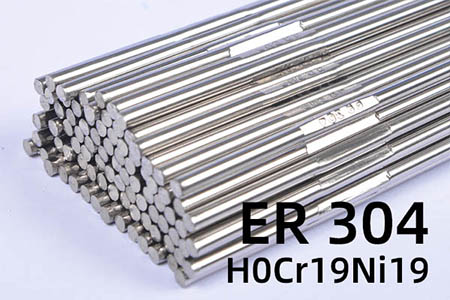 Precision Stainless Steel 304 TIG Welding Wire for 17-4PH ConnectionsThis 304 TIG wire is commonly used to join 17-4PH to 304/316 components where weld strength does not require precipitation hardening. It provides excellent corrosion resistance and a smooth bead.View Product → range includes 304, 308, 309, 316, and 316L grades; while these are not identical to 17-4PH, they are commonly selected for joining 17-4PH to 304/316 components where the weld does not require precipitation‑hardened strength. Verify the specific procedure with your welding engineer.
For bolted joints, the fasteners themselves should match or exceed the strength of the parent metal. Our 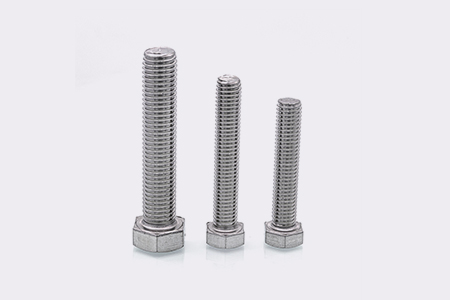 Stainless Steel DIN933 Full Thread Hexagon Bolt for High-Strength JointsThis hex bolt is available in high-strength conditions suitable for bolted 17-4PH assemblies. Custom heat treatment can be discussed to ensure the fastener matches or exceeds parent metal strength.View Product → are available in high‑strength conditions, and we can discuss custom heat‑treatment options for demanding 17-4PH assemblies. Likewise,
 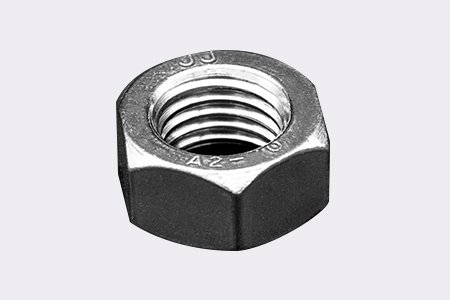 Stainless Steel DIN934 Hexagon Nut for Reliable Thread EngagementThis hex nut pairs with matching bolts to provide secure fastening. Its strength class (e.g., 8 or 10) should be confirmed to meet design loads, ensuring reliable joint performance.View Product → provide reliable thread engagement. Always confirm that the nut strength class (e.g., 8 or 10) meets your design loads.
If your project involves multiple stainless steel grades, working with one supplier who controls raw material, processing, and finishing reduces the risk of mixing different compositions. We maintain separate production lines for 304/316 and high‑strength alloys, and our ISO 9001:2015‑certified quality system includes chemical composition verification.
To decide whether 17-4PH H900 is needed, evaluate three factors: required yield strength, service temperature, and corrosion environment. If the required stress is below 600 MPa and temperatures stay under 300°C, 316 may be sufficient. Above that, or when cyclic fatigue is a concern, 17-4PH H900 is worth the investment. For extreme wear or high‑temperature oxidation, consider checking our contact page to discuss custom solutions.
Remember that the heat‑treatment condition (H900 vs. H1025 vs. H1150) dramatically changes mechanical properties. Always specify both the base grade and the temper in your procurement documentation. We recommend reading our article on precision thread machining to understand how tolerances affect assembly efficiency in high‑strength assemblies.
17-4PH H900 is a high‑performance precipitation‑hardening stainless steel that bridges the gap between standard austenitic grades and tool steels. Its combination of strength, corrosion resistance, and moderate toughness makes it indispensable in demanding industrial sectors. When you source mating components like bolts, nuts, and welding wire from a manufacturer experienced in stainless steel processing, you ensure that the entire assembly meets its intended service life. Evaluate your load, temperature, and environment criteria, then match the material temper and supply chain accordingly.
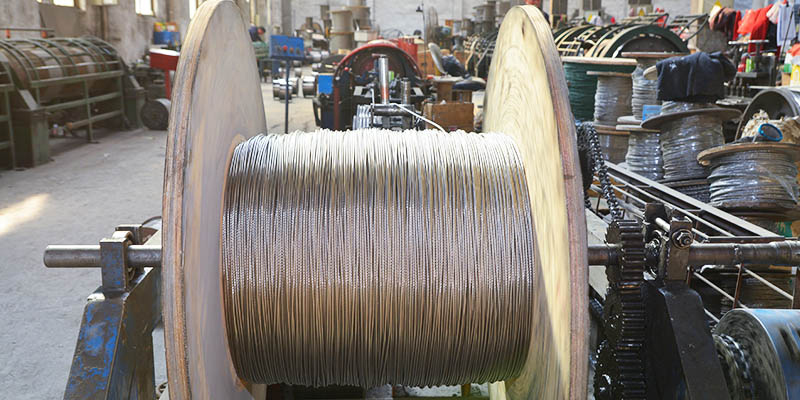
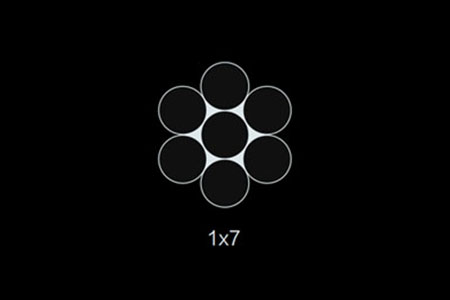
1×7 Stainless Steel Wire Rope Product Introduction Overview: The 1×7 stainless steel wire rope is a high-quality, durable, and versatile wire rope constructed from a single strand of seven individual ...
See Details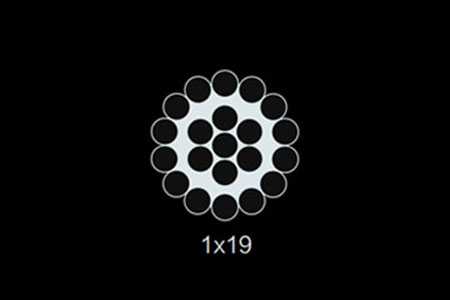
1×19 Stainless Steel Wire Rope Product Introduction Overview: The 1×19 stainless steel wire rope is a robust and high-strength wire rope made from a single strand of 19 individual wires twisted togeth...
See Details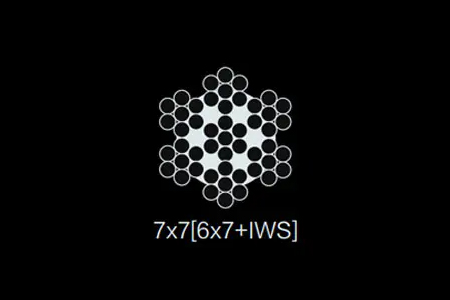
7×7 Stainless Steel Wire Rope Product Introduction Overview: The 7×7 stainless steel wire rope is a versatile, durable, and flexible wire rope made from seven strands, each containing seven individual...
See Details![7X19 [6x19+IWS] Stainless Steel Wire Rope 304/316](/steelwirerope-china/2024/12/20/4.jpg)
7X19 [6x19+IWS] Stainless Steel Wire Rope Product Introduction Overview: The 7X19 [6x19+IWS] stainless steel wire rope is a high-performance wire rope designed for applications that require maximum st...
See Details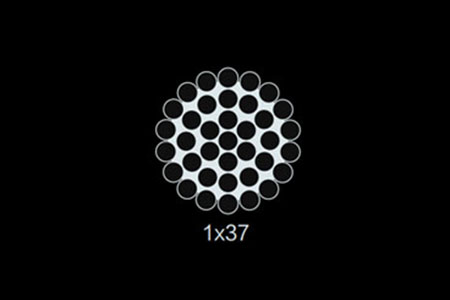
1×37 Stainless Steel Wire Rope Product Introduction Overview: The 1×37 stainless steel wire rope is a high-strength, durable wire rope made from a single strand of 37 individual wires twisted together...
See Details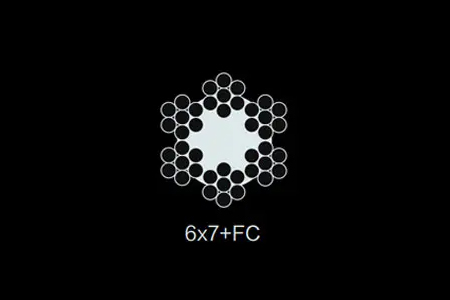
6×7+FC Stainless Steel Wire Rope Product Introduction Overview: The 6×7+FC stainless steel wire rope is a high-quality wire rope designed for applications requiring both strength and flexibility. This...
See Details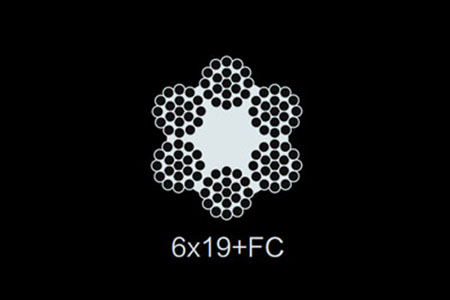
6×19+FC Stainless Steel Wire Rope Product Introduction Overview: The 6×19+FC stainless steel wire rope is a high-performance, versatile rope designed to provide exceptional strength, flexibility, and ...
See Details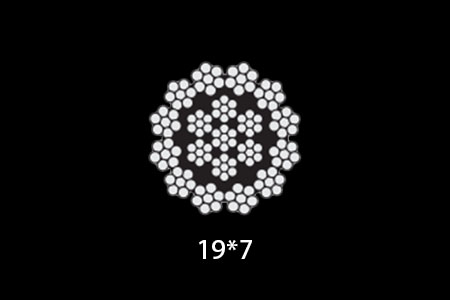
19×7 Stainless Steel Wire Rope Product Introduction Overview: The 19×7 stainless steel wire rope is a high-performance wire rope designed for a wide range of applications requiring both strength and f...
See Details



 wechat scan