1×7 Stainless Steel Wire Rope Product Introduction Overview: The 1×7 stainless steel wire rope is a high-quality, durable, and versatile wire rope constructed from a single strand of seven individual ...
See Details

Rigging hardware is the critical link that ensures the safety, efficiency, and success of any lifting operation. Without properly selected, inspected, and maintained hardware, even the most powerful lifting equipment becomes a severe hazard. Understanding the specific functions, load capacities, and limitations of each component is not merely a technical requirement; it is the foundational principle of workplace safety. Every piece of hardware, from the smallest shackle to the most complex swivel, plays an irreplaceable role in distributing force, securing loads, and protecting human life. Neglecting the quality or condition of these components inevitably leads to catastrophic failures, project delays, and severe injuries.
The fundamental purpose of rigging hardware is to create a secure and reliable connection between the load and the lifting apparatus. This connection must withstand not only the static weight of the load but also the dynamic forces introduced by movement, wind, and sudden stops. Because these forces can multiply rapidly, the hardware must possess a high strength-to-weight ratio and excellent fatigue resistance. Selecting the right hardware requires a comprehensive understanding of the applied forces, the environmental conditions, and the specific geometry of the load being lifted. It is a discipline where guesswork is entirely unacceptable, and adherence to engineering principles is paramount.
Rigging hardware encompasses a broad spectrum of components, each engineered to fulfill a specific mechanical purpose within a lifting system. By categorizing these components, rigging professionals can systematically build a secure lifting plan that addresses every potential point of failure. The primary categories include connecting links, tensioning devices, and load-bearing supports. Understanding the distinctions within these categories is the first step toward building a safe rigging assembly.
Connecting hardware serves as the joints of the rigging system, joining slings, chains, and the load itself. The most common connecting components include shackles, hooks, and eye bolts. Shackles are the workhorses of rigging, providing a robust method to connect different elements. The two primary types are anchor shackles, which feature a rounded body to accommodate multiple slings, and chain shackles, which are designed for straight-line, in-line pulls. Hooks provide a quick method for attaching to a load, often equipped with safety latches to prevent accidental detachment. Eye bolts are used to create a permanent or semi-permanent attachment point on the load, though their capacity drastically decreases when pulled at an angle.
Turnbuckles are the primary hardware used for adjusting the tension or length of cables, ropes, and rods. They feature a body with left-hand and right-hand internal threads, allowing for precise adjustments without twisting the attached rigging. In complex lifts, turnbuckles are essential for leveling the load and ensuring that the weight is distributed evenly across all lifting points. Uneven tension can lead to overloaded slings and unpredictable load behavior, making these devices crucial for maintaining balance and structural integrity during the lift.
Swivels are specialized hardware designed to rotate freely under load, preventing the transfer of torque from the load or the wire rope to the lifting device. This rotation prevents the wire rope from kinking or unlaying, which severely compromises its structural integrity. Wire rope clips and thimbles are also essential accessories. Thimbles protect the eye of the wire rope from crushing and abrasion, while wire rope clips secure the loose end of the rope back to the standing part to form a load-bearing loop. Proper installation of these accessories is critical, as even a minor error in orientation can reduce the assembly's capacity by a significant margin.
The Working Load Limit (WLL) is the single most important specification associated with any piece of rigging hardware. The WLL represents the maximum load that should ever be applied to a component during standard use. Exceeding this limit pushes the hardware beyond its design parameters, causing microscopic structural deformations that can lead to sudden, brittle failure. It is crucial to understand that the WLL is not the breaking strength; it is a carefully calculated fraction of the breaking strength, incorporating a safety factor that accounts for dynamic forces, shock loads, and material fatigue.
The safety factor, often referred to as the design factor, is the ratio of the minimum breaking strength to the working load limit. For standard rigging hardware, the safety factor is typically a significant multiplier, ensuring a wide margin of safety. This margin is necessary because lifting operations rarely involve purely static loads. The sudden jerking of a crane, the acceleration of a hoist, or the wind pushing against a large surface area introduces dynamic forces that can momentarily spike the load well beyond the static weight. The safety factor ensures that these inevitable force spikes do not result in catastrophic failure.
One of the most critical, yet frequently overlooked, aspects of rigging is the effect of angles on the WLL of the hardware. Rigging components are typically rated based on a straight, vertical pull. However, as the angle between the load and the sling decreases—forming a wider V-shape—the tension on the hardware increases exponentially. For example, when two slings are used at an angle, the force exerted on each sling and its associated hardware is much greater than half the total weight. Failing to account for this angular tension can easily result in the hardware being overloaded, even if the total weight of the load is below the combined WLL of the hardware. Rigging professionals must always calculate the vector forces and choose hardware with a WLL that accommodates the actual tension induced by the specific rigging geometry.
| Sling Angle (Degrees from Horizontal) | Load Factor | Effective Capacity Retention |
|---|---|---|
| 90 (Vertical) | 1.00 | 100% |
| 60 | 1.15 | 87% |
| 45 | 1.41 | 71% |
| 30 | 2.00 | 50% |
The performance of rigging hardware is inextricably linked to the materials from which it is forged. The vast majority of high-capacity rigging hardware is manufactured from alloy steel or carbon steel, chosen for their exceptional tensile strength and durability. However, the base metal is only part of the equation. The manufacturing processes—including drop forging, heat treatment, and quenching—dictate the grain structure and ultimate toughness of the component. Drop forging aligns the grain flow of the metal with the shape of the hardware, resulting in superior impact resistance compared to cast alternatives.
While steel offers unparalleled strength, it is highly susceptible to oxidation, particularly in outdoor, marine, or chemically active environments. To combat this, rigging hardware undergoes various surface treatments. Hot-dip galvanization is a common method where the steel component is submerged in molten zinc, forming a thick, sacrificial barrier that protects the underlying steel from rusting. For more extreme environments, such as offshore marine operations or chemical processing plants, stainless steel hardware is utilized. Stainless steel contains significant amounts of chromium, which forms a passive, self-healing oxide layer on the surface, providing excellent corrosion resistance without the need for additional coatings.
Temperature drastically affects the mechanical properties of rigging hardware. At extremely low temperatures, standard carbon steel becomes brittle, losing its ability to deform under stress, which can lead to sudden, catastrophic fracture upon impact. Conversely, high temperatures can anneal the steel, reducing its tensile strength and causing it to stretch or yield under normal working loads. When operating in environments with extreme temperatures, specialized alloys must be selected to maintain structural integrity. For cryogenic applications, specific grades of alloy steel are required to prevent brittle fracture. For high-temperature applications, such as near foundries or kilns, hardware must be manufactured from heat-resistant alloys, and the Working Load Limit must be significantly derated based on the specific ambient temperature.
Rigging hardware does not last forever. The harsh realities of heavy lifting—including shock loads, abrasion, and environmental exposure—cause cumulative damage over time. To prevent this damage from culminating in failure, rigorous inspection protocols must be established and followed. There are three primary types of inspections: initial, frequent, and periodic. The initial inspection occurs when hardware is first received to ensure it meets specifications and has not been damaged during shipping. Frequent inspections are performed by the user before every shift, focusing on obvious signs of damage. Periodic inspections are thorough, documented examinations conducted by a qualified professional to assess the long-term condition of the hardware.
During inspections, several critical indicators can reveal that hardware must be immediately removed from service. Identifying these flaws requires a trained eye and a thorough understanding of how stress manifests on metal components.
Effective lifecycle management relies heavily on meticulous record keeping. Each critical piece of rigging hardware should be tracked using identification numbers and maintenance logs. These logs record the date of purchase, inspection history, maximum loads lifted, and any repairs or re-certifications. This documentation provides a vital baseline for assessing the rate of degradation and predicting when a component should be proactively replaced, rather than waiting for an inspector to identify a critical flaw. Without proper documentation, it is impossible to verify the pedigree and history of the hardware, rendering it a liability rather than an asset.
Selecting the right rigging hardware is a multidimensional decision that goes beyond simply matching the Working Load Limit to the weight of the load. It requires a holistic evaluation of the entire lifting operation, including the rigging geometry, the nature of the load, and the environmental conditions. A systematic approach to selection and deployment is the hallmark of professional rigging.
Rigging hardware does not operate in isolation; it must function harmoniously with slings and specialized lifters. The compatibility between these components is crucial. For instance, using a thick wire rope sling on a hook with a narrow throat can cause the sling to pinch and fray, while the point loading on the hook tip can bend the hook out of alignment. Similarly, connecting a large shackle to a small eye bolt will result in uneven bearing and potential bending of the bolt. Rigging professionals must ensure that the physical dimensions of the hardware match the connection points of the slings and the load, allowing for smooth, even distribution of force across all bearing surfaces.
Even the most robust, well-maintained rigging hardware is rendered dangerous in the hands of an untrained operator. The human element remains the most variable and unpredictable factor in any lifting operation. Comprehensive safety training is essential to ensure that personnel understand the principles of rigging, the limitations of the hardware, and the proper response to emergencies. Training must cover the identification of hardware types, the interpretation of load charts, the recognition of structural defects, and the correct procedures for rigging asymmetrical loads.
On a bustling construction site or a noisy industrial facility, verbal communication is often impossible. Therefore, standardized hand signals and radio protocols are critical components of rigging safety. The rigger on the ground directing the crane operator must use universally recognized hand signals to communicate movements precisely. Any ambiguity in communication can lead to shock loading, snagging, or collisions, all of which place extreme stress on the rigging hardware. Establishing a clear chain of command and an immediate stop signal protocol ensures that operations can be halted instantly if a hazard is detected.
Complacency during routine or repetitive lifts is a leading cause of rigging failures. When operators perform the same lift repeatedly, they often stop thinking critically about the forces involved and begin to skip inspection steps or ignore slight changes in the load or environment. This psychological drift can result in using damaged hardware, misjudging the load weight, or failing to notice a shifting center of gravity. Cultivating a safety culture that demands unwavering adherence to protocols—regardless of how mundane the lift may seem—is vital for preventing accidents caused by human oversight.
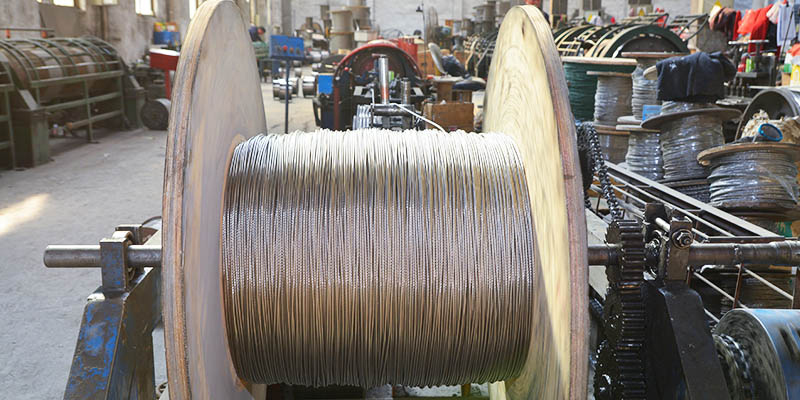

1×7 Stainless Steel Wire Rope Product Introduction Overview: The 1×7 stainless steel wire rope is a high-quality, durable, and versatile wire rope constructed from a single strand of seven individual ...
See Details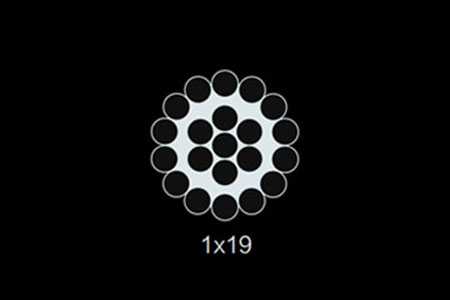
1×19 Stainless Steel Wire Rope Product Introduction Overview: The 1×19 stainless steel wire rope is a robust and high-strength wire rope made from a single strand of 19 individual wires twisted togeth...
See Details
7×7 Stainless Steel Wire Rope Product Introduction Overview: The 7×7 stainless steel wire rope is a versatile, durable, and flexible wire rope made from seven strands, each containing seven individual...
See Details![7X19 [6x19+IWS] Stainless Steel Wire Rope 304/316](/steelwirerope-china/2024/12/20/4.jpg)
7X19 [6x19+IWS] Stainless Steel Wire Rope Product Introduction Overview: The 7X19 [6x19+IWS] stainless steel wire rope is a high-performance wire rope designed for applications that require maximum st...
See Details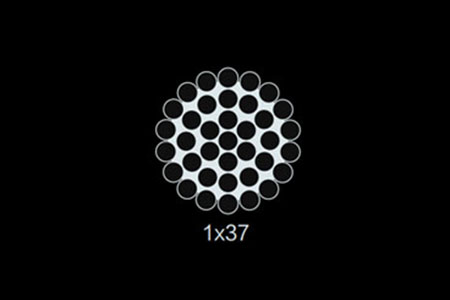
1×37 Stainless Steel Wire Rope Product Introduction Overview: The 1×37 stainless steel wire rope is a high-strength, durable wire rope made from a single strand of 37 individual wires twisted together...
See Details
6×7+FC Stainless Steel Wire Rope Product Introduction Overview: The 6×7+FC stainless steel wire rope is a high-quality wire rope designed for applications requiring both strength and flexibility. This...
See Details
6×19+FC Stainless Steel Wire Rope Product Introduction Overview: The 6×19+FC stainless steel wire rope is a high-performance, versatile rope designed to provide exceptional strength, flexibility, and ...
See Details
19×7 Stainless Steel Wire Rope Product Introduction Overview: The 19×7 stainless steel wire rope is a high-performance wire rope designed for a wide range of applications requiring both strength and f...
See Details




 wechat scan