1×7 Stainless Steel Wire Rope Product Introduction Overview: The 1×7 stainless steel wire rope is a high-quality, durable, and versatile wire rope constructed from a single strand of seven individual ...
See Details

A qualified rigging hardware manufacturer is an enterprise that integrates independent research and development, precision forging, standardized processing, strict quality inspection and customized services, which can provide safe, reliable and industry-adapted rigging products for lifting, construction, marine, transportation and other fields. High-quality manufacturers always take product safety and material performance as the core, and their qualified rate of finished products is stably above 99% after complete quality control. Such manufacturers are not only suppliers of hardware accessories, but also important partners to ensure the safety of industrial operation and engineering construction.
All formal rigging hardware manufacturers must follow international and industry-specific standards in the whole production chain, from raw material selection to finished product delivery. They have complete production equipment, professional technical teams and perfect testing systems, and can meet the conventional needs of standard parts and the personalized needs of special working conditions. This is the essential difference between professional manufacturers and small processing workshops, and also the key to ensuring that users can use products with confidence.
Rigging hardware manufacturers cover a wealth of product lines, which are divided into different categories according to application scenarios and structural forms, covering almost all hardware accessories required for rigging systems. These products are made of high-strength alloy steel, carbon steel, stainless steel and other materials, with strong wear resistance, tensile resistance and corrosion resistance.
This is the most widely used product line of rigging hardware manufacturers, mainly used in crane lifting, mechanical hoisting and material handling. The products bear large tensile force and are the core components to ensure the stability of the lifting process.
Marine rigging hardware has extremely high requirements for corrosion resistance, and professional manufacturers use stainless steel or hot-dip galvanized materials to adapt to salt spray and humid marine environments. These products are widely used in ship mooring, port loading and unloading, offshore engineering and yacht fixing.
For construction engineering and cargo transportation, manufacturers produce high-strength connecting pieces, tensioners and fixing accessories, which are used for building structure fixing, cargo binding and engineering traction, with strong pressure resistance and impact resistance.
The production of rigging hardware is a precise and standardized industrial process. Professional manufacturers have a complete closed-loop production process, and every link is controlled to ensure that the final products meet the safety standards. The whole process is divided into six key steps, and each step is indispensable.
Manufacturers give priority to high-quality carbon steel and alloy steel produced by regular steel mills, and conduct chemical composition and mechanical property testing on incoming materials. Only raw materials that fully meet the standard tensile strength and yield strength can enter the production line, which fundamentally eliminates potential safety hazards caused by unqualified materials.
Forging is the core link of rigging hardware production. Manufacturers use high-power forging equipment to heat and stamp the raw materials, so that the metal structure is denser and the product strength is greatly improved. Most high-strength rigging products adopt die forging process, which ensures the consistency of product shape and size.
After forging, the blanks are processed by CNC machine tools for cutting, drilling, tapping and precision grinding. This step ensures the dimensional accuracy of the product, making the assembly and connection between different rigging accessories more precise. The polished surface can reduce wear and improve the service life of the product.
Heat treatment is the key to improve the mechanical properties of rigging hardware. Through quenching and tempering processes, the hardness, toughness and tensile strength of the product are balanced. After standard heat treatment, the tensile strength of rigging products can be increased by more than 30% compared with untreated products, adapting to heavy-load working conditions.
According to different application scenarios, manufacturers adopt electro-galvanizing, hot-dip galvanizing, electrophoretic coating, polishing and other surface treatment processes. Among them, hot-dip galvanizing has the best anti-corrosion effect, which can form a thick protective layer on the product surface and effectively extend the service life in outdoor and humid environments.
The processed parts are assembled and inspected one by one, and the qualified products are packaged with shockproof and moisture-proof materials to avoid damage during transportation. Large-scale manufacturers will also mark the product specifications, load-bearing parameters and production batch numbers for user identification and traceability.
Safety is the primary indicator of rigging hardware, so professional manufacturers have established a full-process quality control system, covering raw materials, production, finished products and delivery. The quality control system runs through every link, and unqualified products are strictly prohibited from flowing into the market.
All raw materials and auxiliary materials must be accompanied by material certificates, and manufacturers conduct random inspection or full inspection. The inspection items include material composition, hardness, size and appearance, and unqualified batches are directly returned to ensure the stability of the initial materials.
Special quality inspectors conduct real-time monitoring during forging, machining and heat treatment. Dimensional inspection, appearance inspection and hardness test are carried out for semi-finished products. Problems found in the production process are adjusted in time to avoid batch quality defects.
Finished rigging products need to pass a number of strict performance tests, the most critical of which is the tensile test. The test load is usually 1.5 times the rated working load to verify that the product will not break or deform under extreme conditions. In addition, surface coating adhesion test, salt spray corrosion test and fatigue test are also essential items.
Before delivery, inspectors conduct a final comprehensive inspection of the products, including size, surface, marking and performance. Manufacturers establish a complete production traceability system, recording the raw material batch, production date, processing equipment and inspection results of each product, which is convenient for problem tracing and after-sales treatment.
Rigging hardware is a basic industrial accessory, which is widely used in many industries, and different industries have different performance requirements for products. Professional rigging hardware manufacturers can adjust materials, processes and surface treatments according to industry characteristics to meet targeted needs.
| Application Industry | Core Product Requirements | Common Product Types |
|---|---|---|
| Construction Engineering | High strength, impact resistance | Shackles, turnbuckles, hooks |
| Marine & Offshore | Salt spray corrosion resistance | Stainless steel shackles, mooring accessories |
| Lifting & Hoisting | High tensile stability | Wire rope clips, safety hooks |
| Logistics & Transportation | Wear resistance, firm fixing | Binding tensioners, connectors |
In special industries such as petrochemical and mining, rigging hardware also needs to have explosion-proof, high-temperature resistance and other special properties. Manufacturers will use special alloy materials and customized processes to meet these extreme working condition requirements, which reflects the professional capability of rigging hardware manufacturers.
In addition to producing standard rigging hardware products, professional manufacturers have strong customized service capabilities, which can develop and produce non-standard accessories according to customer drawings, parameters and actual working conditions. Customized services are one of the important signs to measure the comprehensive strength of manufacturers.
For special equipment and engineering projects, standard products cannot meet the use needs. Manufacturers can customize the size, load-bearing capacity, connection mode and material of products according to customer-provided drawings or demand descriptions. From design to prototype, testing and mass production, the whole process is completed independently by the manufacturer's technical team.
Customers can choose carbon steel, alloy steel, 304 stainless steel, 316 stainless steel and other materials according to the use environment. At the same time, they can customize surface treatment processes such as hot-dip galvanizing, electro-galvanizing, powder coating and polishing to adapt to different corrosion resistance and appearance requirements.
Manufacturers can adjust the rated load, working temperature range and other parameters of products according to customer needs, and customize permanent markings such as product models, load values and logos on the product surface to facilitate customer management and use.
Formal rigging hardware manufacturers must obtain relevant industry certifications and strictly produce in accordance with international and national standards, which is the basic guarantee of product safety and quality. Certified products can be used in global engineering and industrial projects with universal recognition.
Common international standards include US Federal Specifications, European EN standards, and ISO international standards. Domestic manufacturers also need to comply with national rigging hardware standards and safety specifications. In addition, authoritative certifications such as CE certification are essential for products exported to European and American markets.
The certification process requires manufacturers to provide complete production processes, quality control records and product test reports, and pass on-site audits by certification bodies. Manufacturers with complete certifications have more standardized management and more reliable product quality, which is the preferred partner for enterprise procurement.
For enterprises that need to purchase rigging hardware, selecting a reliable manufacturer is crucial. It is recommended to comprehensively evaluate from the following dimensions to avoid cooperation with unqualified small workshops and ensure the safety and stability of products.
Through multi-dimensional evaluation, enterprises can find long-term and stable cooperative rigging hardware manufacturers, reduce procurement risks, and ensure that the rigging products used meet safety requirements and adapt to their own working conditions.
With the development of industrial intelligence and engineering modernization, the rigging hardware manufacturing industry is moving towards high precision, intelligence, green and specialization. Professional manufacturers are constantly upgrading and transforming to adapt to market changes.
Intelligent production has become a major trend. More and more manufacturers introduce CNC machining centers, automated forging lines and intelligent inspection equipment, which improves production efficiency and product dimensional accuracy, and reduces manual errors. The application of intelligent equipment can increase production efficiency by more than 40% and reduce the defect rate to below 0.5%.
Green environmental protection is also an important development direction. Manufacturers use environmentally friendly surface treatment processes, recycle production waste, and reduce energy consumption, complying with global environmental protection policies. In terms of products, high-strength and lightweight rigging hardware has become a research and development focus, reducing the self-weight of products while improving load-bearing capacity.
In the future, rigging hardware manufacturers will pay more attention to product safety performance and personalized services, and deepen cooperation with downstream industries to provide more targeted and reliable rigging solutions for global industrial and engineering fields.
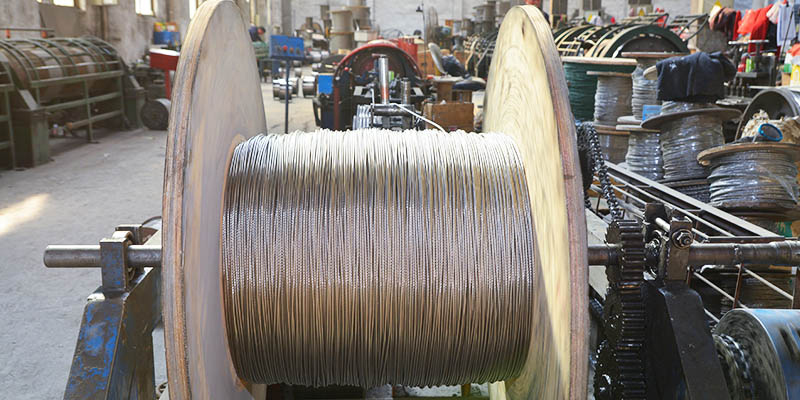
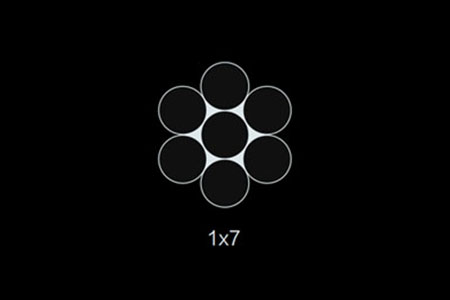
1×7 Stainless Steel Wire Rope Product Introduction Overview: The 1×7 stainless steel wire rope is a high-quality, durable, and versatile wire rope constructed from a single strand of seven individual ...
See Details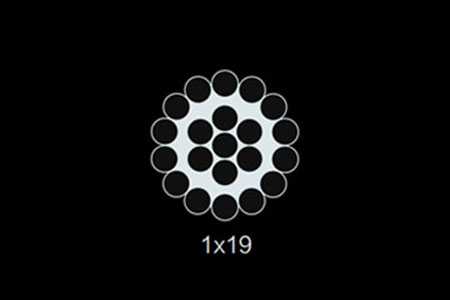
1×19 Stainless Steel Wire Rope Product Introduction Overview: The 1×19 stainless steel wire rope is a robust and high-strength wire rope made from a single strand of 19 individual wires twisted togeth...
See Details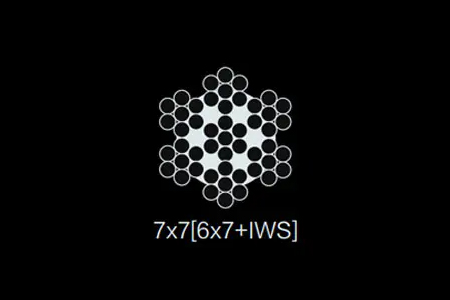
7×7 Stainless Steel Wire Rope Product Introduction Overview: The 7×7 stainless steel wire rope is a versatile, durable, and flexible wire rope made from seven strands, each containing seven individual...
See Details![7X19 [6x19+IWS] Stainless Steel Wire Rope 304/316](/steelwirerope-china/2024/12/20/4.jpg)
7X19 [6x19+IWS] Stainless Steel Wire Rope Product Introduction Overview: The 7X19 [6x19+IWS] stainless steel wire rope is a high-performance wire rope designed for applications that require maximum st...
See Details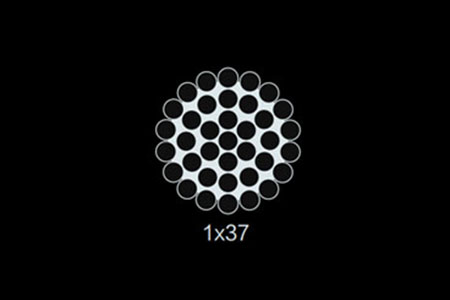
1×37 Stainless Steel Wire Rope Product Introduction Overview: The 1×37 stainless steel wire rope is a high-strength, durable wire rope made from a single strand of 37 individual wires twisted together...
See Details
6×7+FC Stainless Steel Wire Rope Product Introduction Overview: The 6×7+FC stainless steel wire rope is a high-quality wire rope designed for applications requiring both strength and flexibility. This...
See Details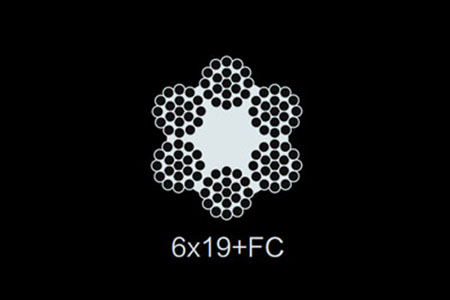
6×19+FC Stainless Steel Wire Rope Product Introduction Overview: The 6×19+FC stainless steel wire rope is a high-performance, versatile rope designed to provide exceptional strength, flexibility, and ...
See Details
19×7 Stainless Steel Wire Rope Product Introduction Overview: The 19×7 stainless steel wire rope is a high-performance wire rope designed for a wide range of applications requiring both strength and f...
See Details




 wechat scan