1×7 Stainless Steel Wire Rope Product Introduction Overview: The 1×7 stainless steel wire rope is a high-quality, durable, and versatile wire rope constructed from a single strand of seven individual ...
See Details

Marine hardware is the foundational component system that supports the normal operation, structural safety, and long-term durability of all types of water vessels, from small recreational boats to large commercial ships. Without high-quality marine hardware, even the most advanced vessels cannot maintain stability and reliability in harsh marine environments, including saltwater corrosion, strong wind and wave impacts, and long-term mechanical stress.
This equipment covers all functional modules of a vessel, including mooring, anchoring, rigging, deck operations, and structural connections. Its performance directly determines the safety of crew, passengers, and cargo, as well as the service life of the entire vessel. More than 60% of vessel mechanical failures are related to the quality and installation of marine hardware, making it a non-negligible core field in ship design, construction, and maintenance.
The core value of marine hardware lies in its ability to adapt to extreme marine conditions: saltwater corrosion resistance, high load-bearing capacity, weather resistance, and long-term maintenance-free performance. Unlike ordinary industrial hardware, marine-grade products must pass strict material testing and performance verification to ensure they can work stably for years without failure. Choosing the right marine hardware and using it correctly is one of the most cost-effective ways to improve vessel safety and reduce maintenance costs.
Marine hardware is a comprehensive system composed of multiple categories, each with clear functional positioning and application scenarios. Classifying and understanding these components helps users select matching products according to actual needs and ensure proper installation and maintenance.
Mooring hardware is responsible for fixing the vessel at the dock or designated waters, preventing drifting caused by wind, waves, and currents. This category is the most frequently used and most stressed part of marine hardware, requiring extremely high strength and durability.
Anchoring hardware enables vessels to stay stationary in open water, a critical safety system for emergency stopping and temporary berthing. The performance of this hardware directly affects the vessel's ability to resist wind and waves in offshore environments.
This type of hardware is mainly used for sailboats and yachts, controlling sail angle, mast stability, and sailing direction. It requires precise coordination and flexible adjustment to adapt to changing wind conditions during navigation.
Deck hardware covers daily operation and safety protection facilities, improving work efficiency and ensuring the personal safety of crew members. These components are designed with ergonomics and anti-slip, anti-fall properties as core indicators.
This is the invisible basic component of vessels, used to connect hull plates, decks, cabins, and various equipment. These fasteners account for more than 30% of the total number of marine hardware, and their quality determines the overall structural strength of the vessel.
The marine environment is one of the harshest application scenarios for metal and plastic components, so marine hardware must use professional materials and manufacturing processes to meet strict performance standards. Ordinary industrial materials cannot adapt to saltwater, humidity, and ultraviolet radiation, and will fail rapidly in a short time.
All marine hardware must meet several core performance requirements to ensure long-term stable use. These indicators are the basis for distinguishing marine-grade hardware from ordinary hardware.
Material selection directly determines the service life and performance of marine hardware. Manufacturers usually select materials according to the application location, stress conditions, and budget of the components.
| Material Type | Corrosion Resistance | Strength Performance | Main Application Scenarios |
|---|---|---|---|
| Marine Grade Stainless Steel | High | High | Deck fittings, fasteners, rigging |
| Silicon Bronze | Extremely High | Medium-High | Underwater components, propeller shafts |
| Hot-Dip Galvanized Steel | Medium | High | Anchor chains, large mooring fittings |
| Marine Grade Aluminum Alloy | Medium-High | Lightweight High Strength | Deck handrails, lightweight fittings |
| Synthetic Polymers | Extremely High | Medium | Non-metal fittings, insulation components |
Marine grade 316 stainless steel is the most widely used material, balancing corrosion resistance, strength, and cost, making it suitable for most above-water applications. Silicon bronze has better corrosion resistance in saltwater but higher cost, mainly used for key underwater components. Hot-dip galvanized steel provides high strength at a lower cost, suitable for large structural hardware that does not require high appearance requirements.
Formal marine hardware must pass international certification to ensure compliance with safety and performance standards. Major certification systems include marine industry standards and classification society certifications, which are essential for vessel registration and commercial operation.
These standards strictly regulate material composition, mechanical properties, corrosion resistance testing, and manufacturing processes. Products without certification cannot be installed on commercial vessels and most large yachts, as they cannot guarantee safety in extreme marine environments.
Different types and sizes of vessels have completely different requirements for marine hardware, and the correct selection is the premise of ensuring safety and service life. Selection should comprehensively consider vessel tonnage, navigation area, usage frequency, and maintenance conditions, rather than just focusing on price.
Small vessels mainly sail in coastal and inland waters, with moderate environmental conditions and limited load-bearing requirements. The selection focuses on corrosion resistance, lightweight, and easy installation, while taking into account the appearance design.
Recommended materials: 316 stainless steel, marine-grade aluminum alloy, high-performance synthetic materials. Core components include small cleats, compact anchors, handrails, and plastic deck fittings. Priority should be given to rust-proof and maintenance-free products to reduce the maintenance burden of private owners.
These vessels often sail in open waters and face more complex wind and wave conditions, requiring higher strength and safety performance. Hardware selection must balance performance, durability, and luxury appearance.
Key components need to use high-grade materials such as silicon bronze and high-strength stainless steel, with precision processing and polishing surface treatment. All hardware must have high load-bearing capacity to adapt to the inertia and impact of large vessels. The safety factor of mooring and anchoring hardware should be increased by more than 50% compared with small vessels to cope with sudden storm impacts.
Fishing vessels have high-frequency operation and heavy-load working conditions, and hardware needs super wear resistance, impact resistance, and easy repair. Appearance is secondary, and practicality and durability are the top priorities.
Hot-dip galvanized steel and thick stainless steel are preferred materials, with simple structure and high strength design. Core hardware includes large-capacity winches, heavy-duty mooring cleats, reinforced deck hinges, and wear-resistant rigging components. These components need to withstand long-term continuous work and frequent friction with fishing nets and equipment.
Large vessels operate globally, facing extreme marine environments such as ocean storms and polar waters, and marine hardware must meet the highest international standards. All core hardware must pass classification society certification, with ultra-high safety redundancy and long service life.
Materials are mainly high-strength alloy steel, special stainless steel, and copper alloys, with strict anti-corrosion treatment and regular testing requirements. Components include oversized bollards, heavy anchor systems, reinforced structural fasteners, and professional deck operating equipment. Each component must be able to withstand thousands of tons of static and dynamic loads without failure.
Even the highest-quality marine hardware will fail prematurely if installed incorrectly or maintained improperly. Correct installation and regular maintenance are key to extending service life and ensuring safe use, which can reduce failure rates by more than 70% and double the average service life.
Installation quality directly affects the performance and safety of marine hardware, and must follow professional processes and standards. Improper installation such as loose fastening, incorrect sealing, and material mismatch will lead to rapid damage and even safety accidents.
Marine hardware maintenance is divided into daily, regular, and annual overhauls, forming a complete maintenance system to detect potential problems early and avoid sudden failures during navigation.
Daily maintenance: Rinse with fresh water after each use to remove salt and dirt, especially for moving parts such as hinges and pulleys. Check for obvious looseness or corrosion and deal with it immediately.
Regular maintenance: Conduct comprehensive cleaning and lubrication monthly, apply special marine lubricant to moving components, check fastener torque, and retighten loose parts. Clean surface corrosion and apply protective coating.
Annual overhaul: Conduct full nondestructive testing of key hardware, check for internal cracks and fatigue damage, replace severely worn components, and reapply all anti-corrosion and sealing treatments. Annual professional inspection can effectively avoid catastrophic failures caused by long-term hidden damage.
Different types of marine hardware have different service lives, affected by materials, environments, and usage frequency. Timely replacement of aging hardware is more cost-effective than forced use, which can avoid greater losses caused by failures.
High-quality marine-grade stainless steel hardware can be used for 10-15 years under normal maintenance, galvanized hardware for 5-8 years, and synthetic materials for 8-12 years. Under severe marine conditions, the service life will be shortened by 30%-50%. Replacement must be carried out immediately when obvious deformation, deep corrosion, functional failure, or exceeding the service life occur.
Understanding common failures and solutions of marine hardware helps users quickly deal with emergencies during navigation and reduce safety risks. Most failures are caused by corrosion, fatigue, improper installation, and lack of maintenance, and can be prevented and solved through targeted measures.
Corrosion is the number one enemy of marine hardware, accounting for more than 50% of all failures. Saltwater and air form an electrochemical corrosion environment, which rapidly damages metal surfaces and internal structures.
Mild corrosion: Clean the surface with special rust remover, then polish and apply anti-corrosion coating for protection. Moderate corrosion: Remove all rust layers, repair the surface, and reinforce with anti-corrosion treatment. Severe corrosion: Replace the hardware directly, as structural strength has been irreversibly damaged.
Long-term vibration, wave impact, and repeated stress cause metal fatigue, leading to deformation, cracking, and loosening of hardware. This type of failure is hidden and easy to cause sudden accidents.
Solutions: Regularly check fastener torque, install anti-loosening gaskets and locking devices, avoid overloading use, and replace fatigued components in advance. For key stressed components, regular ultrasonic testing can detect internal cracks invisible to the naked eye.
Failed sealing leads to water penetration, causing internal corrosion of hardware and damage to vessel structures. This is common in through-hull installations, hatch connectors, and deck fittings.
Solutions: Use high-quality marine sealant during installation, replace aging sealing gaskets regularly, check for water stains and moisture after rain and waves, and re-seal leaking parts immediately. Water ingress problems must be solved within 24 hours to avoid large-area corrosion.
Pulleys, hinges, winches, and other moving parts are prone to wear and jamming due to salt, sand, and lack of lubrication, resulting in loss of function.
Solutions: Rinse with fresh water regularly, use waterproof marine lubricant for lubrication, remove foreign matter in moving parts, and replace severely worn shafts and bearings. Do not force operation when jammed to avoid greater damage.
With the development of marine industry and material technology, marine hardware is constantly upgrading and innovating in terms of materials, design, and intelligence. New technologies improve performance, extend service life, reduce maintenance costs, and adapt to the development needs of green and intelligent vessels.
Advanced composite materials and special alloys are gradually replacing traditional metals, bringing comprehensive performance improvements. Carbon fiber composites, titanium alloys, and new polymer materials have ultra-high corrosion resistance and strength-to-weight ratio, reducing component weight by 40%-60% while improving performance.
New surface treatment technologies such as nano-coating and plasma treatment form a permanent protective layer on the hardware surface, completely isolating saltwater and air corrosion, achieving true maintenance-free use. These materials and processes are gradually applied from high-end vessels to ordinary commercial and recreational vessels.
Intelligent marine hardware with sensors and monitoring functions has become a new development direction. Built-in stress sensors, corrosion sensors, and service life monitors collect real-time data and transmit it to the vessel control system, realizing automatic early warning and predictive maintenance.
Integrated design combines multiple functions into one component, reducing installation quantity and improving overall structural stability. For example, integrated mooring cleats with sealing and buffer functions, and intelligent hinges with automatic locking and status feedback. This design simplifies the system, reduces failure points, and improves safety.
Environmentally friendly materials and processes are widely used in marine hardware, complying with international marine environmental protection standards. Non-toxic anti-corrosion coatings, recyclable alloy materials, and pollution-free production processes reduce the impact on the marine ecological environment.
Energy-saving hardware such as lightweight components reduce vessel weight and fuel consumption, and labor-saving mechanical structures reduce manual operation energy consumption. Green marine hardware has become a necessary condition for entering the international market, and relevant environmental protection certifications are increasingly strict.
Global unified standards for marine hardware are becoming more perfect, promoting product interchangeability and universality. International certification systems are more standardized, ensuring product quality and safety performance. Standardized design reduces production costs and facilitates user replacement and maintenance.
In the future, marine hardware will develop in the direction of higher performance, longer life, intelligence, and environmental protection. Technological innovation will continue to break through limitations, providing safer and more reliable support for the development of the global marine industry.
Combining all the above content, we summarize a set of practical guidance to help users quickly master the correct selection and use methods of marine hardware, avoid detours, and ensure safety and economy.
Invest more in key safety hardware such as mooring, anchoring, and structural fasteners, and choose the highest-grade products that can be afforded. For non-critical decorative hardware, you can appropriately reduce costs while ensuring marine-grade quality. Long-term cost calculation shows that high-quality marine hardware has a lower overall cost in the full life cycle, with fewer failures and lower maintenance costs.
Avoid the wrong idea of "just make do with it". The safety loss caused by low-quality hardware far exceeds the cost saved. Correct selection and use of marine hardware is the most worthwhile investment for all vessel owners.
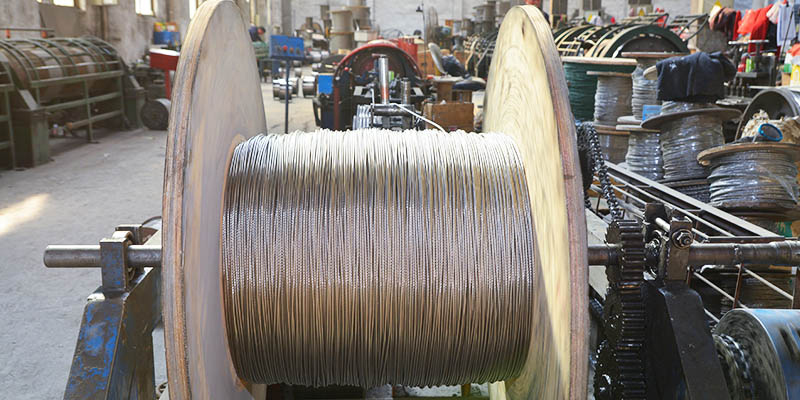
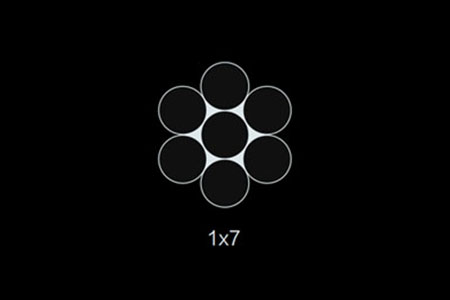
1×7 Stainless Steel Wire Rope Product Introduction Overview: The 1×7 stainless steel wire rope is a high-quality, durable, and versatile wire rope constructed from a single strand of seven individual ...
See Details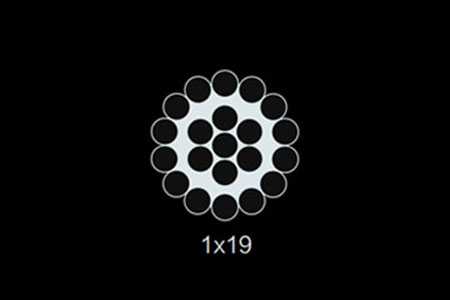
1×19 Stainless Steel Wire Rope Product Introduction Overview: The 1×19 stainless steel wire rope is a robust and high-strength wire rope made from a single strand of 19 individual wires twisted togeth...
See Details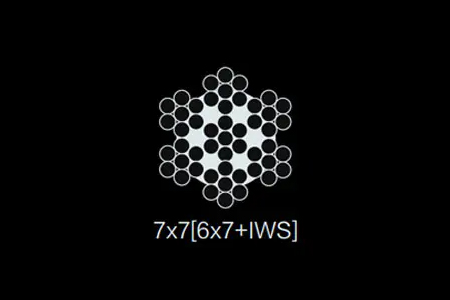
7×7 Stainless Steel Wire Rope Product Introduction Overview: The 7×7 stainless steel wire rope is a versatile, durable, and flexible wire rope made from seven strands, each containing seven individual...
See Details![7X19 [6x19+IWS] Stainless Steel Wire Rope 304/316](/steelwirerope-china/2024/12/20/4.jpg)
7X19 [6x19+IWS] Stainless Steel Wire Rope Product Introduction Overview: The 7X19 [6x19+IWS] stainless steel wire rope is a high-performance wire rope designed for applications that require maximum st...
See Details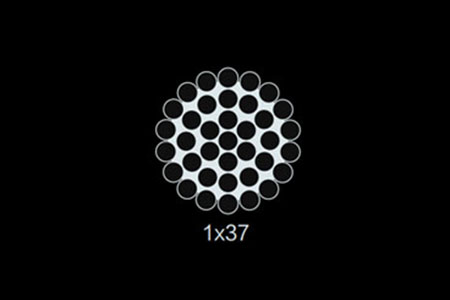
1×37 Stainless Steel Wire Rope Product Introduction Overview: The 1×37 stainless steel wire rope is a high-strength, durable wire rope made from a single strand of 37 individual wires twisted together...
See Details
6×7+FC Stainless Steel Wire Rope Product Introduction Overview: The 6×7+FC stainless steel wire rope is a high-quality wire rope designed for applications requiring both strength and flexibility. This...
See Details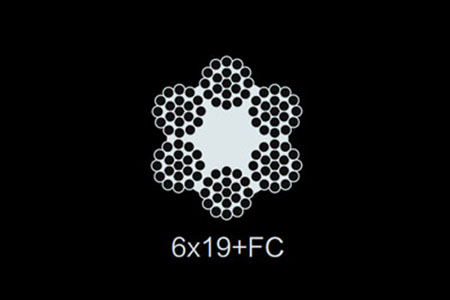
6×19+FC Stainless Steel Wire Rope Product Introduction Overview: The 6×19+FC stainless steel wire rope is a high-performance, versatile rope designed to provide exceptional strength, flexibility, and ...
See Details
19×7 Stainless Steel Wire Rope Product Introduction Overview: The 19×7 stainless steel wire rope is a high-performance wire rope designed for a wide range of applications requiring both strength and f...
See Details




 wechat scan