1×7 Stainless Steel Wire Rope Product Introduction Overview: The 1×7 stainless steel wire rope is a high-quality, durable, and versatile wire rope constructed from a single strand of seven individual ...
See Details

Stainless steel bolts are high-performance fasteners widely used in global industrial and civil fields, with excellent corrosion resistance, high strength, and long service life as their core advantages. They can maintain stable mechanical properties and appearance integrity in harsh environments such as humidity, high temperature, chemical corrosion, and outdoor exposure, far surpassing carbon steel bolts in durability and safety. The most commonly used grades include 304 and 316 stainless steel, which meet the fastening needs of most scenarios, and special-grade stainless steel bolts can adapt to extreme working conditions such as ultra-high temperature and strong acid corrosion. Correct selection, installation, and maintenance can maximize the performance of stainless steel bolts and ensure the safety and stability of connected components.
Stainless steel bolts are made of alloy steel with chromium as the core element, and their unique material properties determine their superior performance in fastening applications. The minimum chromium content of qualified stainless steel is 10.5%, which forms a dense passive film on the surface, effectively blocking the contact between the internal metal and external corrosive media, thus fundamentally solving the rust problem of fasteners.
Corrosion resistance is the most prominent advantage of stainless steel bolts. Unlike carbon steel bolts that rust quickly in humid air, stainless steel bolts can resist corrosion from water, salt spray, weak acid, weak alkali and other substances. 316 stainless steel bolts added with molybdenum element have superior pitting resistance, especially suitable for marine, coastal and chemical environments with chloride ions. In outdoor engineering applications, the service life of stainless steel bolts is more than 10 times that of ordinary carbon steel bolts, reducing the cost of replacement and maintenance.
Stainless steel bolts have reliable mechanical strength, covering a variety of strength levels from low-strength to high-strength. Through cold working and heat treatment processes, the tensile strength and yield strength of stainless steel bolts can be significantly improved, meeting the fastening requirements of heavy machinery, building structures and other fields. Even at high temperatures above 300°C, high-performance stainless steel bolts can maintain stable mechanical properties without deformation or fracture, which is impossible for ordinary fasteners.
The surface of stainless steel bolts is smooth and metallic, without painting or electroplating treatment, maintaining a clean and beautiful appearance for a long time. This feature makes them widely used in furniture, decoration, food processing equipment and medical equipment. In addition, stainless steel materials are non-toxic and pollution-free, will not release harmful substances, and meet the strict hygiene standards of food and medical industries.
Stainless steel bolts have excellent temperature adaptability, can work normally in the temperature range of -200°C to 800°C. In ultra-low temperature environments, they will not become brittle and fracture; in high-temperature environments, they will not lose strength due to oxidation. This characteristic makes them indispensable fasteners in aerospace, cryogenic equipment, industrial furnaces and other special fields.
There are many grades of stainless steel bolts, and the chemical composition and performance of each grade are different. Selecting the appropriate grade is the key to ensuring the normal operation of fasteners. The following is a detailed introduction to the most commonly used stainless steel bolt grades and their selection basis.
| Stainless Steel Grade | Core Performance | Applicable Environment |
|---|---|---|
| 304 | General corrosion resistance, good strength | Indoor, dry outdoor, general industrial |
| 316 | Excellent corrosion resistance, chloride resistance | Marine, coastal, chemical, high humidity |
| 321 | High temperature oxidation resistance | High temperature equipment, boiler, pipeline |
| 410 | High strength, moderate corrosion resistance | Mechanical parts, valves, low corrosion environment |
Stainless steel bolts are divided into multiple types according to head shape, drive type and thread structure, each with unique structural characteristics and application scenarios, meeting the diversified fastening needs of different industries.
Hexagon head bolts are the most widely used type, with a large stress area and convenient installation with wrenches, suitable for all kinds of mechanical equipment and building structures. Pan head bolts have a smooth and round head, beautiful appearance, and are suitable for furniture, electronic equipment, and decorative parts. Flat head bolts can be embedded in the connected parts, keeping the surface flat, and are commonly used in precision instruments and automotive interior parts. Round head bolts are easy to install manually, suitable for small equipment and daily necessities.
Most stainless steel bolts use metric threads, with uniform pitch and good interchangeability. The thread surface of high-quality stainless steel bolts is smooth, without burrs and cracks, ensuring a stable connection and is not easy to loosen. Fully threaded bolts are suitable for thin plate connections, and partially threaded bolts are suitable for thick plate and high-load connections, with higher mechanical strength at the unthreaded part.
Correct installation is the key to giving full play to the performance of stainless steel bolts. Improper installation will lead to bolt fracture, loose connection, and other problems, affecting the safety of the entire structure. Strictly following the installation specifications and torque requirements can effectively avoid these problems.
Before installation, check the surface of stainless steel bolts for damage, rust, and thread defects; clean the installation holes to remove impurities, oil, and burrs to ensure smooth insertion of bolts. For threaded connection parts, apply an appropriate anti-seize agent to prevent thread adhesion caused by friction during installation, especially for 316 stainless steel bolts with high viscosity.
The installation torque of stainless steel bolts is directly related to their service life and connection strength. The torque of small-diameter bolts is controlled at 5-20 N·m, and the torque of large-diameter bolts can reach 50-200 N·m. Using a torque wrench for precise tightening is the best way to ensure that the torque meets the standard. Over-tightening will cause excessive stress on the bolt and lead to fracture; under-tightening will cause the connection to loosen under vibration and load.
For applications in vibration environments, anti-loose measures must be taken for stainless steel bolts, such as using spring washers, flat washers, nylon lock nuts, or applying thread locking glue. These measures can effectively prevent the bolts from loosening due to long-term vibration, ensuring the stability of the connection structure. The combination of stainless steel bolts and stainless steel washers can avoid galvanic corrosion and further improve the service life.
Although stainless steel bolts have excellent corrosion resistance, regular maintenance and protection can extend their service life and maintain optimal performance. Especially in harsh environments, scientific maintenance is essential to avoid performance degradation.
Regularly clean the surface of stainless steel bolts to remove dust, oil, salt, and other corrosive substances. Use clean water or neutral detergent for cleaning; avoid using strong acid or strong alkali cleaning agents, which will damage the surface passive film of stainless steel. After cleaning, dry the bolt surface with a soft cloth to keep it dry and clean.
In coastal and chemical environments, apply a layer of anti-corrosion coating on the surface of stainless steel bolts to enhance corrosion resistance; regularly check the surface of bolts for signs of corrosion, and replace them immediately if pitting or rust is found. Avoid contact between stainless steel bolts and carbon steel parts to prevent galvanic corrosion caused by potential difference.
Establish a regular inspection cycle, check the tightness, surface condition, and mechanical properties of stainless steel bolts. For bolts in high-load and harsh environments, shorten the inspection cycle. Replace bolts with thread wear, surface cracks, and reduced strength in time to avoid potential safety hazards. The service life of well-maintained stainless steel bolts can reach more than 20 years.
Stainless steel bolts are widely used in various industries due to their excellent comprehensive performance, becoming an indispensable fastening component in modern industry and daily life.
In the construction field, stainless steel bolts are used for the connection of curtain walls, steel structures, doors, and windows, with a beautiful appearance and strong outdoor corrosion resistance. In interior decoration, they are used for the installation of furniture, handrails, and shelves, matching the decorative style and ensuring connection safety.
316 stainless steel bolts are the preferred fasteners for ships, offshore platforms, coastal bridges, and port equipment, resisting the corrosion of salt spray and seawater, and ensuring the structural safety of marine engineering. They can maintain stable performance in the marine environment for a long time without rusting or fracturing.
Stainless steel bolts are widely used in food processing machinery, chemical equipment, pharmaceutical machinery, and textile machinery, meeting the requirements of corrosion resistance, hygiene, and high temperature resistance. They ensure the stable operation of equipment and avoid product pollution caused by fastener rust.
In the automotive industry, stainless steel bolts are used for the connection of body parts, engine parts, and chassis parts, with lightweight and high strength, reducing the weight of the whole vehicle while ensuring safety. In rail transit and aerospace, high-performance stainless steel bolts meet the strict requirements of safety and reliability.
Stainless steel bolts are used in household appliances, digital products, sports equipment, and daily necessities, with small size, beautiful appearance, and reliable connection. They are not easy to rust and have a long service life, improving the quality and service life of products.
In the process of use, stainless steel bolts may encounter thread adhesion, fracture, corrosion, and other problems. Understanding the causes and solutions of these problems can quickly solve faults and ensure normal use.
Thread adhesion is the most common problem of stainless steel bolts, mainly caused by excessive friction and high temperature during installation. Solutions: apply anti-seize agent before installation, control the installation torque, avoid rapid tightening, and use lubricants to reduce friction.
A bolt fracture is usually caused by over-tightening, excessive load, or material defects. Solutions: select the appropriate strength grade and diameter, strictly control the installation torque, avoid overload use, and choose high-quality stainless steel bolts produced by standard processes.
Local corrosion, such as pitting, occurs in harsh environments, caused by damage to the surface passive film. Solutions: clean the bolt surface regularly, use higher-grade stainless steel bolts, and take anti-corrosion protection measures to avoid contact with corrosive media.
A loose connection is caused by vibration and insufficient torque. Solutions: use anti-loose washers and lock nuts, re-tighten to the specified torque, and install anti-vibration devices in vibration environments.
With the development of industrial technology, the production process and performance of stainless steel bolts are constantly innovating, developing towards higher strength, better corrosion resistance, intelligence, and environmental protection.
New stainless steel materials with higher chromium, molybdenum, and nitrogen content are being developed, with stronger corrosion resistance and higher strength, adapting to more extreme environments. The composite stainless steel material combines the advantages of multiple metals, further improving the comprehensive performance of bolts.
Advanced cold heading, precision threading, and heat treatment processes are widely used, improving the dimensional accuracy and mechanical properties of stainless steel bolts. Automated production lines reduce human errors, improve production efficiency, and ensure the consistency of product quality.
Intelligent stainless steel bolts with sensing functions can monitor the tightness, temperature, and stress in real time, providing data support for structural safety. Anti-theft, self-locking, and other functional stainless steel bolts are constantly upgraded to meet the special needs of different fields.
The production process of stainless steel bolts is developing towards low energy consumption and low pollution, and the recycling rate of waste stainless steel bolts is increasing. Environmentally friendly surface treatment technologies replace traditional electroplating processes, reducing environmental pollution while ensuring product performance.
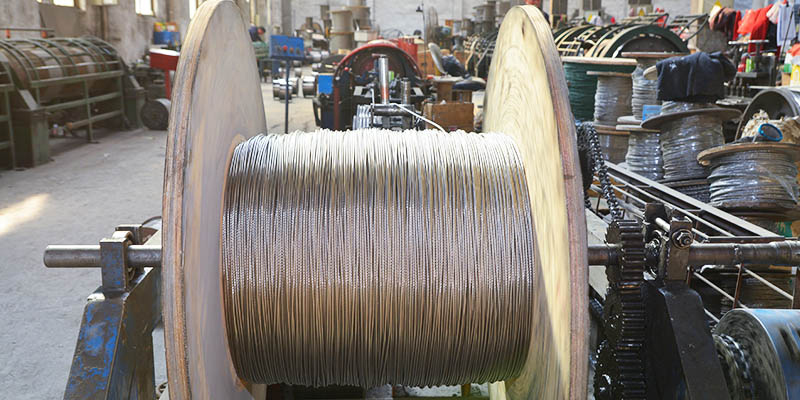

1×7 Stainless Steel Wire Rope Product Introduction Overview: The 1×7 stainless steel wire rope is a high-quality, durable, and versatile wire rope constructed from a single strand of seven individual ...
See Details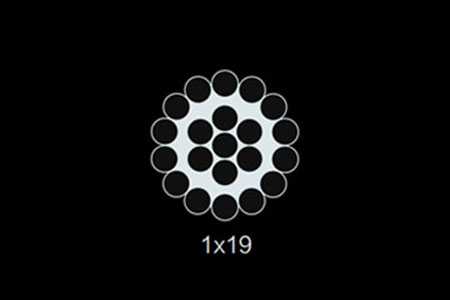
1×19 Stainless Steel Wire Rope Product Introduction Overview: The 1×19 stainless steel wire rope is a robust and high-strength wire rope made from a single strand of 19 individual wires twisted togeth...
See Details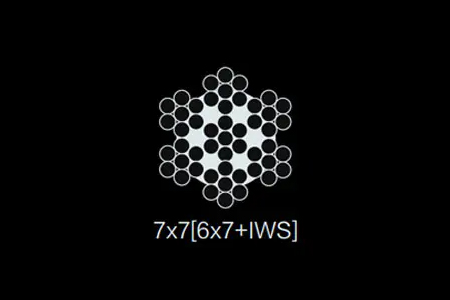
7×7 Stainless Steel Wire Rope Product Introduction Overview: The 7×7 stainless steel wire rope is a versatile, durable, and flexible wire rope made from seven strands, each containing seven individual...
See Details![7X19 [6x19+IWS] Stainless Steel Wire Rope 304/316](/steelwirerope-china/2024/12/20/4.jpg)
7X19 [6x19+IWS] Stainless Steel Wire Rope Product Introduction Overview: The 7X19 [6x19+IWS] stainless steel wire rope is a high-performance wire rope designed for applications that require maximum st...
See Details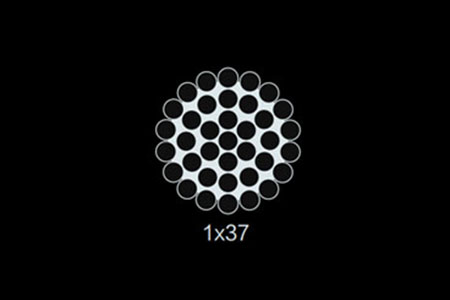
1×37 Stainless Steel Wire Rope Product Introduction Overview: The 1×37 stainless steel wire rope is a high-strength, durable wire rope made from a single strand of 37 individual wires twisted together...
See Details
6×7+FC Stainless Steel Wire Rope Product Introduction Overview: The 6×7+FC stainless steel wire rope is a high-quality wire rope designed for applications requiring both strength and flexibility. This...
See Details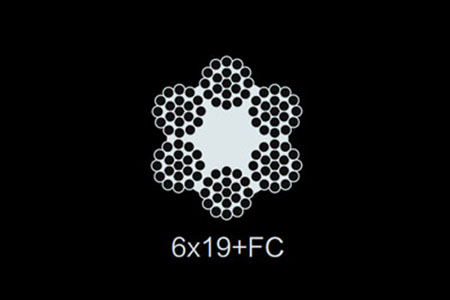
6×19+FC Stainless Steel Wire Rope Product Introduction Overview: The 6×19+FC stainless steel wire rope is a high-performance, versatile rope designed to provide exceptional strength, flexibility, and ...
See Details
19×7 Stainless Steel Wire Rope Product Introduction Overview: The 19×7 stainless steel wire rope is a high-performance wire rope designed for a wide range of applications requiring both strength and f...
See Details




 wechat scan