1×7 Stainless Steel Wire Rope Product Introduction Overview: The 1×7 stainless steel wire rope is a high-quality, durable, and versatile wire rope constructed from a single strand of seven individual ...
See Details

A 0.05 mm diameter deviation is the difference between a spring that survives ten million cycles and one that fails inside a customer's device. Precision stainless steel wire is bought and sold on numbers like that, and the gap between a compliant coil and a nearly compliant coil stays invisible until the wire reaches a drawing die, a high-speed coiler, or a weld pool.
JiangSu Kailong Stainless Steel Products Co., Ltd. has produced cold-drawn stainless steel wire at Dainan Town, Xinghua, Jiangsu, since 2006, inside a cluster that producers there describe as a nationally known stainless steel production base. The direction of the category shows up clearly in the enquiries arriving at mills like this one: thinner diameters, tighter tolerance bands, and documentation that survives a customer audit.
Precision stainless steel wire is cold-drawn austenitic wire sold against three measurable outputs: diameter tolerance, tensile strength consistency, and surface condition.
Precision stainless steel wire is wire drawn to a stated diameter tolerance of roughly +/- 0.01 mm or tighter, with tensile strength held inside a narrow band and a surface free of die lines, scratches, and residual drawing lubricant.
The word precision only carries weight in a quotation when it is attached to a number. A supplier that promises high precision without naming a tolerance class is describing a drawing line, not a deliverable. Three commercial bands cover most of the market.
| Class | Diameter range | Diameter tolerance | Tensile range (304) | Typical end use |
| Standard drawn | 0.50 to 8.00 mm | +/- 0.03 mm | 1300 to 1500 MPa | Fencing, balustrade mesh, general hardware |
| Precision drawn | 0.10 to 3.00 mm | +/- 0.01 mm | 1500 to 1900 MPa | Springs, fasteners, TIG filler wire |
| Ultra-fine | 0.02 to 0.10 mm | +/- 0.005 mm | 1800 to 2200 MPa | Medical guide wire, filter media, sensor leads |
Diameter is the number buyers check first and the one they should check last. A coil can hold +/- 0.01 mm and still stall a high-speed coiler if cast and helix vary from spool to spool, and the same coil can pass a micrometer check while carrying enough surface lubricant to ruin a welding arc. Precision wire is therefore specified as a package: diameter, tolerance, temper, tensile band, cast, helix, spool weight, and surface finish.
Demand for tighter wire specifications is being pulled by three forces at once: smaller finished components, longer corrosion budgets, and a deliberate shift from imported wire to domestically drawn equivalents.
At that band, wire stops behaving like wire and starts behaving like a machining operation. Die wear, lubricant residue, and spool tension become controlled process variables rather than operator judgement calls.
Specify 316L when the wire will see chlorides, thin welded sections, or a service life measured in decades, and stay with 304 when the environment is indoor, mildly corrosive, and cost per kilogram decides the order.
With roughly 18 percent chromium and 8 percent nickel, 304 draws cleanly, holds a non-magnetic annealed structure, and takes cold work well enough for springs, fasteners, and rope wires. In dry housings, indoor machinery, and general hardware it delivers a long service life at a material cost that keeps the finished part competitive.
316L adds 2 to 3 percent molybdenum and a lower carbon ceiling. Molybdenum raises resistance to pitting in chloride environments, and low carbon limits carbide precipitation in welded joints. That combination is why coastal mesh, marine rigging, food-processing equipment, and welded medical components default to 316L, and why it is the wrong default everywhere else.
A useful shortcut is the pitting resistance equivalent number, which weights chromium, molybdenum, and nitrogen into a single score. Common 316L grades sit in the mid-twenties on that scale, against roughly eighteen for 304. That gap, not the price gap, is the technical reason to move up a grade.
Grade selection is a corrosion calculation, not a status signal. A 304 spring inside a dry actuator housing will outlast the assembly it sits in, while a 304 mesh panel two hundred metres from a coastline will pit within a single season.
Vertically integrated wire mills shorten lead time because drawing, surface treatment, and packaging stay inside one quality system instead of being split across three suppliers.
Kailong's own operating model illustrates how that works in practice. Design, development, and production of stainless steel precision wire sit under one roof, alongside in-house surface finishing and packaging, an ISO 9001:2015 quality management system, and an annual output reported in the tens of thousands of tons. The company positions its wire programme as a replacement for imported material in demanding applications, a claim that only holds up when the tolerance band, the tensile spread, and the mill certificate match the import being replaced.
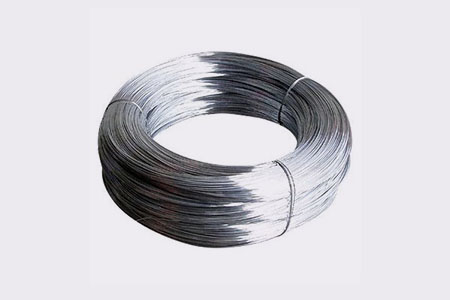 Multi-Specification Stainless Steel Wire in 302, 304, 316, and 316LFor import-replacement checks, review these 302, 304, 316, and 316L grades covering corrosion resistance, oxidation resistance, and applications from mesh to reinforcement.View Product →
For a buyer, the operative question is not how large the mill is but which process steps it controls directly. A supplier that draws, heat treats, cleans, and spools on the same site can trace a defect back to a die, a furnace batch, or a spooling line within hours. A supplier that brokers wire from three sources cannot, and the cost of that gap usually appears later as a rejected shipment or a stopped production line.
The same 304 heat can be correct for a spring and wrong for a TIG filler, because each downstream process converts a different wire property into a finished part.
Tensile band and temper matter more than diameter here. A measured range such as 1500 to 1700 MPa keeps forming predictable, while a stated minimum of 1500 MPa allows a heat to arrive at 2100 MPa and crack on the first bend. Buyers who specify only a minimum are the ones who receive inconsistent coils.
Rope wires need high tensile strength paired with controlled ductility so that strands can be closed without surface fractures. Constructions such as 7x19 and 7x37 in 304 and 316 cover most lifting, tensioning, and architectural cable work, while a black 7x7 finish is used where the visible appearance of the rope matters.
 7×37 High-Tensile Stainless Steel Wire Rope in 304/316Flexible 7×37 construction in 304, 316, or 316L suits marine, lifting, crane, and heavy-duty uses, with diameters from 2 mm and custom options.View Product →
Flexible rope mesh converts wire diameter and rope construction into opening size and load rating. Because the panels are often visible, surface consistency and spool-to-spool colour stability matter as much as mechanical properties, and that pushes mesh specifications toward polished 316L in exterior use.
Filler grade must match the base metal, not the other way round: 308L for 304 fabrications, 316L for 316 components, and 309 for dissimilar joints. Cleanliness is the hidden variable. Residual drawing lubricant on filler wire produces porosity that no welding parameter can compensate for, which is why welding grades are drawn and cleaned to a lubricant-free finish.
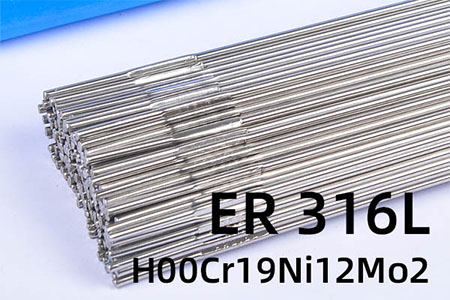 Ultra-Pure 316L Stainless Steel TIG Welding Wire ER316LFor 316L base metal, this ER316L TIG wire offers stable, low-spatter welds and corrosion resistance in chemical, food, medical, and marine service.View Product →
One heat number, three products: the same 304 melt becomes a 0.15 mm spring wire, a 2.5 mm rope wire, and a 1.2 mm welding filler. The chemistry is shared; the drawing route, temper, and surface treatment are not.
A wire specification survives procurement review when it names seven items and gives a number for each one.
Two items on that list are routinely left out and routinely cause disputes: cast and helix, and coil weight. Both are measurable on receipt with simple fixtures, and both should be written into the acceptance criteria before the first production coil is drawn.
Buyers who want a tolerance band reviewed against a real drawing route can contact the mill directly with the drawing, the process, and the required service life, and get a wire specification back rather than a brochure.
Acceptance testing on receipt takes under thirty minutes: measure diameter at both ends and the middle of the coil, verify tensile on each end, and inspect the surface under magnification before releasing the batch to production.
Match the tolerance to the process rather than to the tightest number available. Automatic coilers and orbital welding heads usually justify +/- 0.01 mm, while general hardware and fencing are well served at +/- 0.03 mm. Buying +/- 0.005 mm for an application that never measures it adds cost and lead time without changing the finished part.
No. 316L is chosen for chloride exposure, thin welded sections, and long service-life targets. In dry, indoor, or mildly corrosive service, 304 performs the same function at a lower material cost, and over-specifying 316L mainly raises the price of the finished component.
Ask for the quality management certificate, the mill test certificate for the exact heat number quoted, and a sample coil drawn to your tolerance band. Then measure diameter along the coil length, check tensile at both ends, and inspect the surface under magnification before releasing the bulk order.
Yes. Coil and spool weight determine how many changeovers a production line makes and how much scrap appears at each one. Under-sized spools raise downtime, while over-sized spools can exceed the payoff capacity of the machine they were bought for.
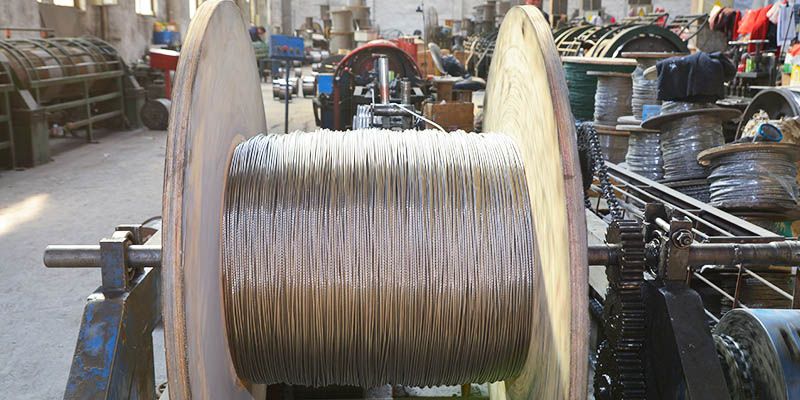
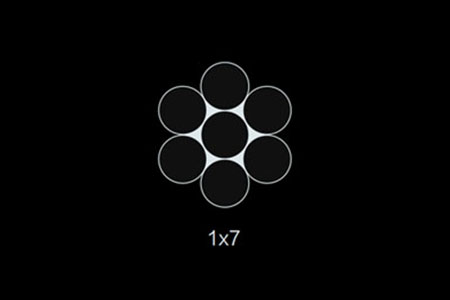
1×7 Stainless Steel Wire Rope Product Introduction Overview: The 1×7 stainless steel wire rope is a high-quality, durable, and versatile wire rope constructed from a single strand of seven individual ...
See Details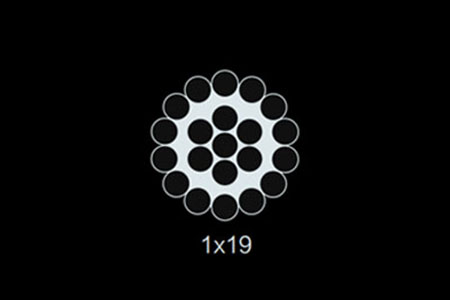
1×19 Stainless Steel Wire Rope Product Introduction Overview: The 1×19 stainless steel wire rope is a robust and high-strength wire rope made from a single strand of 19 individual wires twisted togeth...
See Details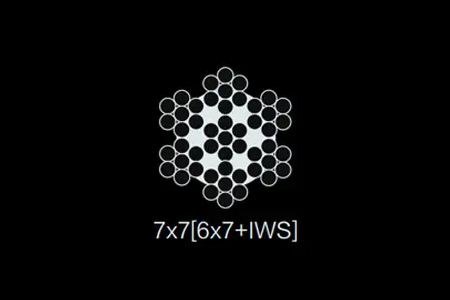
7×7 Stainless Steel Wire Rope Product Introduction Overview: The 7×7 stainless steel wire rope is a versatile, durable, and flexible wire rope made from seven strands, each containing seven individual...
See Details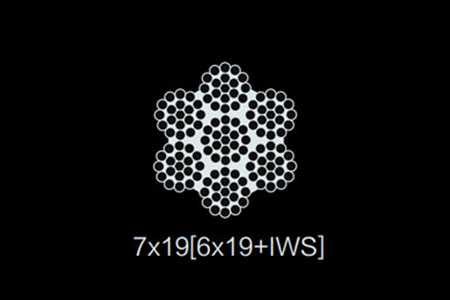
7X19 [6x19+IWS] Stainless Steel Wire Rope Product Introduction Overview: The 7X19 [6x19+IWS] stainless steel wire rope is a high-performance wire rope designed for applications that require maximum st...
See Details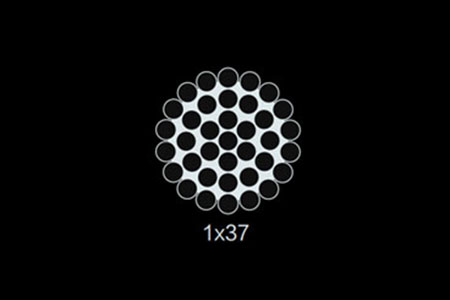
1×37 Stainless Steel Wire Rope Product Introduction Overview: The 1×37 stainless steel wire rope is a high-strength, durable wire rope made from a single strand of 37 individual wires twisted together...
See Details
6×7+FC Stainless Steel Wire Rope Product Introduction Overview: The 6×7+FC stainless steel wire rope is a high-quality wire rope designed for applications requiring both strength and flexibility. This...
See Details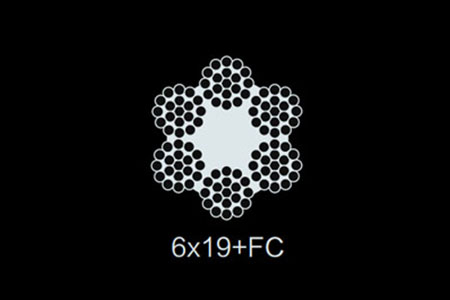
6×19+FC Stainless Steel Wire Rope Product Introduction Overview: The 6×19+FC stainless steel wire rope is a high-performance, versatile rope designed to provide exceptional strength, flexibility, and ...
See Details
19×7 Stainless Steel Wire Rope Product Introduction Overview: The 19×7 stainless steel wire rope is a high-performance wire rope designed for a wide range of applications requiring both strength and f...
See Details




 wechat scan