1×7 Stainless Steel Wire Rope Product Introduction Overview: The 1×7 stainless steel wire rope is a high-quality, durable, and versatile wire rope constructed from a single strand of seven individual ...
See Details

In today’s rapidly developing global marine industry, marine hardware is becoming an indispensable and crucial component of ship equipment, offshore structures, and near-shore operation systems. With the accelerated development of marine resources and the increase in maritime transport volume, higher demands are being placed on the performance, reliability, and durability of various marine hardware components. These demands directly influence design choices, material selection, manufacturing standards, and lifecycle management strategies across the industry.
Broadly speaking, marine hardware includes hull structure connectors, deck system assemblies, anchoring-related components, and various metal components involved in marine engineering operations. These hardware components, exposed to long-term environments of salt spray, humidity, stress impact, long-cycle loads, and temperature variations, perform multiple functions such as support, locking, fixing, transmission, and safety protection. Their presence is not immediately noticeable during the operation of ships and offshore equipment, yet they bear a decisive structural responsibility that underpins the integrity of larger systems.
Due to the specific nature of their applications, the biggest difference between marine hardware and conventional hardware lies in its high corrosion resistance, fatigue resistance, and stability. Whether it is the hardware assembly in hull connection areas or the structural deployment in offshore wind facilities, floating platforms, and near-shore operation systems, the requirements for material structure, mechanical strength, and surface treatment are far higher than in terrestrial environments. Reliable marine hardware effectively prevents structural loosening or fatigue failure caused by long-term stress, thereby protecting the overall system’s operational safety.
Throughout the development of marine hardware, material selection has always been decisive. A material system based on stainless steel, marine-grade alloys, and corrosion-resistant metals constitutes the industry mainstream. These materials exhibit more stable corrosion resistance in seawater environments and maintain stable strength distribution under long-term loads, structural vibrations, and low-temperature impacts. The intrinsic properties of these materials play a foundational role in determining service life and failure modes under complex marine loading conditions.
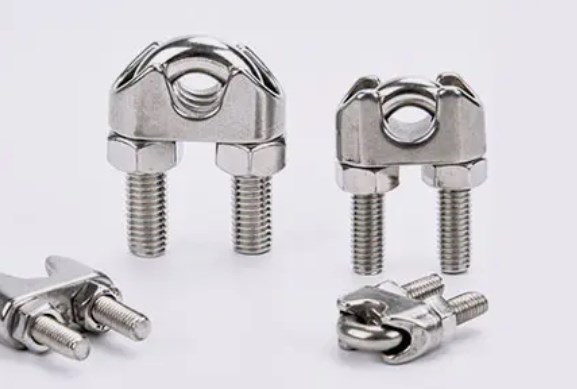
In terms of manufacturing processes, marine hardware production typically involves precision casting, forging, machining, heat treatment, and surface stabilization. Process quality directly affects the hardware’s strength distribution, surface density, and overall lifespan. To avoid microcrack propagation or surface fatigue spalling, the industry generally adopts higher-standard manufacturing paths, supplemented by continuous testing and certification systems. High-quality marine hardware exhibits greater structural precision and dimensional control, maintaining long-term reliability in high-salt-spray and high-convective-current environments.
The marine environment presents multiple destructive factors that interact to create complex corrosion mechanisms and fatigue pathways. Salt spray corrosion, seawater erosion, wet-dry cycles caused by tidal fluctuations, intense load changes during severe weather, and marine organism attachment all have a lasting impact on hardware materials. Marine hardware in long-term service, lacking sufficient protection, is prone to surface pitting, crevice corrosion, or stress corrosion, causing even normally stable structural systems to lose their safety redundancy at critical moments.
To address these challenges, the industry is continuously driving material upgrades, surface engineering optimization, and structural design innovation. Corrosion-resistant alloys are becoming more refined in microstructure, coating technologies are evolving towards higher durability, and structural designs emphasize reducing crack-sensitive areas while promoting stress homogenization. Simultaneously, new detection technologies and health monitoring systems are entering the marine engineering equipment field, enabling more accurate prediction of marine hardware lifespan and informed maintenance scheduling.
The combination of improved materials, better manufacturing control, and condition monitoring shifts maintenance paradigms from reactive repairs to predictive lifecycle management. This shift reduces unexpected failures and allows stakeholders to optimize in-service intervals and refurbishment strategies, directly extending the effective life of both individual components and the larger systems they support.
High-quality marine hardware ensures that load-bearing paths remain continuous and predictable under variable environmental and operational loads. When connectors, fasteners, and assemblies are produced with controlled tolerances, appropriate surface treatments, and validated mechanical properties, the overall structural system retains its designed redundancy and safety margins. In contrast, compromised hardware introduces uncertainty into load transfer mechanisms, elevating the risk of progressive degradation and sudden failure.
Hardware that resists corrosion and fatigue reduces the frequency and intensity of inspections required to assure safety. This reduction lowers operational downtime and maintenance costs while improving the availability of ships and offshore installations. In a sector where operational windows and uptime are economically critical, the extended reliability provided by quality hardware yields measurable value across an asset’s lifecycle.
Today, the marine industry is developing towards deeper, farther, and more efficient directions, and this is inseparable from the core foundational system built by marine hardware. With continuous technological advancements, highly reliable hardware structures will continue to drive the upgrading of marine equipment, making the development of marine resources safer, more efficient, and more sustainable. As the industry standards evolve, hardware quality becomes a strategic differentiator for manufacturers, shipowners, and project developers.
The safe lifespan of ships and offshore equipment is determined not by a single element but by the cumulative performance of many components, among which marine hardware plays a decisive role. From material selection and manufacturing precision to surface protection and intelligent monitoring, each factor contributes to the longevity and safety of maritime assets. Investing in higher-quality marine hardware therefore translates into improved operational reliability, reduced lifecycle costs, and enhanced resilience against the harsh and variable conditions of the marine environment.
If further detail is required on specific categories of marine hardware, production standards, surface treatment processes, or application-driven selection criteria, additional technical sections can be provided to expand on those topics.
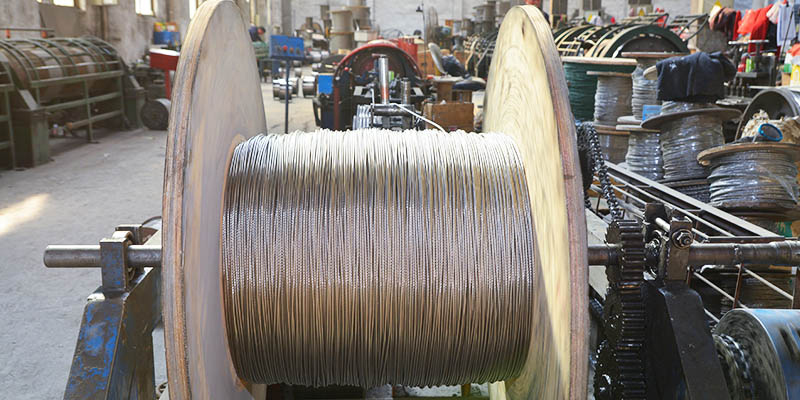

1×7 Stainless Steel Wire Rope Product Introduction Overview: The 1×7 stainless steel wire rope is a high-quality, durable, and versatile wire rope constructed from a single strand of seven individual ...
See Details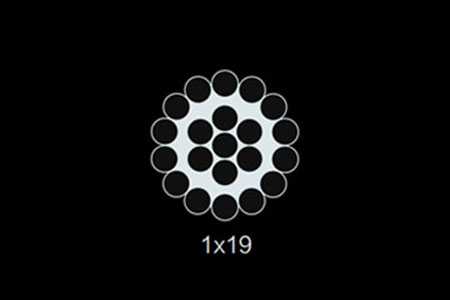
1×19 Stainless Steel Wire Rope Product Introduction Overview: The 1×19 stainless steel wire rope is a robust and high-strength wire rope made from a single strand of 19 individual wires twisted togeth...
See Details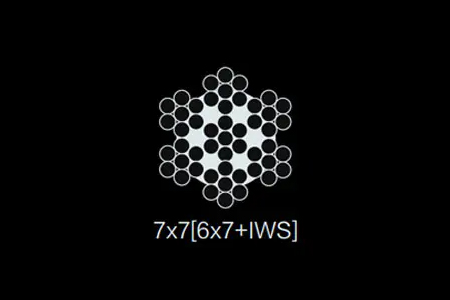
7×7 Stainless Steel Wire Rope Product Introduction Overview: The 7×7 stainless steel wire rope is a versatile, durable, and flexible wire rope made from seven strands, each containing seven individual...
See Details![7X19 [6x19+IWS] Stainless Steel Wire Rope 304/316](/steelwirerope-china/2024/12/20/4.jpg)
7X19 [6x19+IWS] Stainless Steel Wire Rope Product Introduction Overview: The 7X19 [6x19+IWS] stainless steel wire rope is a high-performance wire rope designed for applications that require maximum st...
See Details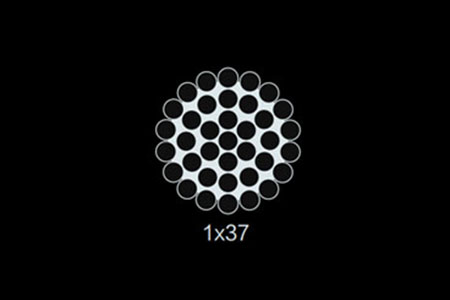
1×37 Stainless Steel Wire Rope Product Introduction Overview: The 1×37 stainless steel wire rope is a high-strength, durable wire rope made from a single strand of 37 individual wires twisted together...
See Details
6×7+FC Stainless Steel Wire Rope Product Introduction Overview: The 6×7+FC stainless steel wire rope is a high-quality wire rope designed for applications requiring both strength and flexibility. This...
See Details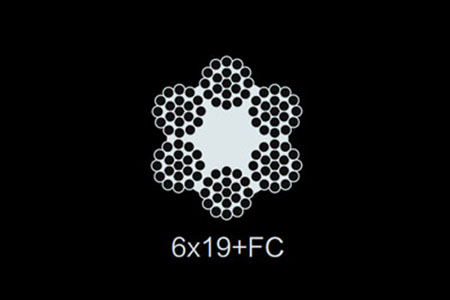
6×19+FC Stainless Steel Wire Rope Product Introduction Overview: The 6×19+FC stainless steel wire rope is a high-performance, versatile rope designed to provide exceptional strength, flexibility, and ...
See Details
19×7 Stainless Steel Wire Rope Product Introduction Overview: The 19×7 stainless steel wire rope is a high-performance wire rope designed for a wide range of applications requiring both strength and f...
See Details




 wechat scan