1×7 Stainless Steel Wire Rope Product Introduction Overview: The 1×7 stainless steel wire rope is a high-quality, durable, and versatile wire rope constructed from a single strand of seven individual ...
See Details

When evaluating materials for large-scale safety barriers, animal enclosures, or architectural facades, stainless steel wire rope mesh stands out as the most reliable, long-lasting, and versatile option available. This material achieves an optimal balance between high tensile strength and inherent flexibility, offering a lifespan that far exceeds traditional fencing or netting alternatives. Unlike rigid metal bars or chain-link fences that degrade, rust, or require frequent replacement, this specialized mesh resists extreme weather, heavy impacts, and environmental corrosion without losing structural integrity. It provides a virtually invisible yet impenetrable barrier, making it the preferred choice for projects where both safety and aesthetic transparency are non-negotiable.
To appreciate why this material performs so exceptionally well, it is necessary to understand its fundamental construction. Stainless steel wire rope mesh is not woven like traditional cloth nor welded like standard metal grids. Instead, it is hand-woven using high-tensile stainless steel wires that are first twisted into individual ropes. These ropes are then interlocked in a specific diagonal pattern to create a net-like structure.
The base cables used in the weaving process typically fall into two primary construction categories, each offering distinct mechanical advantages depending on the application's requirements.
The intersection points where the ropes cross are secured using metal ferrules. The type of ferrule dictates the mesh's aesthetic and structural properties.
The performance longevity of stainless steel wire rope mesh is heavily dependent on the specific alloy chosen for the wires. While various grades exist, two dominate the industry due to their proven track records in diverse environments.
| Material Grade | Corrosion Resistance | Tensile Strength | Ideal Environment |
|---|---|---|---|
| Type 304 | Standard | High | Indoor, urban outdoor, dry climates |
| Type 316 | Superior (Marine Grade) | High | Coastal, high humidity, chemical exposure |
Type 316 stainless steel contains molybdenum, which significantly enhances its defense against pitting corrosion caused by chlorides. For any project located within a few miles of saltwater, or in industrial zones where sulfur dioxide and other aggressive chemicals are present, upgrading to Type 316 is not optional; it is a strict necessity to prevent premature structural failure. Type 304 performs admirably in standard urban environments and is highly cost-effective for indoor stadium barriers or building interiors.
The unique properties of stainless steel wire rope mesh allow it to function effectively in scenarios where traditional materials fail. Its adoption has spread rapidly across several specialized sectors.
Creating a safe environment for both dangerous animals and the visiting public requires a material that can withstand immense force while remaining visually unobtrusive. Traditional cages create a psychological barrier and distort the viewing experience. Wire rope mesh solves this by providing a transparent barrier. The mesh can easily absorb the impact of large predators without breaking or permanently stretching, largely due to the energy distribution across the diagonal weave pattern. Furthermore, the smooth surface of the stainless steel prevents animals from climbing the fence, and the lack of sharp edges protects them from injury.
Modern architecture frequently incorporates large expanses of transparent materials and living plant systems. Wire rope mesh serves as an excellent structural substrate for green walls. When attached to the exterior of a building, it supports climbing plants without the fear of the support system rusting and collapsing under the immense weight of mature vegetation. As an architectural facade element, it can be tensioned between steel frames to act as a secondary skin, providing solar shading, reducing wind load on glass facades, and creating a striking visual depth to the building exterior.
In stadiums, bridges, observation decks, and mountain walkways, fall protection is a critical safety mandate. Rigid glass or solid metal panels can be problematic in high-wind areas because they resist wind entirely, transferring massive structural loads to the building. Wire rope mesh acts as a permeable barrier. Wind passes through the apertures, drastically reducing the lateral force on the supporting structure, while the robust steel cables still guarantee that individuals cannot fall through. This wind permeability often allows engineers to design lighter, less expensive support frameworks.
To fully understand the value proposition of this material, it is helpful to contrast it directly against the materials it is designed to replace.
| Feature | Wire Rope Mesh | Chain-Link Fence | Welded Metal Bars |
|---|---|---|---|
| Lifespan | Decades | 5-10 Years | 10-15 Years |
| Impact Absorption | Excellent (Flexes) | Poor (Deforms) | None (Rigid) |
| Visual Transparency | High | Moderate | Low |
| Maintenance | Virtually None | Regular (Rust/Galvanizing) | Periodic (Painting) |
The most significant advantage lies in the total cost of ownership. While the initial investment for stainless steel wire rope mesh may be higher than that of galvanized chain-link, the elimination of maintenance costs, painting, and eventual replacement renders it far more economical over a thirty-year period. Furthermore, if a localized section of wire rope mesh is severely damaged, it can often be repaired in the field by splicing in a new section, a feat nearly impossible with welded panels without specialized equipment.
The performance of stainless steel wire rope mesh is only as good as the framework supporting it. Proper installation requires careful engineering to account for the material's unique behaviors.
Unlike rigid panels that simply bolt into place, wire rope mesh must be tensioned to achieve its maximum strength and flat appearance. The tensioning process pulls the diagonal ropes taut, transforming the mesh from a loose net into a rigid plane capable of stopping heavy impacts. This requires robust perimeter frames, typically constructed from structural steel or heavy aluminum, capable of withstanding the significant inward pull generated during installation.
The edges of the mesh are usually terminated with specialized thimbles or ferrules that distribute the load over a wider area, preventing the stainless steel wires from fraying under extreme tension at the connection points. High-tensile steel shackles or specialized tensioning bolts are used to attach the mesh to the framework. Using incorrect or low-grade hardware at the connection points is the most common cause of failure, as the mesh itself will rarely break under normal load conditions.
Although minimal compared to solid metal sheets, stainless steel wire rope mesh does experience thermal expansion and contraction in extreme temperature fluctuations. In very large installations, such as building facades spanning multiple stories, the framework design must include slots or flexible connection points that allow the mesh to expand and contract slightly without causing undue stress on the peripheral anchors. Ignoring this can lead to warped meshes or stress fractures at the attachment hardware during sudden cold snaps or heatwaves.
One of the most compelling reasons to specify stainless steel wire rope mesh is its extraordinarily low maintenance profile. However, "maintenance-free" is a practical myth for any outdoor architectural element. A disciplined, yet simple, maintenance strategy will ensure the mesh easily exceeds its expected lifespan.
By adhering to these straightforward steps, facility managers can avoid unexpected downtime and ensure that the barrier system remains structurally sound and aesthetically pleasing for decades without requiring major overhauls.
Stainless steel wire rope mesh is rarely a one-size-fits-all product. Manufacturers offer extensive customization to ensure the material perfectly aligns with the structural and aesthetic demands of the project.
The size of the diamond-shaped openings (apertures) and the thickness of the ropes are engineered based on what is being contained or protected. For bird aviaries, very small apertures with thin ropes are utilized to prevent escape while keeping the structure lightweight. For large primate or big cat enclosures, the aperture might be several inches wide, but the rope diameter increases drastically to provide the necessary breaking strength to withstand clawing and biting.
While the standard diamond pattern is oriented at a specific angle, the weave can be customized to create different visual effects. On architectural facades, altering the angle of the diamonds can change how light interacts with the mesh throughout the day, creating a dynamic, shifting appearance. Additionally, the mesh can be rolled into cylindrical shapes for top-tier aviary enclosures or curved along complex architectural geometries without losing its tensioning capabilities.
Stainless steel wire rope mesh represents a paradigm shift in how engineers, architects, and facility managers approach barrier design. By moving away from rigid, opaque, and high-maintenance materials, projects can achieve a higher standard of safety without sacrificing visual integration or environmental openness. The combination of marine-grade corrosion resistance, exceptional energy absorption, and a highly adaptable weaving architecture makes it an indispensable material for any demanding environment. When properly specified regarding alloy grade and rope construction, and correctly installed with appropriate tensioning hardware, this mesh provides a permanent, low-maintenance solution that pays dividends in reduced lifecycle costs and uncompromising safety for years to come.
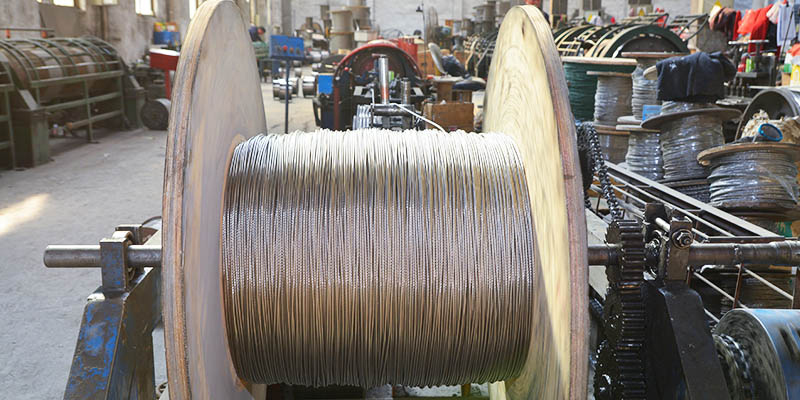

1×7 Stainless Steel Wire Rope Product Introduction Overview: The 1×7 stainless steel wire rope is a high-quality, durable, and versatile wire rope constructed from a single strand of seven individual ...
See Details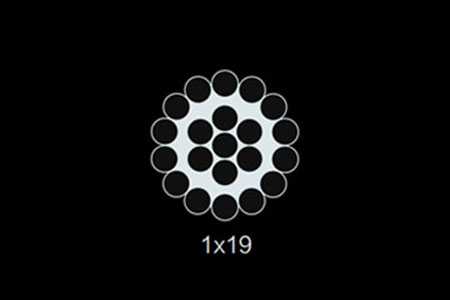
1×19 Stainless Steel Wire Rope Product Introduction Overview: The 1×19 stainless steel wire rope is a robust and high-strength wire rope made from a single strand of 19 individual wires twisted togeth...
See Details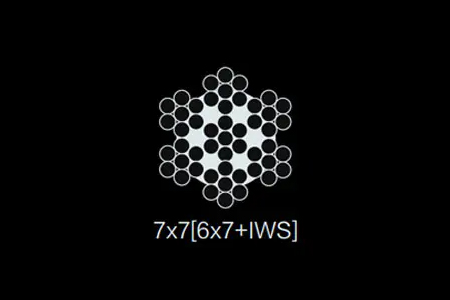
7×7 Stainless Steel Wire Rope Product Introduction Overview: The 7×7 stainless steel wire rope is a versatile, durable, and flexible wire rope made from seven strands, each containing seven individual...
See Details![7X19 [6x19+IWS] Stainless Steel Wire Rope 304/316](/steelwirerope-china/2024/12/20/4.jpg)
7X19 [6x19+IWS] Stainless Steel Wire Rope Product Introduction Overview: The 7X19 [6x19+IWS] stainless steel wire rope is a high-performance wire rope designed for applications that require maximum st...
See Details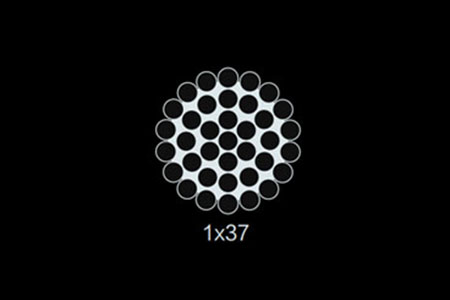
1×37 Stainless Steel Wire Rope Product Introduction Overview: The 1×37 stainless steel wire rope is a high-strength, durable wire rope made from a single strand of 37 individual wires twisted together...
See Details
6×7+FC Stainless Steel Wire Rope Product Introduction Overview: The 6×7+FC stainless steel wire rope is a high-quality wire rope designed for applications requiring both strength and flexibility. This...
See Details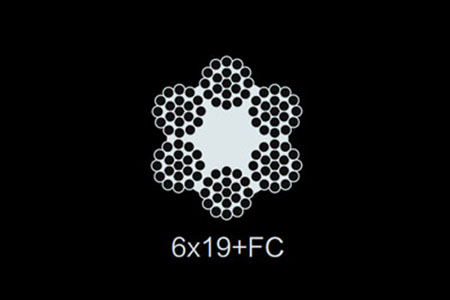
6×19+FC Stainless Steel Wire Rope Product Introduction Overview: The 6×19+FC stainless steel wire rope is a high-performance, versatile rope designed to provide exceptional strength, flexibility, and ...
See Details
19×7 Stainless Steel Wire Rope Product Introduction Overview: The 19×7 stainless steel wire rope is a high-performance wire rope designed for a wide range of applications requiring both strength and f...
See Details




 wechat scan