1×7 Stainless Steel Wire Rope Product Introduction Overview: The 1×7 stainless steel wire rope is a high-quality, durable, and versatile wire rope constructed from a single strand of seven individual ...
See Details


Before you order a replacement wire rope or select a lifting sling, the most important number is the diameter. It determines whether the rope fits the sheave groove, whether a clip grips it reliably, and whether it still performs at its rated strength. The correct method is straightforward: measure the widest distance across the outer envelope of the rope, while the rope is straight and not under load. This practical guide explains why that matters, how to measure with a caliper, what to do without one, and where measurement mistakes usually happen.
You cannot judge a steel wire rope by its label alone. During delivery, handling, and service, the outer diameter can change. Wear rubs off wires, corrosion pits the surface, and overloading can produce a narrowed section. The diameter you measure is a direct indicator of whether the rope is still compatible with its socket, clamp, drum, or sheave. A reading that is too small may indicate dangerous loss of material; a reading that is too large can jam equipment or prevent a clevis pin from seating.
The nominal diameter of a wire rope is defined by the circle that just touches the extreme outer limits of the strands. That means the caliper must measure over the crowns, or crests, of the strands, not down into the valleys between them. For example, when you check a 7x19 stainless steel wire rope, the largest stable reading is the one that matches the product spec. If you drop the jaws into a valley, you can easily understate the rope by a full millimetre. That one millimetre can make the difference between a safe fit and a slipping termination.
![Custom 7X19 [6x19+IWS] Stainless Steel Wire Rope 304/316 Manufacturers, Factory](https://www.steelwirerope-china.com/steelwirerope-china/2024/12/20/4.jpg) Custom 7X19 [6x19+IWS] Stainless Steel Wire Rope 304/316 Manufacturers, FactoryJiangSu Kailong Stainless Steel Products Co., Ltd. is China Custom OEM/ODM 7X19 [6x19+IWS] Stainless Steel Wire Rope 304/316 Manufacturer...View Product →
Custom 7X19 [6x19+IWS] Stainless Steel Wire Rope 304/316 Manufacturers, FactoryJiangSu Kailong Stainless Steel Products Co., Ltd. is China Custom OEM/ODM 7X19 [6x19+IWS] Stainless Steel Wire Rope 304/316 Manufacturer...View Product →A digital or dial caliper gives the most reliable field measurement because the jaws are flat and stiff. Place the jaws at a right angle to the rope’s axis and close them gently over the two highest points on opposite sides. The procedure is the same for any construction, but a few practical steps improve repeatability.
Repeat the measurement at several positions around the reel, especially after a rope has been used in a bend or near a termination. For a rope with a textured surface such as 7x19, the difference between crown and valley can be several tenths of a millimetre; the crown measurement is the meaningful one.
If a caliper is not available, you can use a thin length of string or a flexible tape to measure the circumference. Wrap the string tightly around the rope at right angles to the axis, avoiding the valleys as much as possible, and mark the point where the string meets its end. Then divide that circumference by pi (3.14159).
This method is only an approximation. The tape will settle slightly into the spaces between strands, so the result tends to be a bit low. It is useful for a quick check or for rope that is not safety-critical, but it should never replace caliper measurement when you are selecting a lifting sling, a socket, or a heavy lifting termination. If you must rely on the string method, add a small allowance and confirm with a caliper before committing to a fit.
Most measurement errors come from positioning and pressure. The table below summarizes the mistakes we see most often in receiving inspections and maintenance checks, plus the correct practice.
| Mistake | Effect | Correct practice |
|---|---|---|
| Measuring in the strand valley | Reading is smaller than the real outer envelope diameter | Measure across the crown of the strands; move the caliper until you get the largest stable value |
| Measuring a curved or coiled section | Rope is slightly oval and reads larger than the straight-rope diameter | Pull a straight length off the reel and measure there |
| Squeezing the caliper too firmly | The steel strands deform slightly and the reading drops | Close the jaws until they just touch the surface, no more |
| Using a cloth tape as a direct gauge | The tape bridges the valleys unevenly and gives a random reading | Use a caliper, or measure circumference with a string and divide by pi |
| Taking a single reading on a used rope | Local wear or a damaged spot is missed | Take several readings over the length and compare the minimum to the nominal diameter |
If you regularly inspect wire rope, write the measured values in a log. A consistent drop across several readings is a stronger warning than a single low number.
The outer structure of a rope changes how obvious the crown and valley are. A 1x19 stainless steel wire rope has a relatively smooth outer surface because the nineteen wires are laid in a single layer around a center wire. The caliper reads the outer circle easily, and there is little risk of dropping into a deep valley. For this reason, 1x19 ropes are common in rigging and structural applications where a stable diameter and low stretch matter.
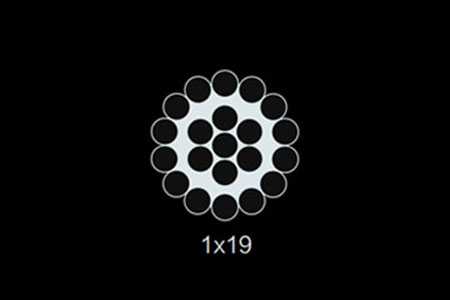 Custom 1*19 Robust Stainless Steel Wire Rope 304/316 Manufacturers, FactoryJiangSu Kailong Stainless Steel Products Co., Ltd. is China Custom OEM/ODM 1*19 Robust Stainless Steel Wire Rope 304/316 Manufacturers an...View Product →
On the other hand, a 7x19 stainless steel wire rope has seven strands, each containing nineteen wires, so the surface is more uneven. You must position the caliper jaws so they span the two highest strands that lie opposite each other. If the rope has been flexed, the strands may move slightly; taking several readings and keeping the largest stable value prevents a false low result. The same advice applies to 6x19 and 7x7 constructions.
Wire rope fittings are not flexible. A clip, turnbuckle, thimble, or shackle is designed for a specific diameter range. If the rope is slightly oversized, the saddle cannot close around it correctly and the rope may crimp on one side. If the rope is slightly undersized, the clip may not generate enough clamping force and the termination can slip. That is why the diameter measurement must be made before you order hardware, not after the rope has arrived.
For example, a stainless steel wire rope clip must sit with the saddle radius matched to the outer envelope of the rope. The correct clip size is stamped on the clip, but the stamp refers to nominal diameter; always confirm the field measurement. If your reading falls near the boundary between two sizes, contact the manufacturer or use the next larger size only when the application allows it. A reliable supplier will tell you the tolerance range rather than guessing.
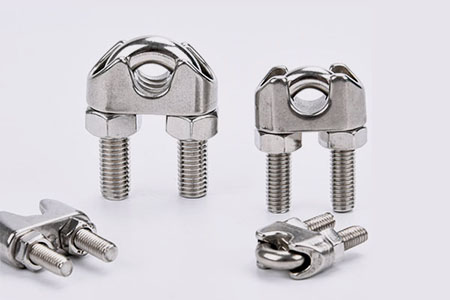 Custom Stainless Steel Clip Marine Hardware ManufacturersJiangSu Kailong Stainless Steel Products Co., Ltd. is China Custom Stainless Steel Clip Marine Hardware Manufacturers, Factory, We Offer ...View Product →
During service, measuring the diameter helps you track wear and warn of hidden damage. Set a baseline by measuring the rope as soon as it is installed. Then re-measure at regular intervals, ideally at the same point, such as the end of the thimble or the area near the socket. Compare each new reading to the nominal diameter and to the previous inspection.
A fall in diameter does not always mean immediate failure, but it is a clear signal that the rope is losing material. Many international lifting and crane standards use a percentage reduction in nominal diameter as a discard criteria, commonly in the range of 7 to 10 percent, but you must use the specific standard that governs your equipment and region. Before you decide to retire a rope, check for broken wires, corrosion, and distortion as well. For a fuller list of visual checks, see our guide to checking the quality of stainless steel wire rope.
An accurate rope diameter reading is not a complicated skill, but it must be deliberate. Always measure the straight portion of the rope, over the crowns, with light caliper pressure. Record the value on the delivery note and update it during inspections. If you see a consistent downward trend, do not ignore it. If you need help interpreting a diameter reading near a tolerance limit, or if you are selecting a replacement rope for an unusual groove or fitting, contact our engineering team with the actual measured values. A correct measurement saves money by preventing premature replacement, and it saves far more by avoiding a failed termination.
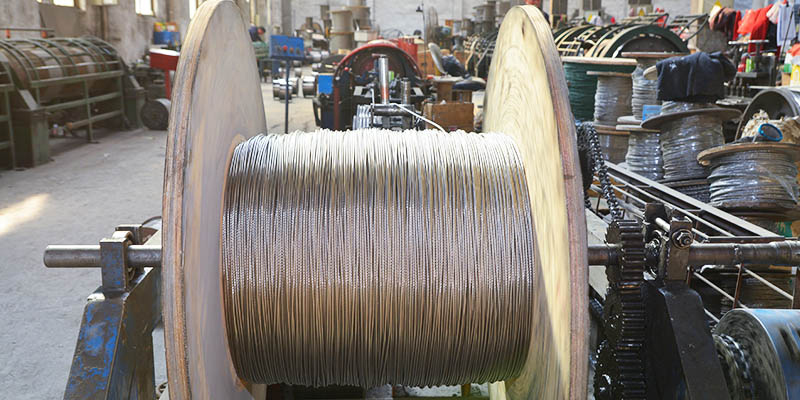
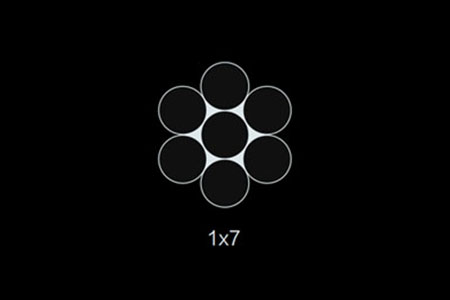
1×7 Stainless Steel Wire Rope Product Introduction Overview: The 1×7 stainless steel wire rope is a high-quality, durable, and versatile wire rope constructed from a single strand of seven individual ...
See Details
1×19 Stainless Steel Wire Rope Product Introduction Overview: The 1×19 stainless steel wire rope is a robust and high-strength wire rope made from a single strand of 19 individual wires twisted togeth...
See Details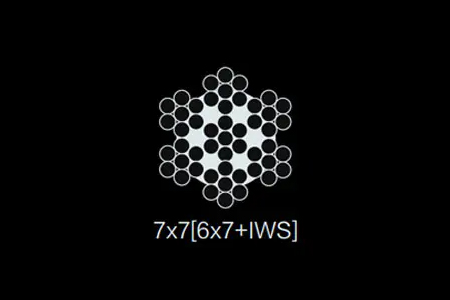
7×7 Stainless Steel Wire Rope Product Introduction Overview: The 7×7 stainless steel wire rope is a versatile, durable, and flexible wire rope made from seven strands, each containing seven individual...
See Details![7X19 [6x19+IWS] Stainless Steel Wire Rope 304/316](/steelwirerope-china/2024/12/20/4.jpg)
7X19 [6x19+IWS] Stainless Steel Wire Rope Product Introduction Overview: The 7X19 [6x19+IWS] stainless steel wire rope is a high-performance wire rope designed for applications that require maximum st...
See Details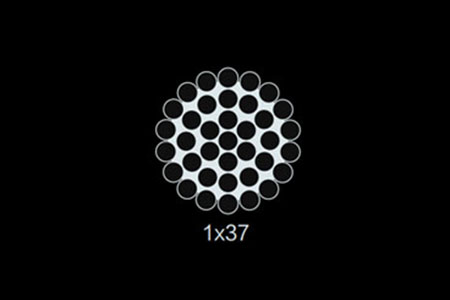
1×37 Stainless Steel Wire Rope Product Introduction Overview: The 1×37 stainless steel wire rope is a high-strength, durable wire rope made from a single strand of 37 individual wires twisted together...
See Details
6×7+FC Stainless Steel Wire Rope Product Introduction Overview: The 6×7+FC stainless steel wire rope is a high-quality wire rope designed for applications requiring both strength and flexibility. This...
See Details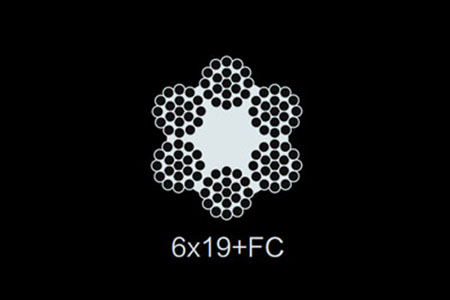
6×19+FC Stainless Steel Wire Rope Product Introduction Overview: The 6×19+FC stainless steel wire rope is a high-performance, versatile rope designed to provide exceptional strength, flexibility, and ...
See Details
19×7 Stainless Steel Wire Rope Product Introduction Overview: The 19×7 stainless steel wire rope is a high-performance wire rope designed for a wide range of applications requiring both strength and f...
See Details




 wechat scan