1×7 Stainless Steel Wire Rope Product Introduction Overview: The 1×7 stainless steel wire rope is a high-quality, durable, and versatile wire rope constructed from a single strand of seven individual ...
See Details

Passivation is a chemical finishing step that removes free iron and other surface contamination from stainless steel so the alloy's natural chromium oxide layer can form on a clean surface. If you machine, weld, store, or buy stainless steel components, this process is often the difference between a fitting that stays bright for years and one with rust-coloured stains after a short time in humid storage.
Here is a familiar example. A batch of newly machined 304 stainless steel fittings is packed while the surfaces still look clean. When the case is opened later, fine reddish spots have appeared around the bores and on the chamfers. The base metal is not defective. Cutting tools, grinding dust, steel fixtures, and unprotected workshop handling have transferred microscopic particles of ordinary iron onto the surface. Those particles act as local corrosion sites. Passivation dissolves the contamination and allows the stainless steel to rebuild a uniform protective film.
Stainless steel is defined by its chromium content, normally at least 10.5 percent. Chromium reacts with oxygen to form a transparent chromium oxide film, only a few nanometers thick, that gives stainless steel its corrosion resistance. If the film is scratched but the surface is clean and the alloy still contains enough chromium, the film repairs itself when exposed to air or water. That self-healing behaviour is the whole basis of stainless steel performance.
Passivation is the controlled chemical treatment used to put the surface into that clean condition. The workpiece is immersed in a diluted acid solution, most often nitric acid or citric acid. The acid removes free iron, embedded tool steel, and light surface contamination while leaving the chromium-rich stainless matrix essentially intact. After rinsing and drying, oxygen in the air reacts with the clean surface and forms a fresh, continuous passive layer.
It is important to state what passivation is not. It is not a coating, not a plating, and not a barrier applied over the metal. It does not hide grinding marks, repair a damaged surface, or make a low-alloy material behave like an austenitic grade. Passivation simply restores a property that the stainless steel already has.
A finished stainless steel part is not automatically free of contamination. Several normal production steps leave something behind on the surface:
Fasteners show the risk clearly. A bolt that leaves the die looking clean may still carry iron residues in its threads and drive recess. High-volume products such as cross-recessed pan head stainless steel bolts for machinery, furniture, and automotive assembly are therefore often given a citric or nitric acid passivation treatment before packaging. The goal is not cosmetic brightness; it is predictable corrosion performance in the application.
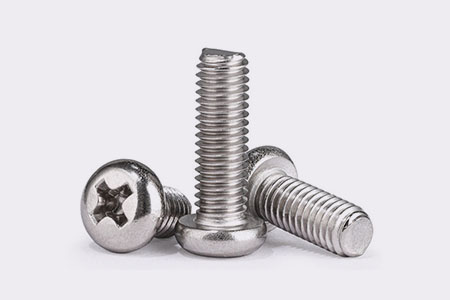 Custom Stainless Steel Cross Recessed Pan Head Bolt for Machine,Furniture,AutomoJiangSu Kailong Stainless Steel Products Co., Ltd. is China Custom OEM/ODM Stainless Steel Cross Recessed Pan Head Bolt for Machine,Furni...View Product →
Both acid families are accepted in industrial practice. Nitric acid has a long history and is the traditional choice for stainless steel passivation, especially where military or aerospace specifications apply. Citric acid is a milder organic acid that chelates dissolved iron, which gives it a strong position in food, pharmaceutical, and environmentally sensitive operations. The choice depends on the grade being treated, the finishing line available, and the specification that the customer requires.
| Point of comparison | Nitric acid bath | Citric acid bath |
|---|---|---|
| Acid type | Mineral acid with strong oxidizing action | Organic acid with chelating action |
| How it removes iron | Dissolves iron residues and oxidizes the surface | Bonds free iron into soluble complexes for rinsing |
| Handling and safety | Produces fumes, requires ventilation and protective equipment | Milder, lower fume risk, simpler operator protection |
| Process control | Concentration, temperature, and time are closely monitored | Concentration and time still controlled, easier bath maintenance in some plants |
| Common applications | General industrial and specification-driven passivation | Food, beverage, pharmaceutical, and sustainability-focused lines |
Passivation is reliable when it is done in a disciplined sequence. Cleaning comes first because an acid bath cannot reach a surface hidden under oil or grease. The standard sequence for stainless steel parts looks like this:
Every detail in this sequence matters. A longer immersion time does not automatically give better results; it can etch the surface and make it rougher. Dirty parts, hard-water rinses, and bare-hand handling after the bath can undo all of the chemical work.
Pickling is often confused with passivation because both operations use acid and they are frequently performed one after another. The difference is important. Pickling removes a thin layer of the metal itself, including weld scale and heat tint, using a more aggressive acid mixture. Passivation removes only surface contamination and leaves the base metal essentially untouched.
Welded assemblies need special attention. The discoloured heat-tint zone around a weld is chromium-depleted scale, not ordinary dirt, and a passivation bath will not remove it properly. Industry practice is to pickle the weld seam first, rinse thoroughly, and then passivate the cleaned surface. Filler metal selection also influences the final result. When the base material is type 316, ER316 stainless steel TIG welding wire keeps the weld deposit close to the parent metal in composition, which makes the subsequent finishing treatment far more predictable.
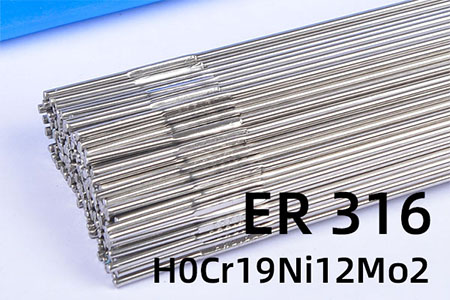 Custom Refined Stainless Steel 316 TIG Special Welding Wire ER316 Manufacturers,JiangSu Kailong Stainless Steel Products Co., Ltd. is China Custom OEM/ODM Refined Stainless Steel 316 TIG Special Welding Wire ER316 Man...View Product →
If a customer asks for passivation without naming a standard, the result can be impossible to verify. The most common references are ASTM A967 for chemical passivation treatments, ASTM A380 for cleaning and descaling practices, and AMS 2700 for aerospace and other high-reliability industries. These documents define bath types, process conditions, grade limitations, and the tests used to confirm that a batch has been treated correctly.
Acceptance testing usually includes high-humidity exposure, salt spray, or a free-iron indicator test, depending on the specification selected. Such tests are only meaningful when they are performed on a clean, properly rinsed surface. They also assume that the base grade is suitable for the intended environment. A perfectly passivated surface cannot compensate for a marginal alloy choice in a chloride-rich application. The practical differences between 304 and 316 stainless steel grades should be settled before the finishing process is chosen, not after a field failure appears.
Most passivation failures follow a similar pattern. The part is oily, the rinse water is contaminated, the acid bath has lost its strength, or someone has touched the cleaned surface with bare fingers. These problems can be avoided with simple discipline:
For buyers, the practical question is not whether passivation is a good idea; it is whether the supplier controls the process well enough to prove it. Any stainless wire, fastener, or fabricated component that has been machined, drawn, or assembled can carry surface contamination. A reliable supplier should be able to state which finishing standard is used, what kind of rinse water quality is maintained, and whether verification tests are performed on a lot-by-lot basis.
At our production facility, surface finishing is treated as part of the manufacturing chain rather than as an optional extra. When you discuss an order for stainless steel wire rope, fasteners, welding wire, or wire components, we expect the conversation to cover the finished surface condition as well as the grade and mechanical properties. That is the level of detail a component with a long service life deserves.
If you are sourcing parts for a marine, food-processing, architectural, or chemically exposed application, start with the environment and the expected service life. Then confirm that the material grade, the surface finish, and the passivation procedure fit that reality. Our engineering and sales team can review the grade selection and finishing requirements with you before production begins. Contact us with your drawing or specification and we will advise on the passivation requirements that apply to your order.
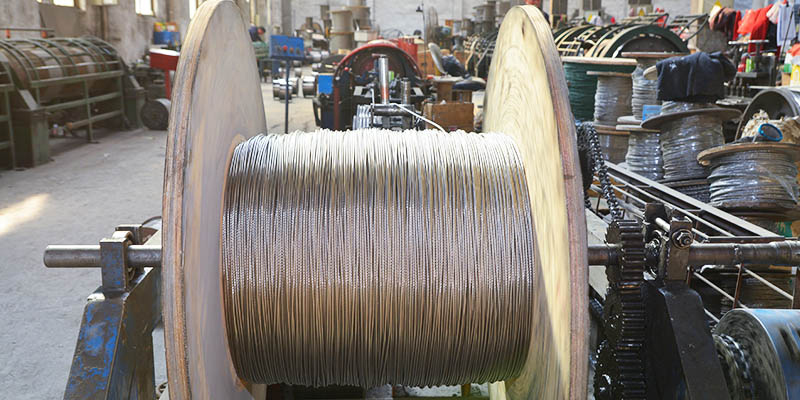
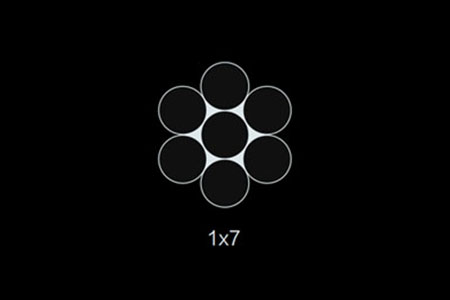
1×7 Stainless Steel Wire Rope Product Introduction Overview: The 1×7 stainless steel wire rope is a high-quality, durable, and versatile wire rope constructed from a single strand of seven individual ...
See Details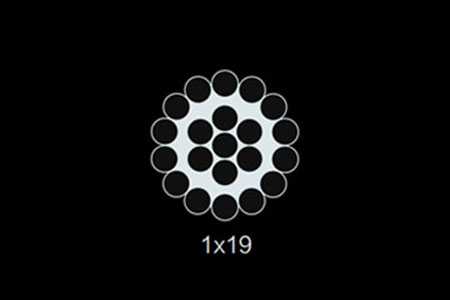
1×19 Stainless Steel Wire Rope Product Introduction Overview: The 1×19 stainless steel wire rope is a robust and high-strength wire rope made from a single strand of 19 individual wires twisted togeth...
See Details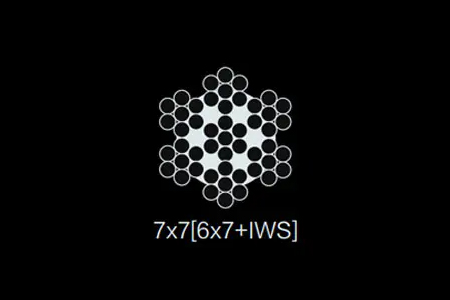
7×7 Stainless Steel Wire Rope Product Introduction Overview: The 7×7 stainless steel wire rope is a versatile, durable, and flexible wire rope made from seven strands, each containing seven individual...
See Details![7X19 [6x19+IWS] Stainless Steel Wire Rope 304/316](/steelwirerope-china/2024/12/20/4.jpg)
7X19 [6x19+IWS] Stainless Steel Wire Rope Product Introduction Overview: The 7X19 [6x19+IWS] stainless steel wire rope is a high-performance wire rope designed for applications that require maximum st...
See Details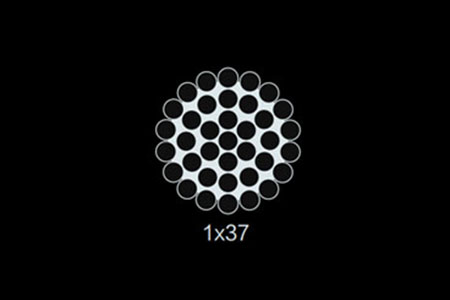
1×37 Stainless Steel Wire Rope Product Introduction Overview: The 1×37 stainless steel wire rope is a high-strength, durable wire rope made from a single strand of 37 individual wires twisted together...
See Details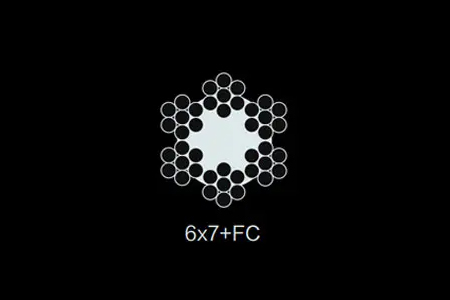
6×7+FC Stainless Steel Wire Rope Product Introduction Overview: The 6×7+FC stainless steel wire rope is a high-quality wire rope designed for applications requiring both strength and flexibility. This...
See Details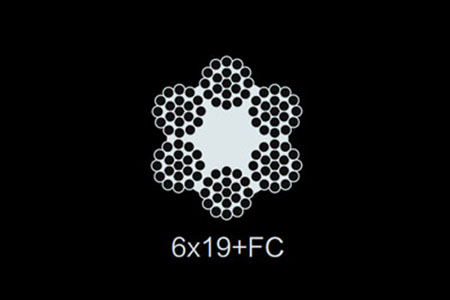
6×19+FC Stainless Steel Wire Rope Product Introduction Overview: The 6×19+FC stainless steel wire rope is a high-performance, versatile rope designed to provide exceptional strength, flexibility, and ...
See Details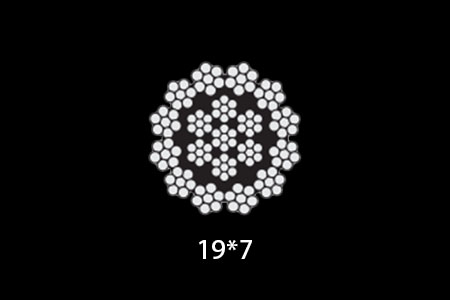
19×7 Stainless Steel Wire Rope Product Introduction Overview: The 19×7 stainless steel wire rope is a high-performance wire rope designed for a wide range of applications requiring both strength and f...
See Details




 wechat scan