1×7 Stainless Steel Wire Rope Product Introduction Overview: The 1×7 stainless steel wire rope is a high-quality, durable, and versatile wire rope constructed from a single strand of seven individual ...
See Details

A maintenance supervisor once asked us why a 1/4-inch 7x19 stainless steel wire rope with a rated breaking strength of 7,400 pounds could not be used for a 6,000-pound lift. The short answer is that breaking strength is a laboratory value, not a working limit. You must apply a safety factor before putting any load on the rope. This article explains how wire rope breaking strength is defined, how construction and diameter affect it, and what to check before you specify a rope for lifting, rigging, or permanent installation.
Wire rope breaking strength, also called minimum breaking load (MBL), is the maximum force a new, straight rope can withstand before it breaks during a tensile test. Manufacturers pull a sample to failure in a calibrated test machine and record the result. That value is then used as the rated breaking strength for the production batch.
The test follows international standards such as ISO 2408, EN 12385, or DIN 3060. These standards define sample length, gripping method, loading speed, and how to report the result. Some suppliers use the term minimum breaking force (MBF) instead of MBL. Both mean the same thing: the lowest breaking load you can expect from that rope under controlled laboratory conditions.
Do not confuse breaking strength with working load limit. A rope that breaks at 20,000 pounds is not designed to lift 20,000 pounds in daily service. The safety factor between these two values is what protects people and equipment.
Wire rope construction is written as two numbers: strands and wires per strand. A 7x19 rope has seven strands, each made of 19 wires. The arrangement changes flexibility, crush resistance, and breaking strength.
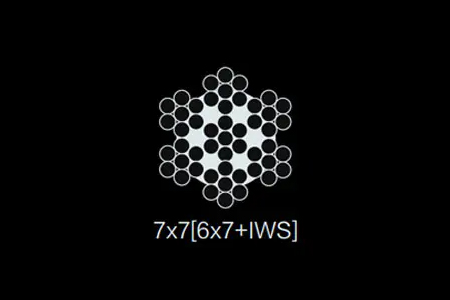
For a deeper look at how each construction behaves, see our article on wire rope construction explained. For applications that require repeated bending, a 7x19 stainless steel wire rope with an independent wire rope core often provides the right balance of strength and fatigue life.
![Custom 7X19 [6x19+IWS] Stainless Steel Wire Rope 304/316 Manufacturers, Factory](https://www.steelwirerope-china.com/steelwirerope-china/2024/12/20/4.jpg) Custom 7X19 [6x19+IWS] Stainless Steel Wire Rope 304/316 Manufacturers, FactoryJiangSu Kailong Stainless Steel Products Co., Ltd. is China Custom OEM/ODM 7X19 [6x19+IWS] Stainless Steel Wire Rope 304/316 Manufacturer...View Product →
Custom 7X19 [6x19+IWS] Stainless Steel Wire Rope 304/316 Manufacturers, FactoryJiangSu Kailong Stainless Steel Products Co., Ltd. is China Custom OEM/ODM 7X19 [6x19+IWS] Stainless Steel Wire Rope 304/316 Manufacturer...View Product →To give you a practical starting point, the table below lists typical minimum breaking loads for common stainless steel rope constructions. Values are rounded; always request the manufacturer's test certificate for the exact batch.
| Diameter (in) | Diameter (mm) | 7x7 MBL (lbs) | 7x19 MBL (lbs) | 6x19 FC MBL (lbs) |
|---|---|---|---|---|
| 1/16 | 1.5 | 480 | - | - |
| 1/8 | 3.2 | 1,760 | 1,980 | 2,200 |
| 3/16 | 4.8 | 3,800 | 4,200 | 4,700 |
| 1/4 | 6.4 | 6,600 | 7,400 | 8,200 |
| 5/16 | 8.0 | - | 9,800 | 11,000 |
| 3/8 | 9.5 | - | 14,400 | 16,000 |
| 1/2 | 12.7 | - | 22,500 | 25,000 |
These are representative values for 304/316 stainless steel at 1770 MPa grade. Actual ratings depend on material grade, core type, and manufacturing tolerances. A 6x19 rope with a steel core can be stronger than the fiber-core version. If you are selecting a rope for general lifting, a 6x19 FC stainless steel wire rope is a common and cost-effective choice.
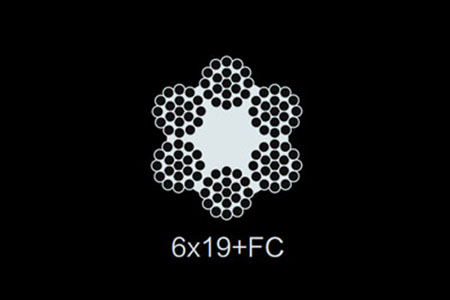 Custom 6*19+FC High-performance Stainless Steel Wire Rope 304/316 Manufacturers,JiangSu Kailong Stainless Steel Products Co., Ltd. is China Custom OEM/ODM 6*19+FC High-performance Stainless Steel Wire Rope 304/316 Man...View Product →
Breaking strength tells you what the rope can survive once in a lab. Working Load Limit (WLL) tells you what you can safely use every day. The ratio between them is the safety factor.
For example, a 1/4-inch 7x19 rope with a 7,400 lb MBL and a 5:1 safety factor has a WLL of 1,480 lb. If you need to lift 2,000 lb, this rope is not sufficient, even though its breaking strength looks impressive. Always calculate the required diameter from the WLL, not from the breaking strength.
A new rope in a test machine is the ideal case. In service, several factors reduce the effective strength of the same rope.
These factors explain why the same rope can fail at a fraction of its rated breaking strength if the termination is poor or the bend radius is too tight. Check the whole system, not just the rope itself.
When you buy wire rope for a critical application, the rated breaking strength on a tag is not enough. Ask the supplier for the following information before you place an order.
A reliable factory will share these details without hesitation. For architectural or rigging projects where stiffness and strength matter most, a 1x19 stainless steel wire rope is often the right call. For winching and lifting, choose a 6x19 or 7x19 construction instead.
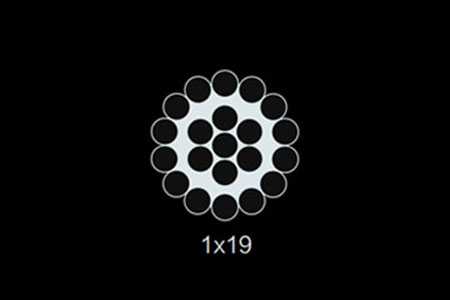 Custom 1*19 Robust Stainless Steel Wire Rope 304/316 Manufacturers, FactoryJiangSu Kailong Stainless Steel Products Co., Ltd. is China Custom OEM/ODM 1*19 Robust Stainless Steel Wire Rope 304/316 Manufacturers an...View Product →
Wire rope breaking strength is a useful starting point, but it is only one of several numbers you need for safe and reliable operation. Always apply the correct safety factor, account for termination and bending losses, and verify the manufacturer's test certificate for the specific batch you receive. If you need help matching a specification to your application, contact our engineering team.
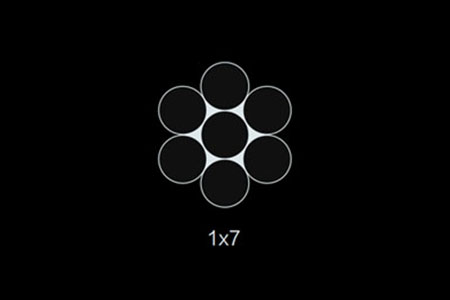
1×7 Stainless Steel Wire Rope Product Introduction Overview: The 1×7 stainless steel wire rope is a high-quality, durable, and versatile wire rope constructed from a single strand of seven individual ...
See Details
1×19 Stainless Steel Wire Rope Product Introduction Overview: The 1×19 stainless steel wire rope is a robust and high-strength wire rope made from a single strand of 19 individual wires twisted togeth...
See Details
7×7 Stainless Steel Wire Rope Product Introduction Overview: The 7×7 stainless steel wire rope is a versatile, durable, and flexible wire rope made from seven strands, each containing seven individual...
See Details![7X19 [6x19+IWS] Stainless Steel Wire Rope 304/316](/steelwirerope-china/2024/12/20/4.jpg)
7X19 [6x19+IWS] Stainless Steel Wire Rope Product Introduction Overview: The 7X19 [6x19+IWS] stainless steel wire rope is a high-performance wire rope designed for applications that require maximum st...
See Details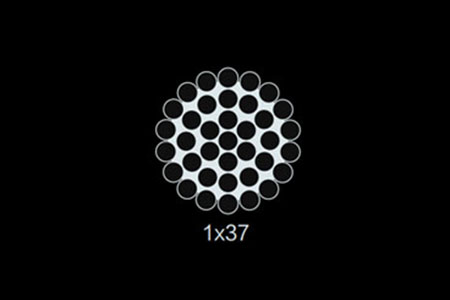
1×37 Stainless Steel Wire Rope Product Introduction Overview: The 1×37 stainless steel wire rope is a high-strength, durable wire rope made from a single strand of 37 individual wires twisted together...
See Details
6×7+FC Stainless Steel Wire Rope Product Introduction Overview: The 6×7+FC stainless steel wire rope is a high-quality wire rope designed for applications requiring both strength and flexibility. This...
See Details
6×19+FC Stainless Steel Wire Rope Product Introduction Overview: The 6×19+FC stainless steel wire rope is a high-performance, versatile rope designed to provide exceptional strength, flexibility, and ...
See Details
19×7 Stainless Steel Wire Rope Product Introduction Overview: The 19×7 stainless steel wire rope is a high-performance wire rope designed for a wide range of applications requiring both strength and f...
See Details




 wechat scan