1×7 Stainless Steel Wire Rope Product Introduction Overview: The 1×7 stainless steel wire rope is a high-quality, durable, and versatile wire rope constructed from a single strand of seven individual ...
See Details

The question of 304 versus 316 stainless steel comes up in almost every industrial hardware sourcing conversation — for wire rope, bolts, nuts, washers, threaded rod, and rigging hardware. Both grades are austenitic stainless steels with similar appearance, similar machinability, and overlapping applications. The difference isn't obvious from looking at the finished part, but it matters significantly in environments where corrosion is a real factor. Getting the grade wrong in a corrosive application leads to premature failure; over-specifying 316 where 304 is adequate wastes budget on a cost premium that buys no real performance benefit.
This guide covers what the chemical difference actually is, what it means in practice for specific applications, and how to decide which grade is right for your end use.
Both 304 and 316 are austenitic stainless steels based on the iron-chromium-nickel system. The chromium content (typically 18% in both grades) creates the passive oxide film on the steel surface that provides the baseline corrosion resistance. The nickel content (8–10% in 304, 10–14% in 316) stabilises the austenitic crystal structure that gives these steels their characteristic combination of good corrosion resistance, toughness, and weldability.
The key difference is the addition of molybdenum in 316: 2–3% molybdenum added to the alloy chemistry that 304 doesn't have. Molybdenum modifies the passive oxide film in a specific way: it makes the film more resistant to attack by chloride ions. Chloride ions are the primary chemical agent responsible for the localised corrosion — pitting and crevice corrosion — that causes stainless steel to fail in marine, coastal, and chemical environments. Without molybdenum, the chloride ion can penetrate and disrupt the passive film, initiating a pit that then propagates through the metal. With molybdenum, the passive film is significantly more stable in the presence of chlorides.
This is the entire practical story of 304 vs 316: if chlorides are not present in any significant concentration in the service environment, 304 provides adequate corrosion resistance for most applications, and there is little performance justification for the cost premium of 316. If chlorides are present — salt water, coastal atmosphere, de-icing salt on roads, chlorinated process fluids, swimming pool environments — 316 is the appropriate specification.
| Element | 304 / 304L | 316 / 316L |
|---|---|---|
| Chromium (Cr) | 18.0–20.0% | 16.0–18.0% |
| Nickel (Ni) | 8.0–10.5% | 10.0–14.0% |
| Molybdenum (Mo) | None | 2.0–3.0% |
| Carbon (C) — standard | ≤0.08% | ≤0.08% |
| Carbon (C) — L grade | ≤0.03% | ≤0.03% |
| Manganese (Mn) | ≤2.0% | ≤2.0% |
| Silicon (Si) | ≤0.75% | ≤0.75% |
The "L" designation (304L, 316L) refers to a lower carbon version of each grade. The lower carbon content reduces the risk of sensitisation during welding — a process where carbon precipitates as chromium carbide at grain boundaries during welding heat cycles, depleting local chromium and creating zones of reduced corrosion resistance. For welded assemblies and fabrications, 304L and 316L are preferred because they maintain corrosion resistance at and near weld zones. For non-welded applications (wire rope, cold-formed fasteners), the distinction between L and standard grades is less significant for most service conditions.
In clean indoor environments without chloride exposure — architectural applications inside buildings, fasteners in dry industrial equipment, structural hardware in controlled environments — 304 provides excellent corrosion resistance. The chromium oxide passive film is stable in atmospheric oxygen and humidity without chloride attack. 316 offers negligible practical advantage over 304 in these conditions, and the cost premium is not justified. The majority of stainless steel fasteners in general industrial use are 304 for this reason.
This is where 316's molybdenum content makes a decisive practical difference. In coastal atmospheres — within approximately 1–5 km of the sea, depending on wind patterns and exposure — airborne sea salt deposits chloride ions on metal surfaces. On 304 stainless, this initiates pitting corrosion that starts as small surface pits and progresses to surface rust staining and eventual structural degradation. The rate depends on exposure conditions, but 304 in direct coastal exposure will typically show visible pitting within months to a few years. 316 in the same coastal atmosphere performs dramatically better — the molybdenum modification allows the passive film to resist chloride attack much more effectively, maintaining appearance and structural integrity for years longer in equivalent exposure.
For wire rope in architectural applications — cable railing systems, tension structures, facade cables on coastal buildings — 316 stainless steel is the standard specification for any project within meaningful coastal influence. The cost premium over 304 is recovered many times over in avoided replacement and maintenance costs. For inland applications well away from coastal influence, 304 wire rope is appropriate and cost-effective.
For hardware and wire rope in direct seawater contact — marine rigging, boat fittings, offshore equipment, dock hardware — 316 is the minimum appropriate specification, and in prolonged submerged service, the additional corrosion resistance of super-duplex grades or other specialist alloys may be required. Direct seawater contact with stagnant conditions (such as in crevices between fittings) is aggressive enough that 316 can still develop crevice corrosion over time in submerged applications — the general rule is that 316 performs well in splash and spray zones, and in intermittent immersion with good water circulation, but prolonged stagnant immersion is demanding even for 316.
Many industrial process environments contain chlorides from process fluids, cleaning agents, or environmental contamination. Food processing plants use chlorinated cleaning agents; swimming pools contain significant dissolved chloride; chemical processing facilities may handle chloride-containing compounds. In these environments, 316 is the standard specification for exposed stainless steel hardware. The specific chloride concentration, temperature, and pH of the environment determine exactly how much corrosion resistance advantage 316 provides — at elevated temperatures, even 316 may be inadequate and higher-alloy grades are needed, but for most commercial and light industrial chloride environments, the step up from 304 to 316 is the appropriate response.
The addition of molybdenum has minimal effect on the mechanical properties of 316 compared to 304. Both grades have similar tensile strength, yield strength, hardness, and toughness in the annealed condition. For engineering calculations involving wire rope breaking load, bolt proof load, or structural capacity of threaded rod, the design values for 304 and 316 are essentially interchangeable — the grade choice is driven by corrosion requirements, not by mechanical performance differences.
| Mechanical Property | 304 (Annealed) | 316 (Annealed) |
|---|---|---|
| Tensile strength (min) | 515 MPa | 515 MPa |
| Yield strength (0.2% proof, min) | 205 MPa | 205 MPa |
| Elongation (min) | 40% | 40% |
| Brinell hardness (max) | 201 HB | 217 HB |
| Density | 7.93 g/cm³ | 7.98 g/cm³ |
316 stainless steel raw material consistently costs more than 304 — the premium ranges from approximately 20–40% depending on current nickel and molybdenum prices. This premium flows through to finished products: 316 wire rope, bolts, and fittings are correspondingly more expensive than 304 equivalents. For large-volume industrial procurement, the cost difference is real and significant.
The specification decision should be based on the total cost of ownership rather than the unit purchase price. In a dry indoor application where 304 provides decades of service, specifying 316 is an unnecessary premium with no performance return. In a coastal marine application where 304 develops rust staining and pitting within two years and 316 maintains acceptable condition for ten or more years, the 316 premium is substantially cheaper than the cumulative cost of replacement and installation labour for 304 components replaced multiple times over the same period.
A useful practical rule: if the application is genuinely corrosion-sensitive (coastal, marine, chemical, food processing) specify 316 and don't equivocate. If the application is clearly non-corrosive (dry indoor, protected environment), 304 is the economical choice. For intermediate cases — inland industrial, light chemical exposure, periodic cleaning — assess the specific environment rather than defaulting to either grade without analysis.
| Application | Recommended Grade | Reasoning |
|---|---|---|
| Inland architectural cable railing | 304 | No significant chloride exposure; 304 adequate |
| Coastal architectural cable railing | 316 | Airborne salt chloride requires molybdenum resistance |
| Marine rigging (above waterline) | 316 | Salt spray environment; 316 minimum specification |
| Submerged marine hardware | 316 (minimum); super-duplex for critical applications | Direct seawater contact; stagnant crevice risk with 316 |
| Indoor industrial fasteners | 304 | Dry environment; cost justification for 316 absent |
| Food processing equipment | 316 | Chlorinated cleaning agents; regular acid/alkali contact |
| Swimming pool hardware | 316 | Dissolved chlorine and chloride; 304 corrodes rapidly |
| Wire rope mesh (architectural, inland) | 304 | Aesthetics and light corrosion resistance are adequate |
| Wire rope mesh (zoo enclosures, coastal) | 316 | Outdoor exposure; coastal applications need chloride resistance |
| Structural threaded rod (indoor) | 304 | Protected environment; mechanical properties equivalent |
| Threaded rod in concrete (coastal construction) | 316 | Concrete chloride ingress in coastal environments |
No 304 and 316 are visually identical in finished form. Both have the same silver-grey appearance and the same surface texture for equivalent surface finishes. The magnet test that is sometimes suggested (austenitic stainless steel is non-magnetic) does not reliably distinguish 304 from 316, because both grades are nominally non-magnetic in the annealed condition, but both can become slightly magnetic when cold-worked. A bolt that has been cold-headed or a wire rope strand that has been drawn will both show some magnetic response, regardless of whether they are 304 or 316. The only reliable method to confirm grade is chemical analysis — XRF (X-ray fluorescence) testing is fast and non-destructive, and is the standard method used for incoming material verification in quality-critical applications. A handheld XRF instrument can confirm the presence and approximate percentage of molybdenum in under a minute, providing identification of 316 vs 304 without laboratory analysis.
A2 and A4 are the ISO 3506 property class designations for stainless steel fasteners. A2 corresponds to 304 (18% chromium, 8–10% nickel, no molybdenum), and A4 corresponds to 316 (with molybdenum). A2-70 means an A2 (304 equivalent) bolt with a minimum tensile strength of 700 MPa; A4-70 means a 316 equivalent at the same strength level. This designation system is commonly used in European markets and in international marine hardware supply. When sourcing fasteners, confirming the property class (A2-70, A4-80, etc.) tells you both the material grade and the strength specification, which is more useful than specifying "304" or "316" alone without a strength requirement.
For swaged wire rope terminals — where the fitting is cold-formed onto the rope end without welding — the distinction between 316 and 316L is not significant for corrosion resistance or mechanical performance. The lower carbon content of 316L is specifically valuable for welded assemblies where the heat-affected zone would otherwise be susceptible to sensitisation. If a terminal or fitting is welded during fabrication (such as welded thimbles, welded end fittings, or welded structural connections), 316L is the appropriate specification to maintain full corrosion resistance at the weld. For mechanical swaged or pressed fittings with no welding, either 316 or 316L is appropriate, and the selection is typically driven by material availability rather than performance difference.
Stainless Steel Wire Rope | Rigging Hardware | Stainless Steel Bolts | Stainless Steel Nuts | Threaded Rod | Wire Rope Mesh | Contact Us
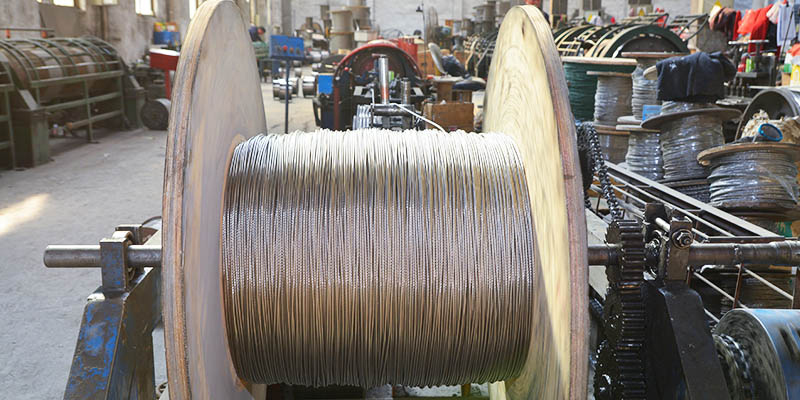
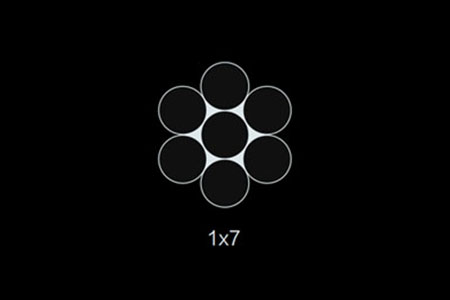
1×7 Stainless Steel Wire Rope Product Introduction Overview: The 1×7 stainless steel wire rope is a high-quality, durable, and versatile wire rope constructed from a single strand of seven individual ...
See Details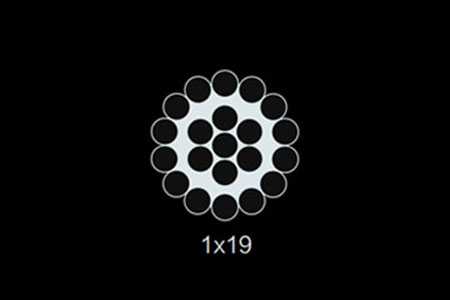
1×19 Stainless Steel Wire Rope Product Introduction Overview: The 1×19 stainless steel wire rope is a robust and high-strength wire rope made from a single strand of 19 individual wires twisted togeth...
See Details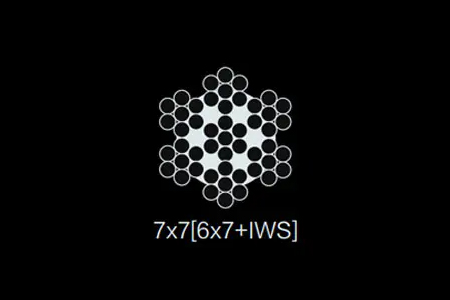
7×7 Stainless Steel Wire Rope Product Introduction Overview: The 7×7 stainless steel wire rope is a versatile, durable, and flexible wire rope made from seven strands, each containing seven individual...
See Details![7X19 [6x19+IWS] Stainless Steel Wire Rope 304/316](/steelwirerope-china/2024/12/20/4.jpg)
7X19 [6x19+IWS] Stainless Steel Wire Rope Product Introduction Overview: The 7X19 [6x19+IWS] stainless steel wire rope is a high-performance wire rope designed for applications that require maximum st...
See Details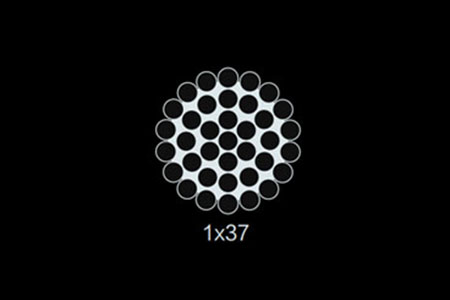
1×37 Stainless Steel Wire Rope Product Introduction Overview: The 1×37 stainless steel wire rope is a high-strength, durable wire rope made from a single strand of 37 individual wires twisted together...
See Details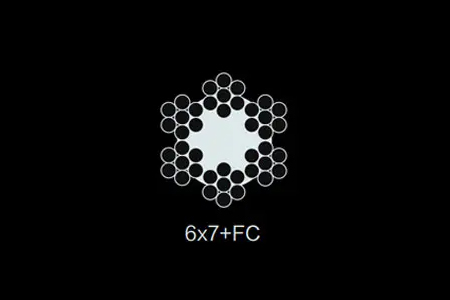
6×7+FC Stainless Steel Wire Rope Product Introduction Overview: The 6×7+FC stainless steel wire rope is a high-quality wire rope designed for applications requiring both strength and flexibility. This...
See Details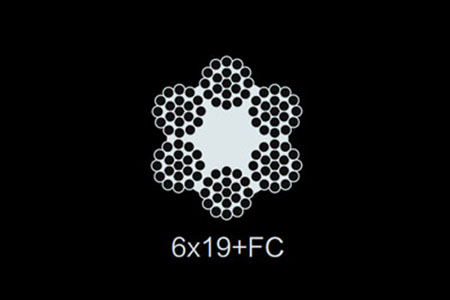
6×19+FC Stainless Steel Wire Rope Product Introduction Overview: The 6×19+FC stainless steel wire rope is a high-performance, versatile rope designed to provide exceptional strength, flexibility, and ...
See Details
19×7 Stainless Steel Wire Rope Product Introduction Overview: The 19×7 stainless steel wire rope is a high-performance wire rope designed for a wide range of applications requiring both strength and f...
See Details




 wechat scan