1×7 Stainless Steel Wire Rope Product Introduction Overview: The 1×7 stainless steel wire rope is a high-quality, durable, and versatile wire rope constructed from a single strand of seven individual ...
See Details

In the industrial and construction fields, rigging hardware plays a crucial role. It is a key component connecting cranes, lifting equipment, and heavy loads, ensuring safety and efficiency during operations. Although many people are unfamiliar with the term "rigging hardware," its applications are ubiquitous. Whether in large-scale construction projects, cargo handling in port logistics, or even high-tech fields such as aerospace and marine engineering, the role of rigging hardware cannot be overlooked.
Rigging hardware refers to the hardware components that connect rigging (such as steel cables, chains, etc.) to lifting equipment or loads. It includes, but is not limited to, various lifting rings, hooks, bolts, chain connectors, etc., which play a vital role in lifting operations. Specifically, the main function of rigging hardware is to connect the load to the lifting equipment or lifting tools and ensure the safety and stability of the entire lifting process.
The selection and design of rigging hardware require consideration of many factors, such as the weight of the load, the complexity of the operating environment, and changes in working temperature. Any problem can lead to equipment failure or accidents; therefore, the quality and durability of rigging hardware are extremely important.
Rigging hardware can be divided into several categories according to its form and function. The following are some common types of rigging hardware:
Hooks are the most common type of rigging hardware, widely used in cranes, hoists, and other equipment. Hooks are generally made of high-strength steel and have a special surface treatment to enhance their corrosion resistance and durability. The shape of the hook is usually U-shaped or L-shaped, and its function is to securely hold the load through its structure and provide support and load-bearing during lifting operations.
Lifting rings and lifting eyes are another common type of rigging hardware, usually used for lifting and securing heavy objects. They can be connected to steel cables, chains, etc., to directly attach the load to the lifting equipment. Lifting rings and lifting eyes are commonly used in lifting operations, and their connection points are usually designed with high tensile strength and wear resistance to withstand heavy loads.
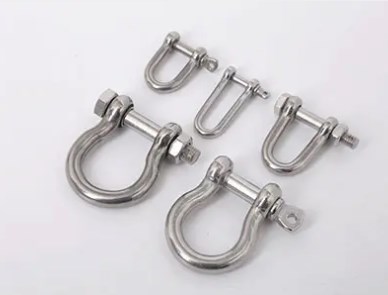
Bolts and chain connectors are crucial components in rigging hardware, used to connect different lifting devices, hoisting equipment, and loads. Bolts are secured using threaded connections, ensuring they do not loosen during lifting operations. Chain connectors are generally used for connecting chain slings, and their wear resistance and tensile strength are particularly important, effectively preventing chain breakage or deformation during lifting.
In addition to basic lifting device connections, rigging hardware also includes specialized equipment such as anchoring devices and tensioning devices. These devices are primarily used in applications requiring strong tensioning. For example, in some steel structure lifting operations, tensioning devices can tighten the rigging, ensuring the stability of the structure during lifting.
The core function of rigging hardware is to connect the load to lifting equipment such as cranes and hoists, using physical mechanical principles to move heavy objects. Typically, rigging hardware needs to withstand tensile, shear, and impact forces from the load; therefore, their material strength, tensile properties, and structural design require meticulous precision.
In actual lifting operations, rigging hardware such as hooks and shackles distribute the weight of the load to multiple points through force transmission, thus ensuring the safety of the lifting operation. For example, when a hook lifts a heavy object, the load on the hook is evenly distributed to various parts of the hook, preventing localized overloading.
At the same time, the design of rigging hardware must also consider the specific working environment. For example, lifting operations may encounter harsh weather conditions such as high temperatures, high humidity, and strong winds. Therefore, the hardware surface needs to be treated with special anti-corrosion and anti-oxidation technologies to ensure that corrosion and wear do not occur during long-term use.
In lifting operations, the quality of rigging hardware directly affects the safety and stability of the entire operation. High-quality rigging hardware usually has the following characteristics: their materials need to have high tensile strength to withstand large loads; their structure needs to be reasonable to ensure that they do not break or deform under external forces; and surface treatment technology is crucial to effectively prevent the hardware from corroding due to environmental factors. When selecting appropriate rigging hardware, in addition to considering the material and structural design, it is also necessary to comprehensively consider the specific needs of the lifting operation. For example, the temperature, humidity, and wind speed of the working environment will all affect the selection of hardware. Only by choosing the right hardware can the smooth progress of the lifting operation be ensured.
Rigging hardware has a very wide range of applications. Whether on construction sites, ports and docks, or in offshore platforms and mines, rigging hardware plays a crucial role. In the construction industry, cranes and hoists often use hooks and shackles to lift large steel structures; in port operations, hooks and chain connectors are used for loading and unloading containers; in offshore platform operations, rigging hardware is used for lifting operations of equipment such as oil drilling platforms.
Yes, rigging hardware may experience wear and corrosion due to long-term weight bearing and environmental factors. Therefore, regular inspection and maintenance are very necessary. Hardware working under high load and in harsh environments requires even more rigorous inspection and timely replacement.
When choosing rigging hardware, it is necessary to decide based on the specific operational needs. For example, factors such as load weight, working environment (such as temperature, humidity, wind speed, etc.), and equipment type need to be considered. It is best to consult a professional to select the appropriate model and material to ensure safety.
The service life of rigging hardware depends on many factors, including material, frequency of use, and working environment. Under normal use and maintenance, good rigging hardware can last for many years. However, if it is subjected to overload, corrosion, or prolonged exposure to harsh environments, its service life may be shortened.
Currently, there are various types of rigging hardware on the market that can adapt to special environments, such as high temperature, high humidity, strong acid and alkali environments. When choosing, it is necessary to select materials with special corrosion resistance or high-temperature resistance according to specific needs.
By understanding the basic knowledge and applications of rigging hardware, it can be seen that it plays an irreplaceable role in industrial operations. Selecting the appropriate rigging hardware and ensuring its quality and safety are crucial to the success of every lifting operation.
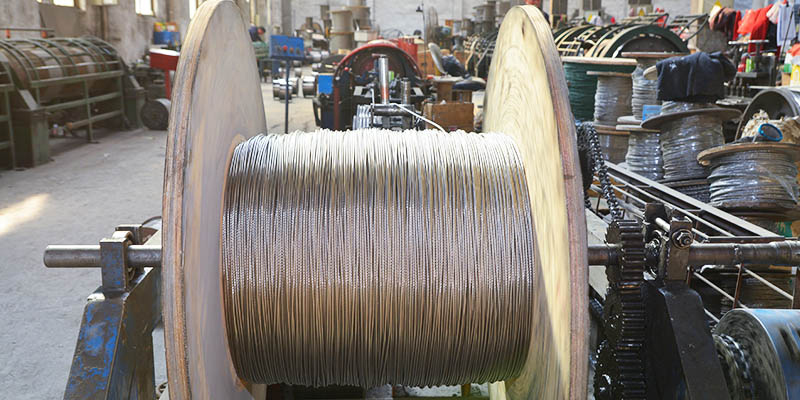

1×7 Stainless Steel Wire Rope Product Introduction Overview: The 1×7 stainless steel wire rope is a high-quality, durable, and versatile wire rope constructed from a single strand of seven individual ...
See Details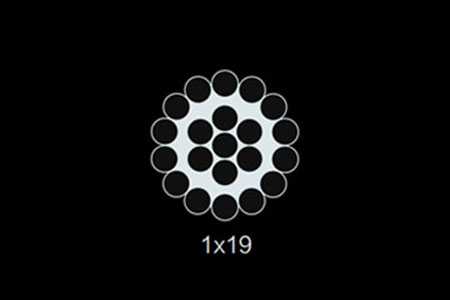
1×19 Stainless Steel Wire Rope Product Introduction Overview: The 1×19 stainless steel wire rope is a robust and high-strength wire rope made from a single strand of 19 individual wires twisted togeth...
See Details
7×7 Stainless Steel Wire Rope Product Introduction Overview: The 7×7 stainless steel wire rope is a versatile, durable, and flexible wire rope made from seven strands, each containing seven individual...
See Details![7X19 [6x19+IWS] Stainless Steel Wire Rope 304/316](/steelwirerope-china/2024/12/20/4.jpg)
7X19 [6x19+IWS] Stainless Steel Wire Rope Product Introduction Overview: The 7X19 [6x19+IWS] stainless steel wire rope is a high-performance wire rope designed for applications that require maximum st...
See Details
1×37 Stainless Steel Wire Rope Product Introduction Overview: The 1×37 stainless steel wire rope is a high-strength, durable wire rope made from a single strand of 37 individual wires twisted together...
See Details
6×7+FC Stainless Steel Wire Rope Product Introduction Overview: The 6×7+FC stainless steel wire rope is a high-quality wire rope designed for applications requiring both strength and flexibility. This...
See Details
6×19+FC Stainless Steel Wire Rope Product Introduction Overview: The 6×19+FC stainless steel wire rope is a high-performance, versatile rope designed to provide exceptional strength, flexibility, and ...
See Details
19×7 Stainless Steel Wire Rope Product Introduction Overview: The 19×7 stainless steel wire rope is a high-performance wire rope designed for a wide range of applications requiring both strength and f...
See Details




 wechat scan